%20(250%20x%20100%20px).png)



In 2026, with automated outreach tools promising thousands of links a month, many companies started investing less in manual link building. Still, it’s one of the most effective and high-ROI strategies you can use to build visibility and authority online.
Our SaaS link building agency has mastered manual link building, so I’ll walk you through what it is and how it’s working in 2026, with strategies, templates, and the parts of this industry nobody likes to talk about openly.
What Is Manual Link Building?
Manual link building is the technique of gaining backlinks by reaching out individually and personally to the webmasters, editors, and writers on a one-to-one basis. This technique doesn't involve the use of any automated tool.
How Is Manual Link Building Different in 2026?
In 2026, the the environment around manual link building has changed, with 3 important shifts:
- Editors are drowning in AI-generated pitches. A SaaS marketing editor we work with told us she gets roughly 400 outreach emails a week, and an estimated 80% are clearly AI-written. Generic pitches don't just underperform anymore. They actively damage your sender reputation.
- Google's spam updates have re-priced links. After Google's 2024-2025 updates cracked down on fake link schemes, sites that relied on them lost their rankings. Links from real, legitimate websites are now worth more than ever.
- Deliverability has collapsed for cold senders. It's now impossible to deliver any message using manual outreach. Due to Gmail's policy of 2024, which has been strengthened in 2025 regarding high volume cold senders, any high volume cold outreach would result in your emails landing in the spam folder.
As a matter of fact, manual outreach has become easier today as compared to three years ago due to this very reason.
Manual vs. Automated vs. Hybrid: An Honest Comparison
You know now what manual links are. On the contrast of that is automated link building - using AI and automation software to do the prospecting, outreach, and everything up into monitoring and revival.
Hybrid links are somewhere in between these two - they still use tools, but extensively rely on human guidance and quality check.
Based on our experience with all three, this is what the comparison looks like:
Most of the industry is doing hybrid link building in 2026, since pure automation is dying and pure manual doesn't scale.
What Makes a Link Worth Pursuing in 2026
Quality link means relevance, authority, and good anchor text. That's true, but in 2026 it's not enough on its own. There are a few other things to look for:
- Is the page itself relevant (not just the website)? A link from a Forbes article about cooking does nothing for your B2B software company. The specific page linking to you needs to be topically related to your site, not just the domain in general.
- Does the page get real traffic? Domain authority scores can be manipulated, but real, organic traffic to a specific page is much harder to fake.
- Is the site mostly AI-written? This is relatively new in 2026, but a lot of are pumping out AI-generated content and losing favor with Google. This which means links from them are worth less and less. We check for this in our process.
- Does the site have editorial standards? There's a difference between a site that occasionally runs sponsored content and one where everything is for sale. The first is fine. The second is a red flag.
- Does a new link fit your site's existing profile? One strong link to a brand new website can look suspicious. The same link pointing to a site with 80 existing backlinks barely raises an eyebrow. Your link-building pace should match where your site currently stands.
Now, let me share a few manual link building tactics that will improve your link building efforts.
The 7 Manual Link Building Tactics You Can Use in 2026
I'm going to rank these by what we've seen produce results across roughly 200 campaigns in the last 18 months. Your mileage will vary based on industry and content quality, but the order holds up surprisingly well.
1. Digital PR with Proprietary Data
If you can publish original research, even small studies, this is the highest-ROI tactic available. A SaaS client of ours surveyed 312 of their customers about a niche workflow problem, turned it into a data report, and got 47 referring domains in eight weeks, including TechCrunch and Inc.
You can read more on such cases in our case studies.
Realistic timeline si 6-12 weeks to collect data, turn into a pitch-able idea, and start your digital PR campaign.
2. Podcast Guest Appearances
Almost nobody talks about this in the context of link building, which is strange because it's one of the easiest high-quality link wins available. Show notes pages almost always include a link to the guest's site, and they're typically on domains with real audiences and editorial credibility.
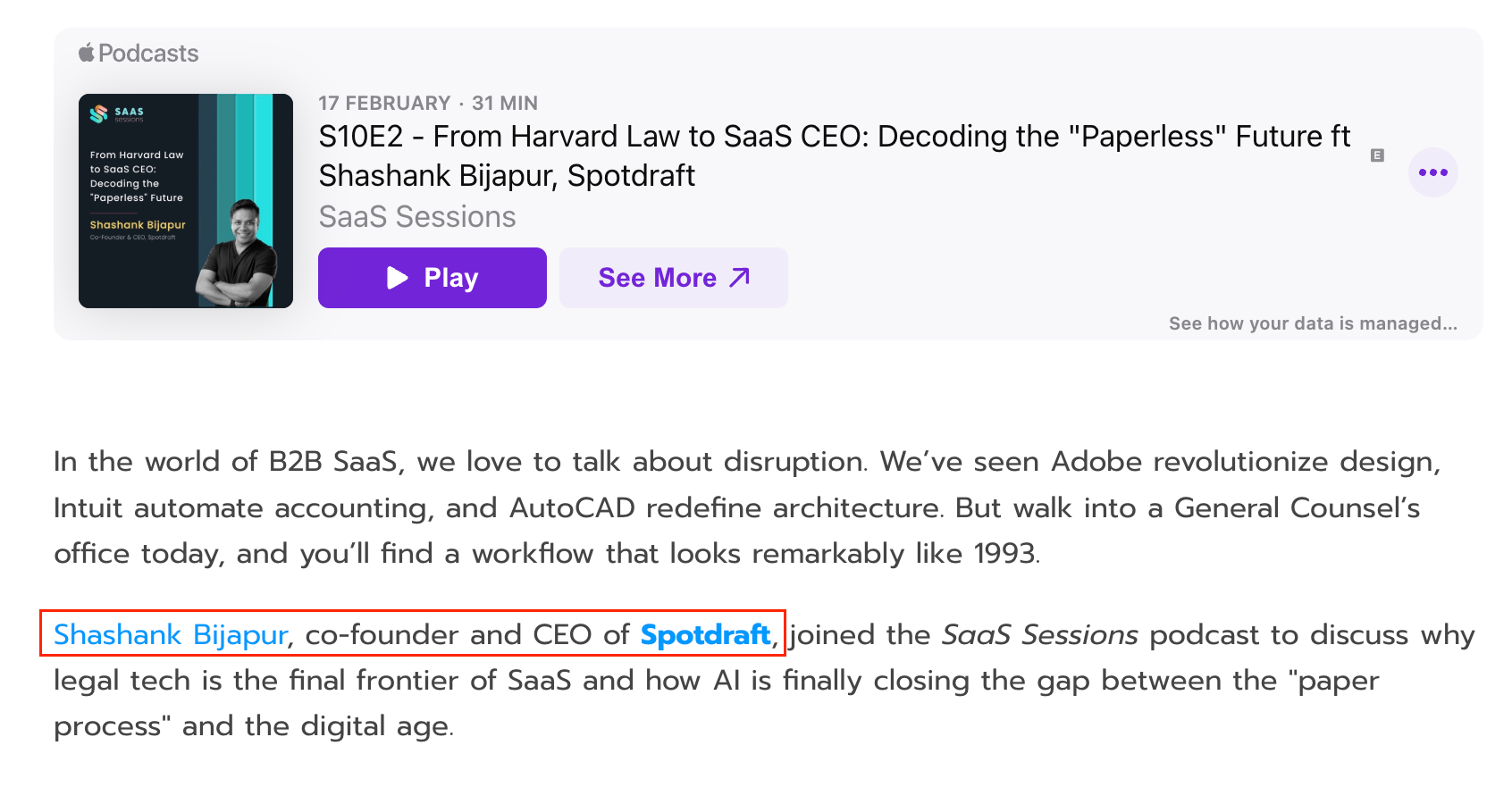
Realistic timeline is 2-4 weeks from outreach to recorded episode, plus 2-6 weeks until publication.
3. Niche Edits (Link Insertions)
Controversial, so let me be honest about it: niche edits are when you persuade (or pay) a site owner to add your link to an existing, already-ranking article. Done well (relevant context, real editorial value-add), they're effective. Done badly, they're indistinguishable from paid link networks.
This is the version that works (and that you can do):
- Find a ranking article that already mentions your competitor or your topic,
- Reach out to them and offer an updated stat, a missing perspective, or a relevant resource that genuinely improves the article.
- Offer a link back you your site in exchange to the useful angle you provide.
Some sites will charge a "placement fee," which typically depends on the industry and the website. Most reputable sites with strong editorial standards won't.
Realistic timeline is 1-2 weeks to pitch the idea on an already existing content and get published.
4. HARO replacements
HARO (Help a reporter out) by Featured, is a journalist-query platform you can use to provide expert commentary and useful inputs in journalists’ articles and get a link back to your site. Besides HARO, you can use other similar platforms:
- Qwoted - the strongest direct replacement, particularly for B2B and tech.
- Featured (formerly Terkel) - quality has dropped but still useful for SMB topics.
- Help A B2B Writer - niche but high-quality matches.
- SourceBottle - better for lifestyle and consumer topics.
- Connectively - Cision's HARO successor; mixed reviews on quality.
All these are done with daily queries.
5. Broken Link Building
Broken link building is finding broken links (404 errors) on other websites, telling the owner, and asking them to link to your website instead.
This still works, but it's slower than it used to be because so many people are doing it badly. The trick now is not to mass-email every site with a broken link, but to focus on broken links to content you've genuinely replicated or improved upon.
Based on industry benchmarks, it has 15-25% reply rate, 5-8% link acquisition rate. This is small, so you need to plan for a large volume.
6. Guest Posting
Guest posting (or guest blogging) is when you write an article/blog post and publish it on someone else’s website or blog. It still works for manual link building, but with the raise for AI-written content, the bar has risen. You need deeply researched, byline-worthy contributions to publications that have real editorial standards.
7. Unlinked Brand Mention Reclamation
As the name suggests, this is when you find a website that has mentioned your name already, and ask them you add a link to your site as well. They trust you enough to have your name on their site, so this is the easiest win.
To do this, you just need to set up Google Alerts or use Ahrefs' Content Explorer to find existing mentions of your brand without a link, then send a short, polite request. Conversion rates are typically 15-30%.
Most brands have 20-100 reclaimable mentions at any given time. After you've worked through them, this isn't a renewable resource.
The Outreach Templates That Get Replies
Here are three templates we have used, with annotations on what makes them work. Steal them, but rewrite them. Recipients can spot a template within two seconds.
Template 1: Broken Link Replacement
Subject: broken link on [page name]
Hi [first name],
Reading your [specific article title] this morning, the link to [source] in the [specific section] paragraph is throwing a 404. Looks like they redesigned their site.
We published [your resource] last [month] that covers the same ground, plus [one specific addition the original didn't have]. Happy for you to use it as the replacement, or just wanted to flag the broken link either way.
[Your name]
What makes this work: specificity (you actually read the article), no fake compliments, low-pressure framing, single ask.
Template 2: Digital PR Pitch
Subject: data: [counterintuitive finding] in [industry]
Hi [first name],
Saw your piece on [recent article] last week. Thought you might find this interesting for a follow-up:
We surveyed [N] [audience] about [topic] and found [single most surprising stat]. Two other findings that might be useful:
- [Stat 2]
- [Stat 3]
Full methodology and data set here if useful: [link]
No need to credit us if it's not relevant; just thought it might fit your beat.
[Your name]
What makes this work: leads with the news hook, references their recent work specifically, gives them the data without demanding coverage, signals you're not desperate for a link.
Template 3: Unlinked Mention Reclamation
Subject: quick thanks + small ask
Hi [first name],
Just saw [our company] mentioned in your [article title] — really appreciated the context you gave it.
If it's not too much trouble, would you be open to linking the mention to our site? Makes it easier for readers to find us, and helps your readers if they want more detail. Here's the URL: [link]
Either way, thanks for the mention.
[Your name]
What makes this work: acknowledges them first, frames the request as helping their readers (true), explicitly removes pressure.
Important note on AI-assisted personalization: The temptation to use ChatGPT to "personalize" 500 emails at once is real and you should resist it. Editors can tell. What we do instead: AI drafts the bones, a human writes the first two sentences and the specific reference to the recipient's recent work. Those two sentences carry the entire pitch.
Top Tools to Help You With Manual Link Building in 2026
I'll be opinionated here. Some of these tools are excellent; some are expensive habits.
Prospecting and backlink analysis:
- Ahrefs ($129-$449/mo) remains the gold standard for backlink data.
- Semrush ($140-$500/mo) is better for keyword research and a hair behind on backlinks.
- Monitolink ($29/mo) covers backlink monitoring and automatic outreach in one platform.
Contact finding:
- Apollo ($59/mo for solo, scales up) has the best price-to-quality ratio.
- Hunter ($49-$199/mo) is more accurate but pricier per credit.
- Linkee ($80.83/mo) for link building prospecting automation & contact verification.
Outreach platforms:
- Pitchbox ($550+/mo) is excellent for teams running multiple coordinated campaigns.
- Respona ($199-$399/mo) is the personalization-focused option, great for smaller, high-touch outreach.
AI-citation tracking (if you also care about GEO):
- Peec AI
- Otterly
- AthenaHQ
- RankScale
All four are all viable. None is perfect yet.
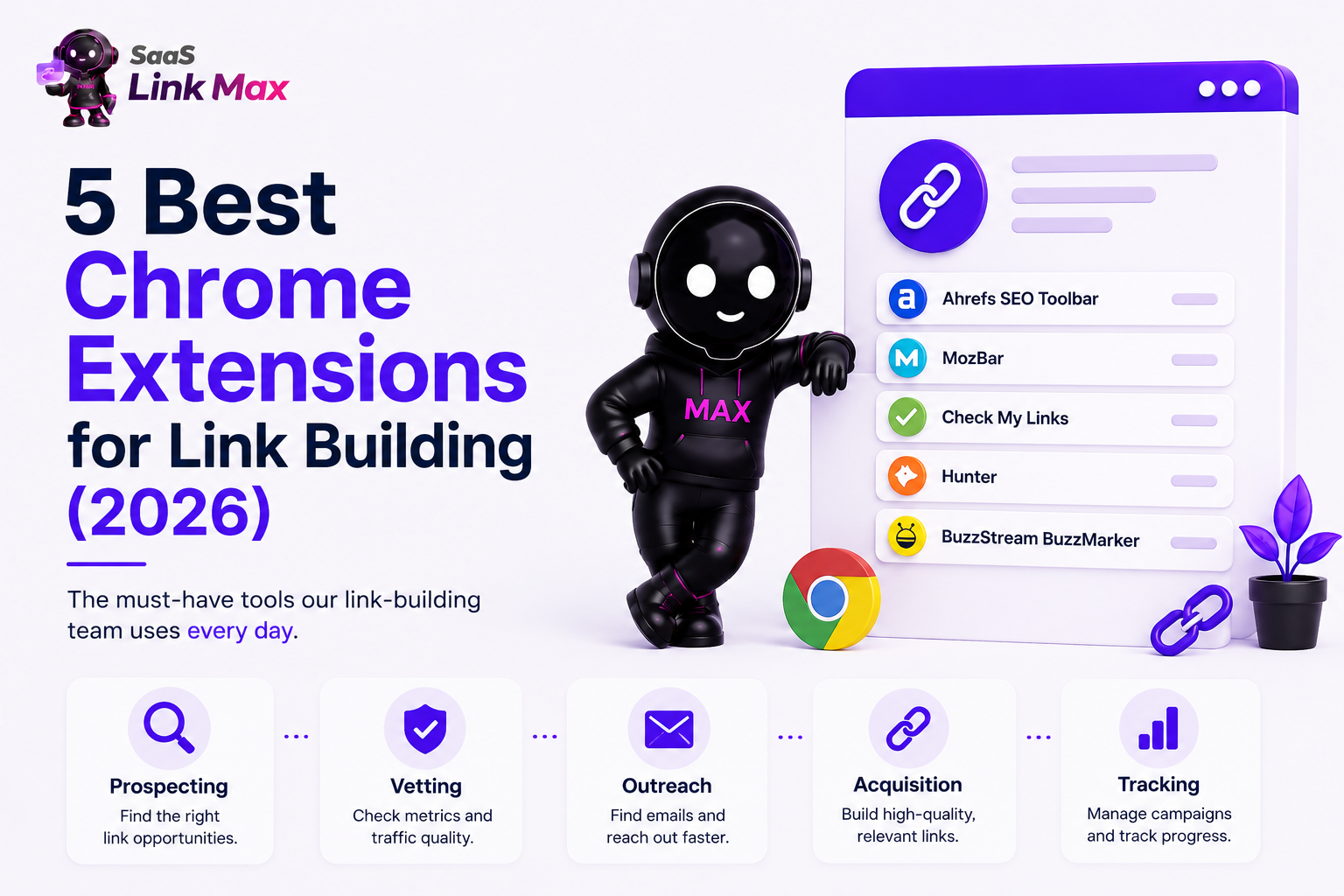
I gave a list of digital PR tools above, but if you want to explore the ecosystem in general, check out our best link building tools list for 2026.
How to Tell a Legitimate Link Building Service From a "Spreadsheet Dump"
This is something I see on forums and get asked about by clients all the time, so let me share some red and green flags.
Red flags:
- Promises specific DR/DA numbers ("100 DR50+ links for $X"). Real link building doesn't work like buying widgets.
- Won't share sample reports from past clients (even with names redacted).
- Uses the same anchor text and target page strategy across every client.
- Pricing under $100 per link for guaranteed placements. The math doesn't work for legitimate outreach at that price.
- No content team. Link building without content is just spam.
- "Guaranteed" links. Real outreach has variance; guarantees usually mean they're paying placement fees on networks.
- Reports that show links but no traffic context for the linking pages.
Green flags:
- Will show you the actual prospects they're considering before reaching out.
- Pricing in the $200-$700 per link range with quality criteria specified upfront.
- Custom content for each placement, not templated.
- Willingness to share their outreach templates and process.
- Clear policies on what they won't do (link farms, PBNs, irrelevant placements).
- Monthly reporting that includes referring domain growth, anchor text breakdown, and traffic of linking pages.
The Paid Link Conversation Nobody Wants to Have
Google's official position is that paid links that pass PageRank (Google’s link analysis algorithm) violate guidelines and should be marked sponsored or nofollow.
The industry reality is that a substantial portion of "editorial" links in all spheres, including B2B SaaS, software review sites, and many content publishers involve some form of placement fee, typically called a "publishing fee," "editorial fee," or "content sponsorship."
I'm not going to tell you what to do here. I'll tell you what we see work and what we see fail:
What tends to work: Paying placement fees on sites with genuine editorial standards, real traffic, and a real audience, where your link is contextually relevant and the surrounding content is high quality. The link looks like every other link on the site because the site's editorial bar is high.
What tends to fail: Paying for links on link farm sites, sites with no real traffic, sites that obviously sell links to anyone with a checkbook, or sites in unrelated industries. Google's spam classifiers are increasingly good at identifying these patterns.
The cleanest answer remains that if you have to ask whether a placement crosses Google's line, it probably does. The earned links you'd be embarrassed to lose if Google asked are usually the ones that compound the most.
Measuring Whether Your Link Building Is Working
You will for sure have some metrics in front of you:
- Total backlinks (heavily inflated by syndication and scrapers)
- Domain Rating in isolation
- Number of "DR70+" links if they're irrelevant
But there are a few more that have proven to have more correlation with your results:
- Referring domains growth, specifically from new, relevant sites. Monthly net-new referring domains in your category.
- Organic traffic to specifically linked pages. Did the page that got the link gain rankings on its target keywords?
- Movement in keyword clusters topically related to your link velocity. Topical authority compounds, so links to your "comparison" pages should lift your other comparison pages too.
- Branded search growth. A surprisingly good signal that your link building is reaching real audiences. PR-driven links tend to drive measurable brand search lifts within 4-8 weeks.
I'd run a simple monthly review: pull referring domain growth from Ahrefs, pull organic traffic to the top 10 pages that received links in the last 90 days, and compare to a control set of similar pages that didn't get links. If the linked pages are outpacing the unlinked ones, your program is working.
FAQ
Is manual link building still worth it in 2026?
Yes, and more so than three years ago. The collapse of automated outreach deliverability and the post-2024 spam updates have widened the gap between manual outreach and everything else. The catch: the bar for what "manual" means has risen. Generic personalization doesn't count anymore.
How many backlinks do I need to rank?
However many your competitors have plus a quality margin. Run a Link Intersect analysis in Ahrefs against your top 3 ranking competitors for your target keywords. The median referring domain count among them is your rough benchmark.
Should I do manual link building myself or hire someone?
If you have less than 5 hours a week to dedicate to outreach, hire someone. If you have a strong personal brand and unique perspectives, podcast guesting and digital PR are worth doing yourself even if everything else is outsourced. The work that requires your voice can't really be delegated.
What are manufactured links?
Manufactured links are the links you create or pay for directly, like directory submissions, paid placements, link exchanges, or any tactic where you control whether the link goes live.
What are editorial links?
Editorial links are the links a site gives you on its own merit - a journalist cites your data, a blogger references your tool, a site links to your content because it's useful. There is no payment or request. These carry more SEO weight because they're harder to gain.