%20(250%20x%20100%20px).png)




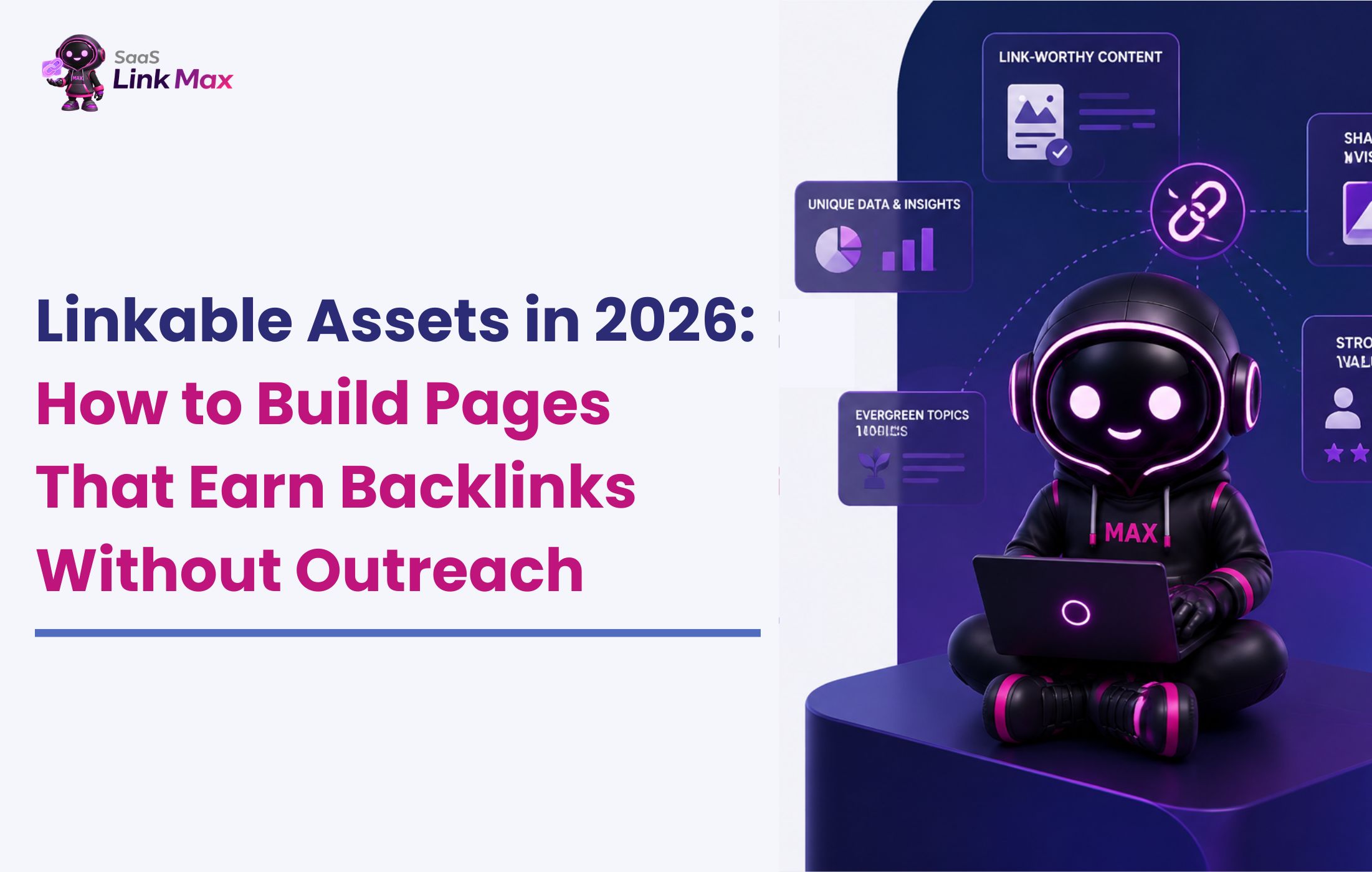
In 2026, linkable assets outperform cold outreach at scale. You build the right thing once, and high authority sites like Wired, TechCrunch, and hundreds of niche blogs link to it without ever being asked.
In this guide, I’ll explain what a linkable asset is, the 7 types worth building in 2026, how to generate ideas with AI in five minutes, how to build without a developer, and how to distribute so links happen. All these are based on real outcomes our SaaS link building agency has seen over the years.
What Is a Linkable Asset?
A linkable asset is a page on your site specifically designed to earn backlinks. It's not a product page, a pricing page, or a generic blog post. It's something useful, interesting, or visually compelling enough that other websites cite it on their own, without you asking.
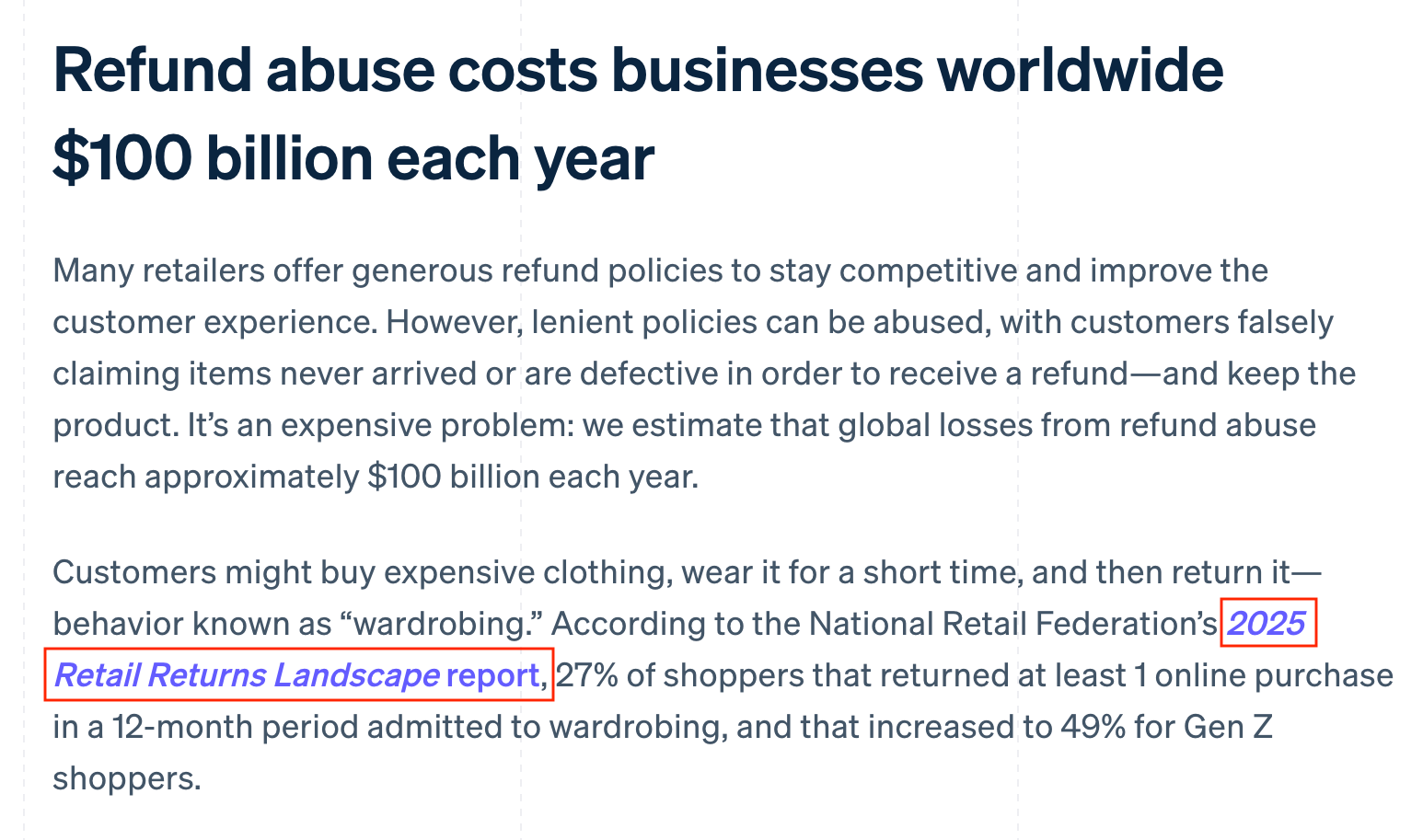
The reason linkable assets exist as a category is that people don't link to commercial content. Nobody is going to link to your pricing page from their article on "the best CRM tools for startups." But they will link to a free tool, an original research piece, or a comprehensive guide that genuinely helps their readers.
The benefits compound beyond just the links to the asset itself:
- Link equity from the asset flows to your commercial pages through internal linking, which means your money pages rank higher
- Referral traffic comes in from the linking sites
- Your brand gets mentioned in places you couldn't pay your way into
Why Linkable Assets Beat Traditional Link Building
Manual link building works, but it’s more expensive and time-consuming compared to a good linkable asset.
You're sending hundreds of emails for a handful of placements. Each link costs you real hours of prospecting, personalization, follow-up, and negotiation.
Linkable assets flip that math. You front-load the effort, and then the asset earns links passively for months or years.
The other thing linkable assets do that outreach can't: they get you links from publishers who would ignore your cold email. Tier-one publications don't respond to pitches from unknown brands. They do cite useful tools and original data, because their writers need to support their articles with credible sources.
There's also an E-E-A-T (Experience, Expertise, Authoritativeness, and Trustworthiness) angle worth mentioning. Google has become more aggressive in rewarding content that demonstrates genuine expertise. A well-built calculator or original study is hard to fake, and Google notices the difference between sites with real assets and sites that just publish blog posts.
The 7 Types of Linkable Assets (With Real Backlink Data)
I'm ranking these by leverage - how much link value you can earn relative to how hard the asset is to build. Your mileage will vary based on your niche and the quality of execution, but the general order holds.
1. Interactive Tools and Micro-Apps
The reason interactive tools and micro-apps work is that they solve a small, specific problem instantly. Anyone can understand them in 5 seconds. And they're easy for journalists and bloggers to cite because the value is self-evident.
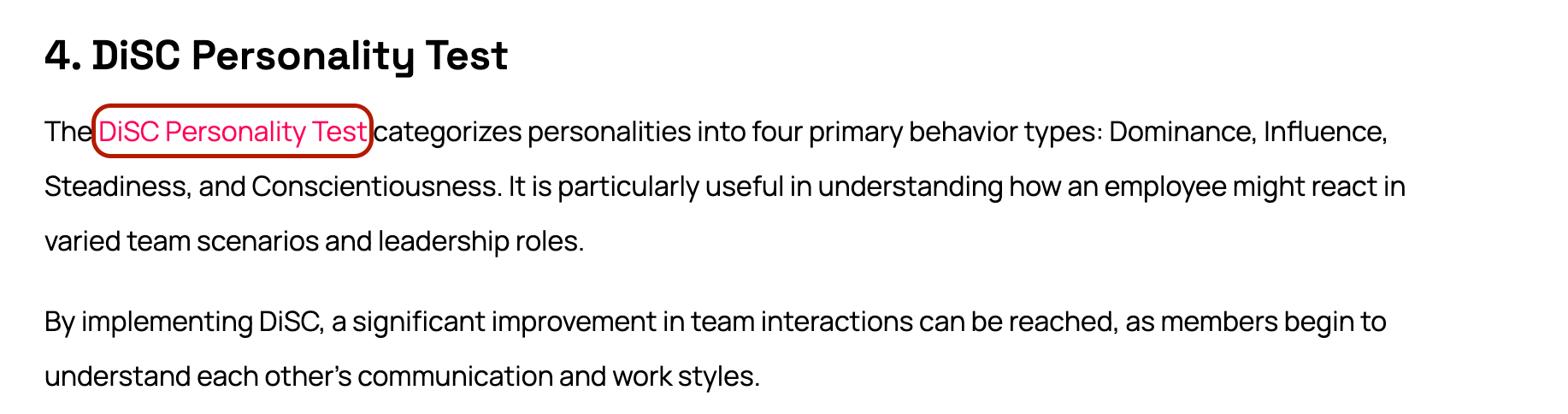
Most brands don’t build a web app because it requires a developer and a few weeks. However, with AI coding tools, you can ship a working tool in an afternoon. I’ll speak more on that in the build section.
2. Calculators
Calculators are a specific subtype of interactive tool that deserves its own category because they're so consistent at earning links.
You just take a calculation that people commonly need to do manually and turn it into a one-screen tool. Local SEO cost calculators, mortgage calculators, ROI calculators, tax estimators, savings calculators. Anything where someone is currently plugging numbers into a formula and hoping they got it right.
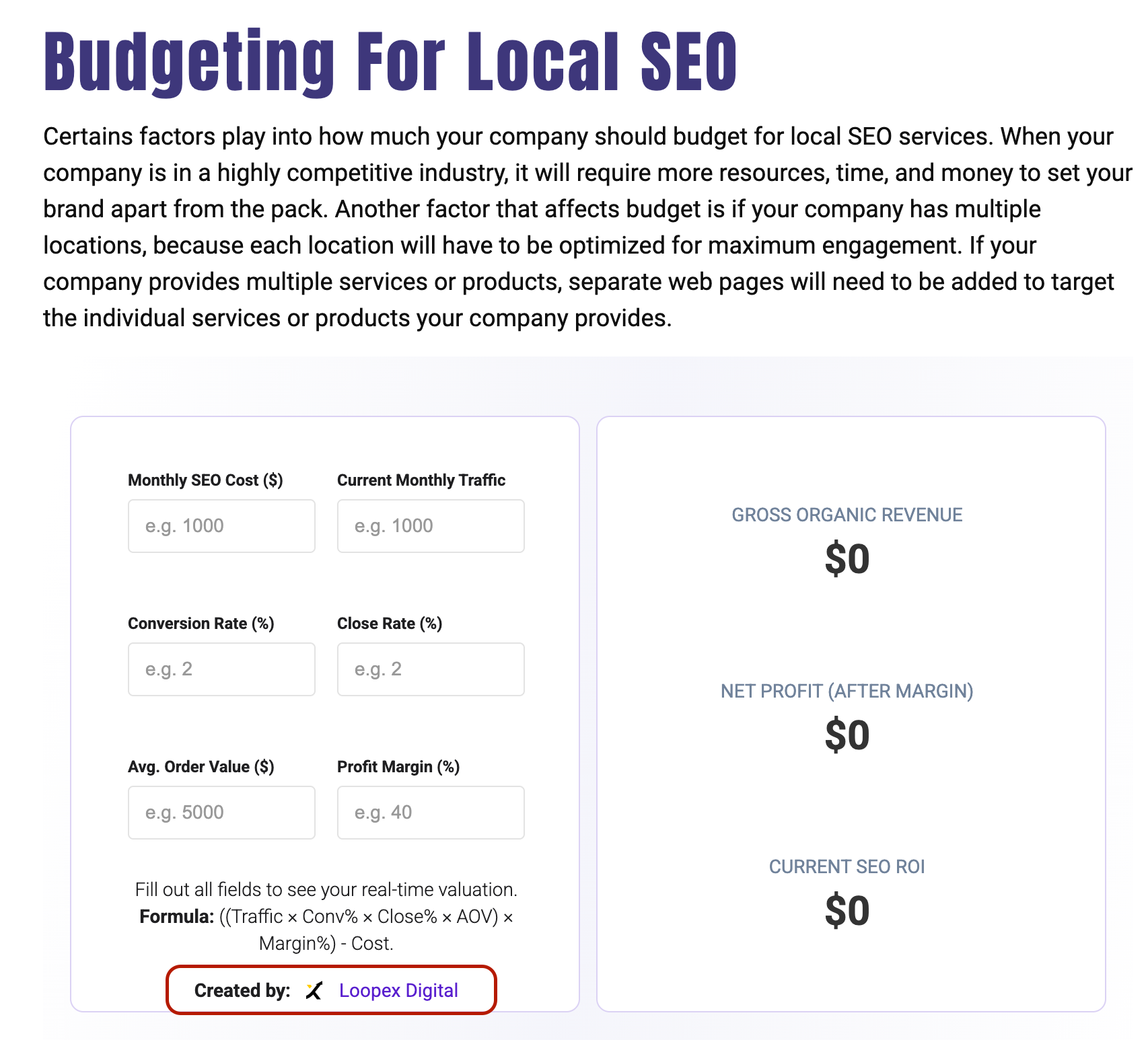
These work because they show up in articles that explain the underlying concept. Someone writes a 2,000-word guide to calculating alcohol by volume, and the natural conclusion is "or just use this calculator." That's a link you'll never have to ask for.
3. Original Research and Data Studies
If you have access to proprietary data, like customer survey data, product usage data, or industry benchmarks, original research is one of the highest-ROI assets you can publish.
Ahrefs' 2023 study claiming "96.55% of Content Gets No Traffic From Google" is the canonical example. It's been cited thousands of times in SEO articles because journalists and bloggers need a number to support their argument, and Ahrefs gave them one with a methodology behind it.
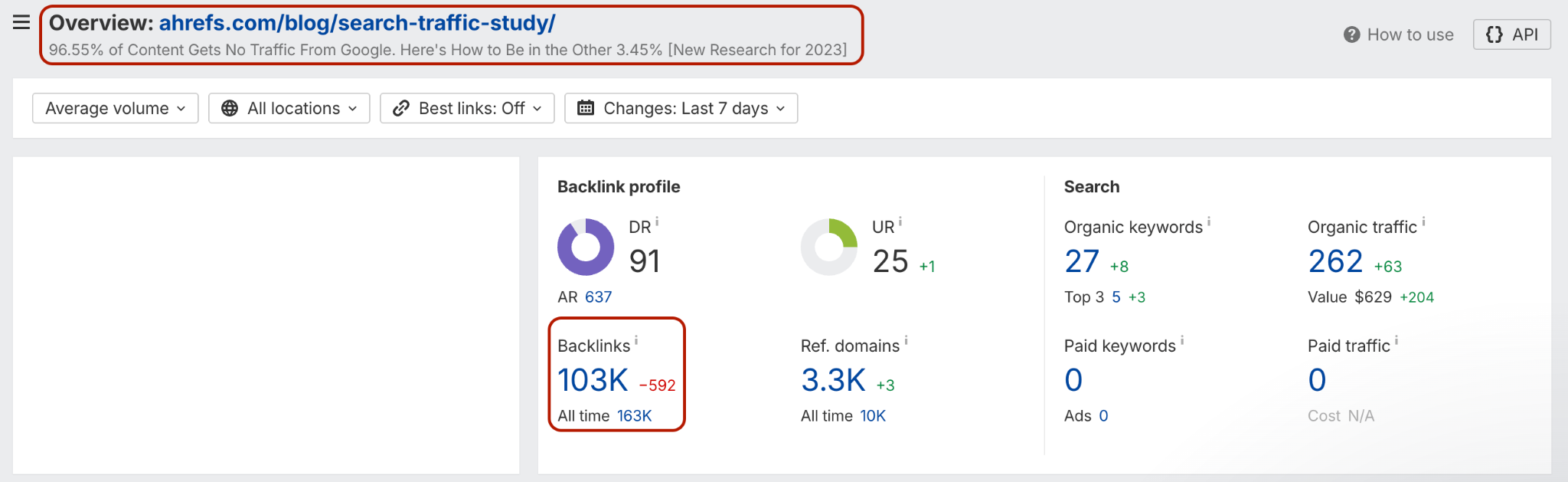
The bar here is doing real work. Don't just publish opinions framed as findings. Survey actual customers, analyze actual data, and write a clear methodology section. The combination of a counterintuitive headline finding plus a credible methodology is what gets cited.
A realistic timeline for these types of linkable assets is 6-12 weeks to manage the survey design, go through a process, and turn it into a published report.
This original research will also help your website with Generative Engine Optimization, and if you further develop it, it can serve as a solid foundation for a digital PR campaign.
4. Definitive Guides and Tutorials
Long-form, detailed guides still earn links in 2026, but the bar has risen. Thousands of 2,000-word "ultimate guides" are flooding the search engine.
To rank and get links with a guide or tutorial, you need to become the best resource on their topic - detailed, simple, custom visuals, original examples, and real expertise.
The compounding move with these is to update them aggressively and highlight the dates of those updates.
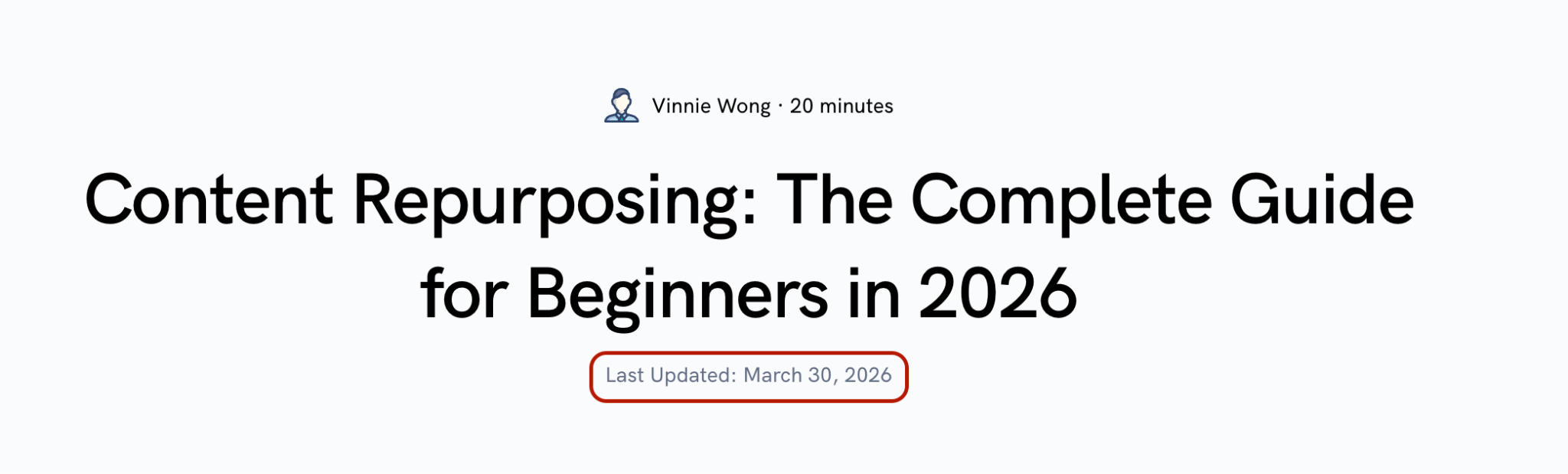
If you're going to commit to a definitive guide, plan to update it twice a year minimum.
5. Statistical Roundups
Aggregating other people's research into one well-organized page is a surprisingly durable tactic. We actively use this strategy with our SaaS clients.
For example, for WaveConnect, we wrote a set of highly searched statistics topics related to their niche in digital business cards. Not only did they start ranking really high, but the pages for business card statistics got 103 organic links and 69+ referring domains!
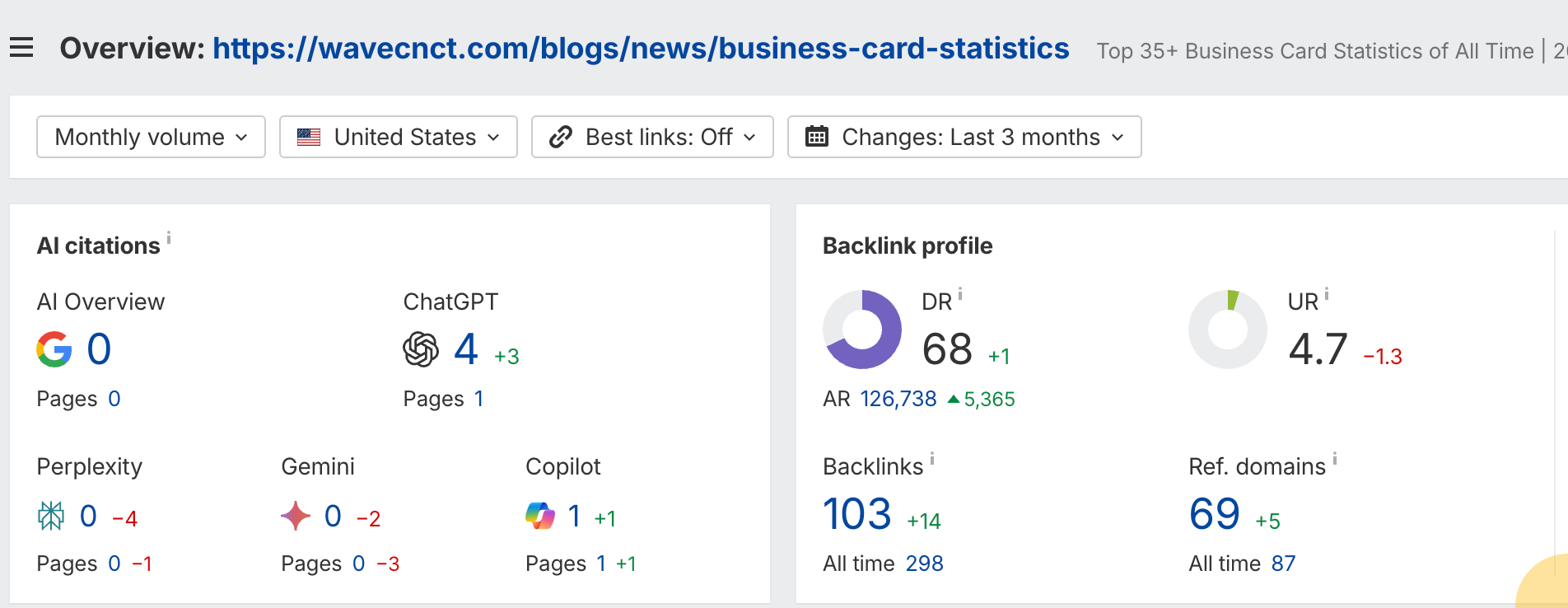
You can read more about the techniques we used and the results in our case study.
These work because writers in your niche need stats to back up their articles. Instead of digging through 40 different studies, they Google "[topic] statistics," find your roundup, and grab three or four stats with a link to your page as the source.
The execution is what separates good roundups from bad ones. Group stats by use case, update them at least annually, and link to the original sources (this also makes other publishers more likely to trust your page).
6. Visualizations and Infographics
This category has cooled significantly since its peak around 2015-2018, but it still works for genuinely visual data. The keyword is "genuinely." If the information is just as clear as text, an infographic adds nothing. If it's spatial, temporal, or comparative in ways text struggles to convey, a visualization can earn serious links.
Map-based visualizations (where data varies by geography), timeline visualizations, and process flows are the formats that still produce results.
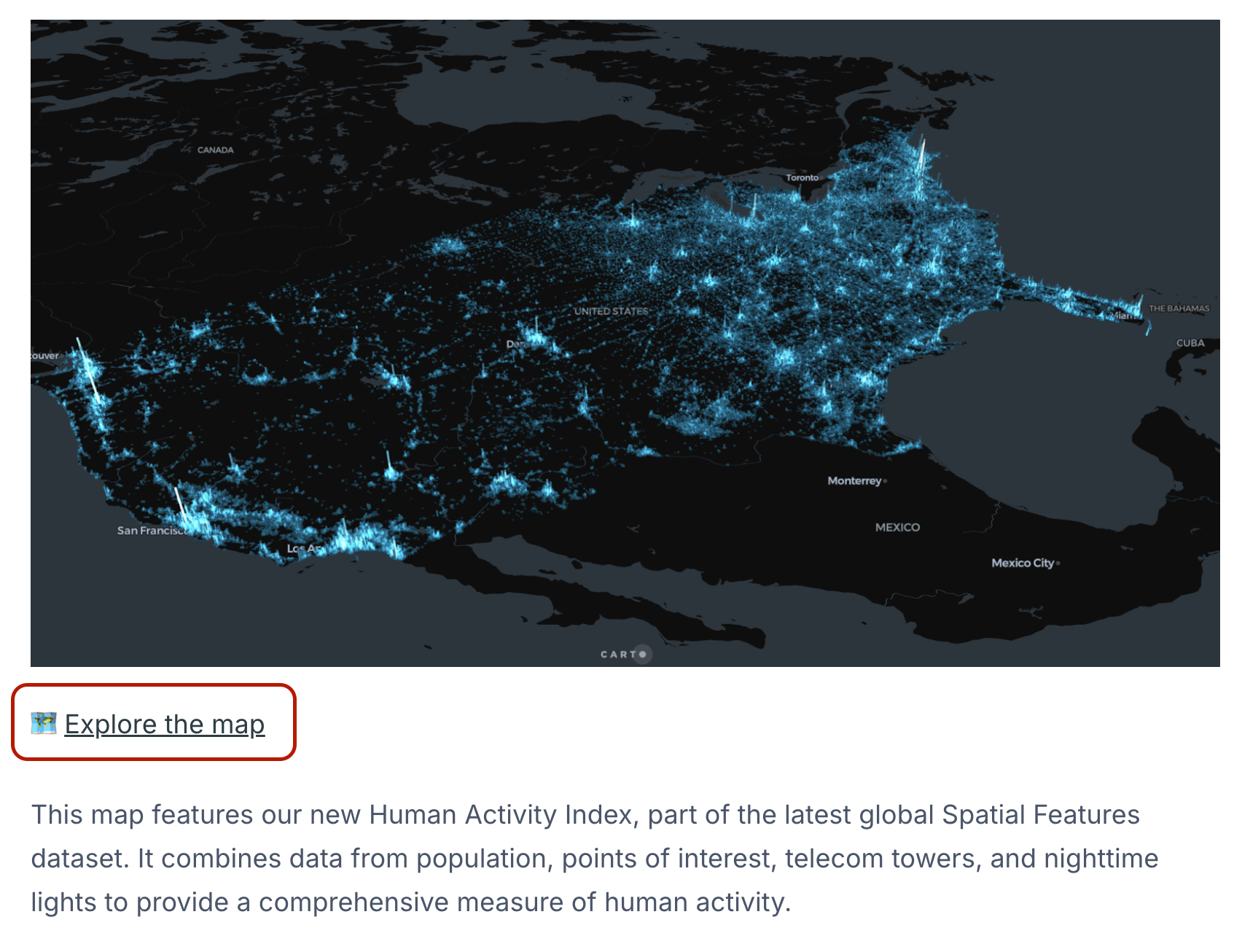
Skip this category unless your data is genuinely visual. A generic "10 AI Agent Usage Tips" infographic isn't earning anyone links in 2026.
7. Templates, Checklists, and Cheatsheets
This is a lowest-effort linkable asset category, which is both an advantage and a limitation. Free templates, such as Excel budget templates, project management templates, content briefs, and social media calendars, are linked from articles that walk readers through a process.
ProjectManager has built a significant portion of its backlink profile on free templates.
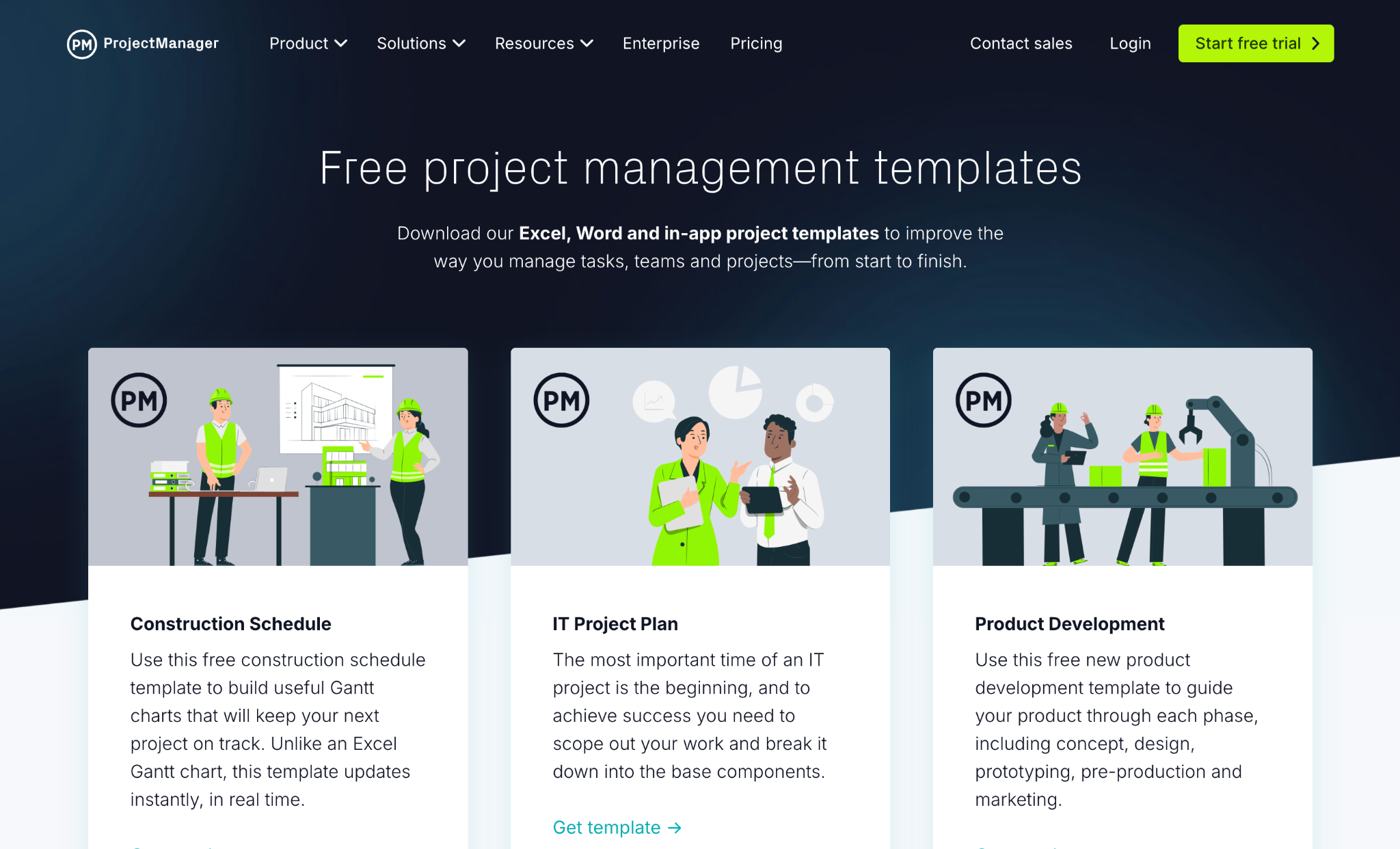
The logic behind this is that when someone writes "how to plan a marketing budget," they need an example template to give readers; they link to yours.
In many cases, these templates and checklists are shared in communities like Reddit and become forum backlinks as well.
Note: Don't expect any single template to go viral. Expect a slow accumulation of links across a library of 20-50 templates over a year or two.
How to Generate Linkable Asset Ideas (Using AI)
Here's a workflow that takes about 15 minutes and gives you 15+ usable ideas for any niche.
Step 1: Generate the raw list
Open ChatGPT or Claude and feed it this prompt template:
Pretend to be an expert growth marketer & SEO strategist. Come up with 15 shareable linkable assets for the [your niche] industry. Consider making a tool, calculator, generator, visualization, quiz, database, map, tracker, or micro app that journalists, bloggers, Reddit users, & social media content creators will want to link to. Make sure these assets are inexpensive to make, easy to understand, emotional, and have natural backlink potential. Provide me with a name, a single-line explanation, and the kind of website that will want to link to it.
Repeat this for your industry, but vary the wording by replacing linkable asset with tool, calculator, data study, etc.
Step 2: Filter ruthlessly
You're looking for three things in every idea:
- Quick to create: Can it be built within one week?
- Easily explainable: Can its concept be explained in one sentence?
- Able to cite: Would a journalist citing this asset actually hyperlink to it?
If your idea doesn’t pass any of the above, ditch it immediately. In most cases, you will have 3-5 valid options out of the initial 15.
Step 3: Validate with competitor analysis
Once you've chosen one of the options for further development, do an additional verification.
Enter the top competitors' websites in the Ahrefs Site Explorer and open the Best by Links report. Sort the result by Referring Domains and identify types of content that bring in links.
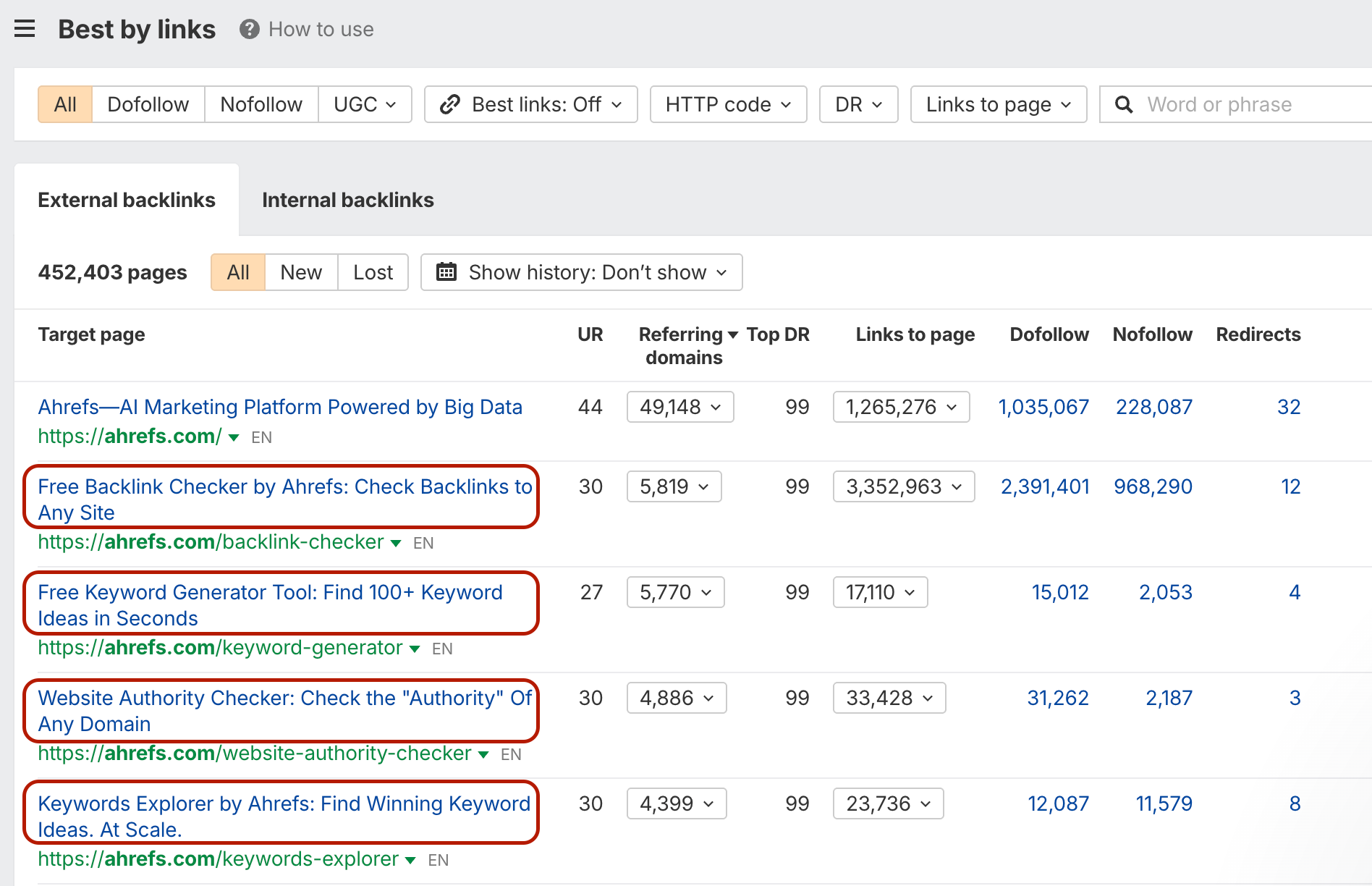
You’re searching for patterns - are calculators popular in your niche? Or perhaps your target audience loves guides and case studies? Find areas where you can outrank or offer an alternative.
How to Build Linkable Assets (Even Without a Developer)
It wasn’t so long ago when creating any kind of calculator required hiring a developer, writing a technical specification, and then spending 4-8 weeks on development. Not anymore.
The tools worth using in 2026:
- Claude, ChatGPT, or Cursor for code generation, if you have any technical background
- Lovable, v0, Bolt, or Replit for prompt-to-app workflows where you describe what you want and get a deployed tool
The workflow looks like this:
- Describe the tool clearly (input, output, the logic in between),
- Iterate on the UI through follow-up prompts, deploy it to a hosting platform,
- Test it on real users.
A reasonably motivated marketer with no coding background can ship a calculator or simple tool in 4-8 hours.
Standalone domain vs. subdirectory
You have a strategic decision once the tool is built: where does it live?
- On a subdirectory of your main site (yourdomain.com/calculator). All link equity flows directly to your domain. Best for SEO. The downside is that it’s less memorable and harder to brand as a standalone product.
- On a standalone domain (catchy-tool-name.com). Better for social shareability and brand. The downside is that the links point to a different domain than your money pages.
Based on my experience, launching on a catchy standalone domain will maximize initial shareability, and then you could 301 redirect the domain to a page on your main site once it has accumulated links. The redirect passes most of the link equity, and you keep the SEO benefit while having gotten the viral lift from the standalone branding.
For assets that aren't tools (guides, studies, infographics) just publish them on your main site from day one.
How to Distribute Linkable Assets
You could just wait for your linkable assets to be found organically, or you can distribute them through various link building strategies to make them get found faster.
Product Hunt and Betalist
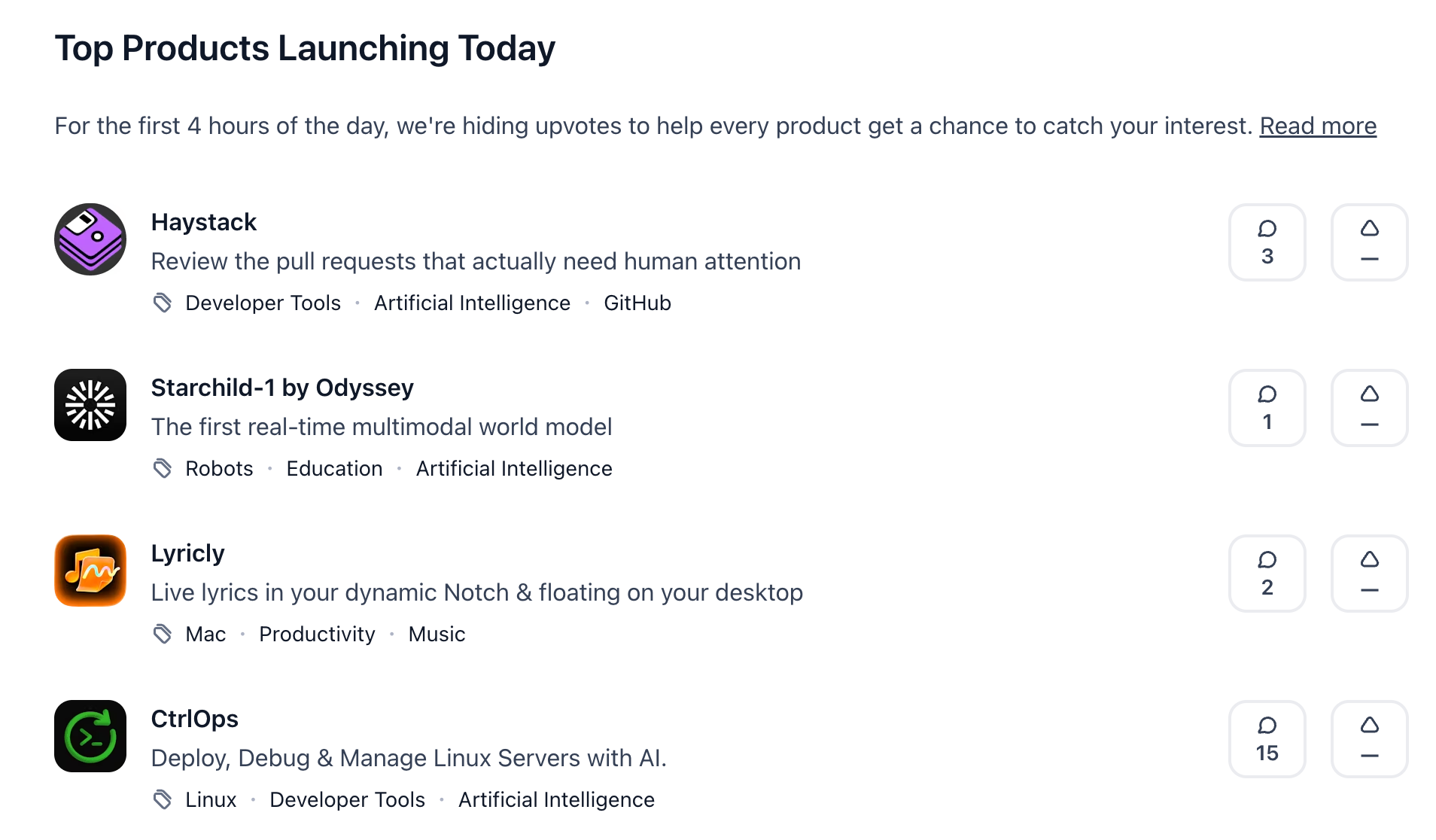
For tools, calculators, and apps, these two platforms are the highest-leverage launch channels. Product Hunt, in particular, brings the initial wave of attention, putting your tool in front of journalists and bloggers.
Journalist outreach
When it comes to studies, data reports, and tools that have a news angle, journalist outreach yields the best backlinks. The flow of things looks something like this:
- Identifying 20-30 journalists who have been covering similar assets/topics in the last six months
- Write personalized pitch letters based on their recent work
- Writing concise and easy-to-scan emails highlighting the name of the asset, its most interesting result, a link to it, and a promise of exclusive data or commentary
To make your efforts easier and faster, there is always a choice of using one of the many specialized link building tools available online, including HARO (Help a Reporter Out), Qwoted, Featured, Help a B2B Writer, Connectively, and others.
Keep in mind that these work for building authority and getting cited in articles that are already being written. Less directly useful for promoting a specific linkable asset, more useful for building the brand recognition that makes future asset launches work better.
Reddit and niche forums
Posting content on Reddit and other niche forums where your target audience already hangs around sounds good. Just remember not to be too pushy about linking back to your tool. Subreddits will ban you for posting a link to your own tool unless you've first contributed to the community. Build some history in the subreddit, post the tool in contexts where it genuinely helps, and don't repost it across 30 subreddits in a single day.
Email to people featured in the asset
For roundups, awards, and statistical compilations, the people you've featured are your best distribution channel. They'll often share the asset with their audience because it flatters them, and a percentage will link to it from their own site.
Internal linking
Often forgotten, sometimes the highest-impact distribution move. Once your asset is published, link to it from your highest-traffic existing pages. This brings the first wave of users, helps Google index it, and signals topical relevance.
What Makes an Asset Linkable
A quick checklist. Before you build anything, the idea should pass all of these:
- Solves a real, recurring problem
- Instantly understandable in one sentence
- Free to use without signup friction (signup gates kill virality)
- Visually polished - looks like a finished product, not a prototype
- Has a clear, memorable name
- Easy to share - clean URL, good Open Graph image, single-click access
- Evergreen, or has a clear plan for updates
If any of these are missing, the asset will underperform regardless of how good the underlying idea is.
Final Thought
The big opportunity right now is that creating great content to get backlinks used to be incredibly hard, but today, it’s incredibly easy. Building a useful web tool used to require a development team. Today, a single person can prompt one into existence in an afternoon.
If you need help building or promoting linkable assets that get backlinks, get in touch. Our team has done it for 300+ SaaS companies, and we'll do it for you too.