%20(250%20x%20100%20px).png)




I'm about to share the 13 best link building tools our SaaS link building agency has used and tested with our clients.
These tools tackle the biggest link building headaches: finding the right prospects, getting verified contact details, sending outreach that actually gets replies, staying organized, and fixing backlink issues fast if they come up. Let’s dive in.
What Is a Link Building Tool?
A link building tool is software that helps you find backlink opportunities, manage outreach, or monitor the links you already have, or some combination of all three.
The category is wider than most people realize. It includes:
- Backlink analysis platforms (Ahrefs, Majestic) that show you who links to whom
- Outreach CRMs (Pitchbox, Respona) that manage the send-track-follow-up workflow
- Email finders (Hunter.io) that get you past the "contact@" wall
- Journalist platforms (HARO, Qwoted) that flip the dynamic so reporters come looking for sources
- Backlink monitoring tools (Monitolink, Screaming Frog) that tell you when what you've built disappears and help get it back
In this list, I’ve included all five categories.
How I Selected These Tools
This list is based on my personal and team experience. My team consists of highly professional link builders, and together we've tried almost all available link building software. I've discussed all the details with them to compile my own experience with theirs and provide a list of tools you should use.
The first criterion that I took into account when selecting the tools was whether the tool saves your time and effort.
For instance, a prospecting tool will be of no help if it returns 1,000 websites, but only 10-15 of them can be considered valuable. This is certainly not an efficiency improvement; this is rather a waste of time.
And so, here's the list of criteria according to which the software has been tested:
- Quality and currency of data
- Fidelity to a campaign outreach process
- Transparent pricing model depending on the number of team members
- Downsides of the product, as every tool has its drawbacks
- Actual target audience vs marketing targets
Now, let’s take a look at the tools themselves.
The 13 Best Link Building Tools in 2026
1. Ahrefs - Best for Backlink Research and Competitor Intelligence
Ahrefs runs the second-most-active web crawler after Google, and its backlink index is updated every 15-30 minutes. That matters when you're trying to spot a competitor's new link acquisition before everyone else does.
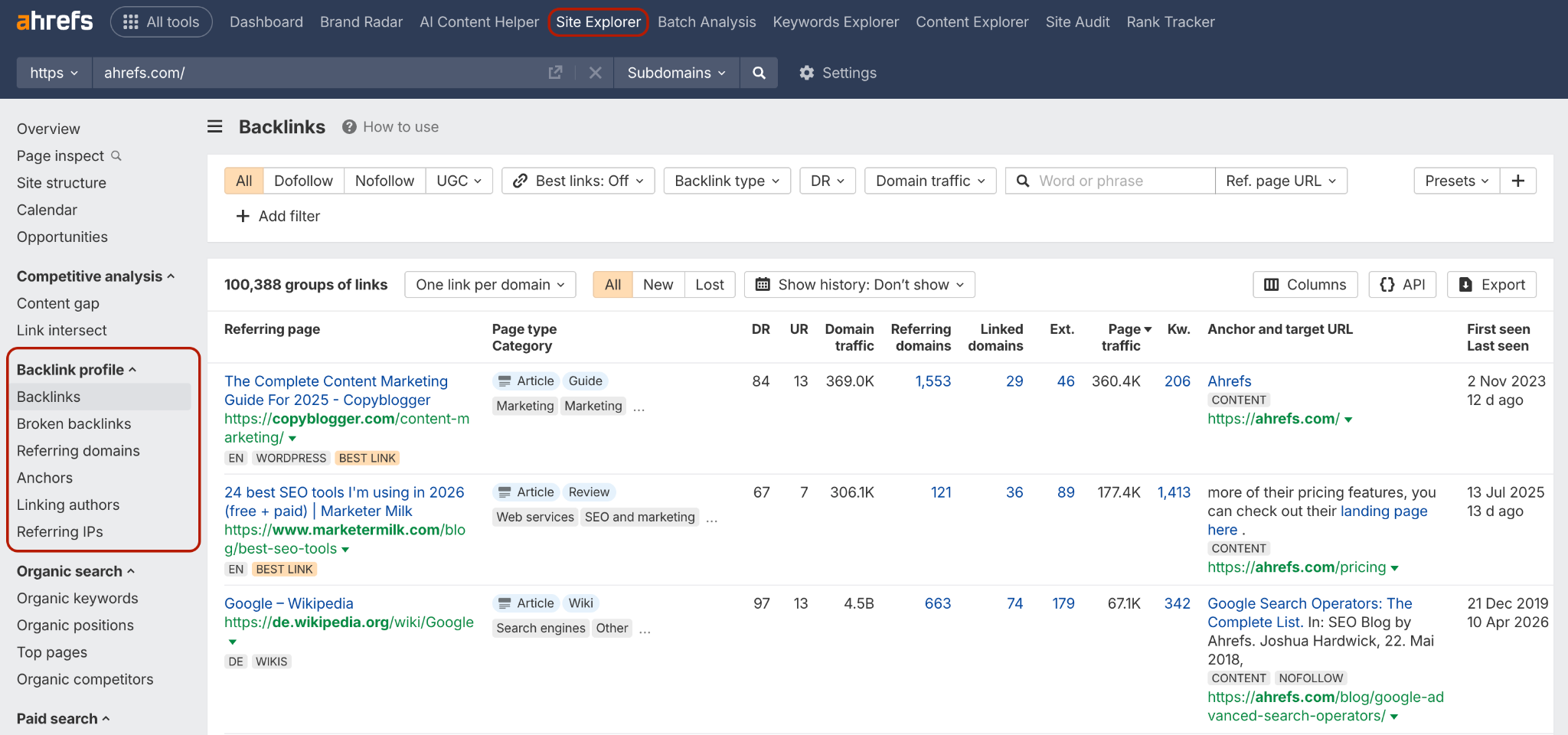
The most used feature will be the Site Explorer. You enter any domain, and you get a complete picture: every referring domain, every anchor text pattern, link growth trends, new and lost links, and a breakdown of link types.
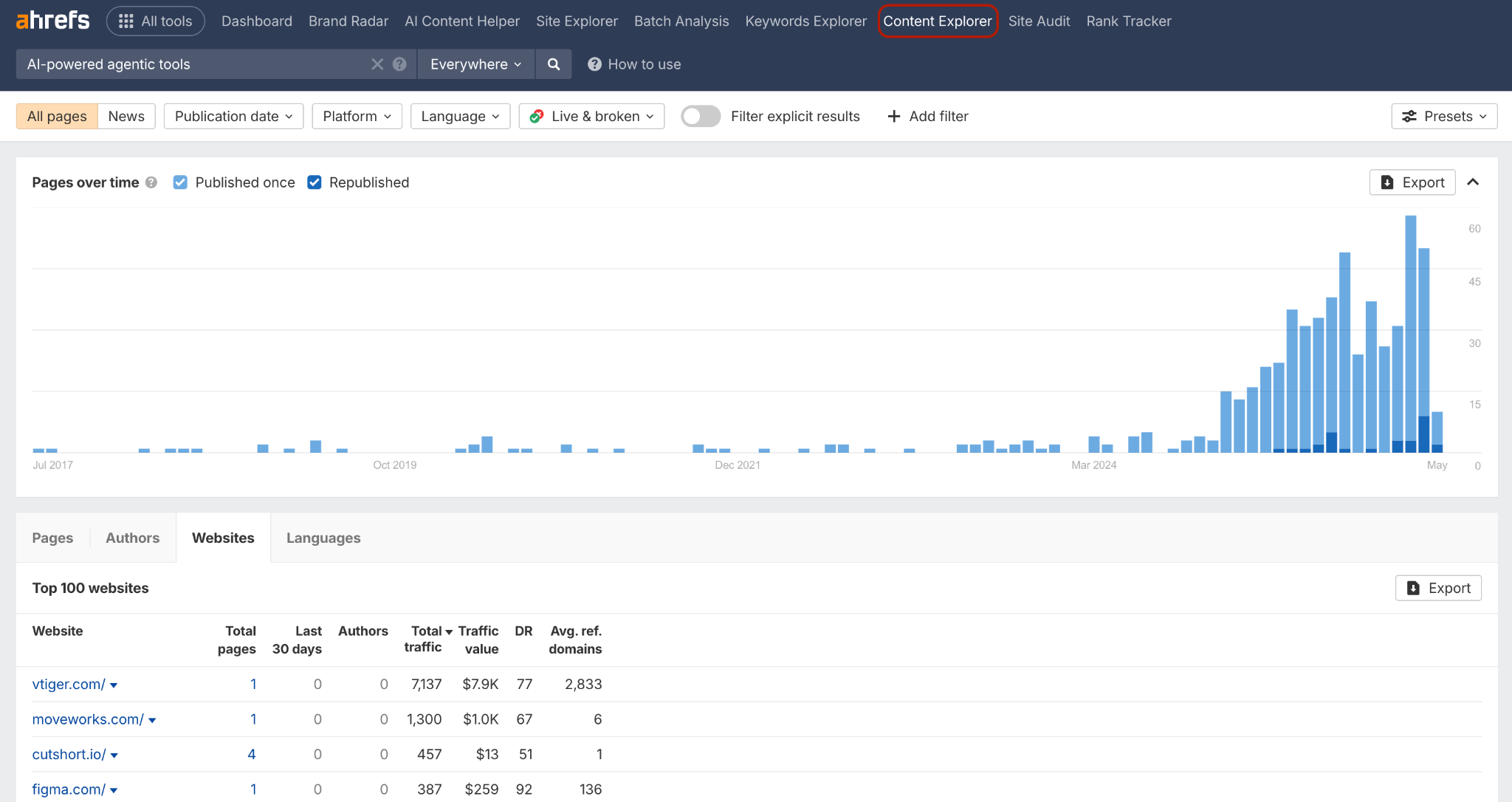
Most link builders underuse Content Explorer. It's essentially a search engine that finds the most-linked and most-shared content on any topic. You can use it to identify linkable asset formats before you invest in creating them, and to find who's already linking to similar content in your niche.
Key Features
- Site Explorer with 44+ trillion backlinks, updated every 15-30 minutes
- Backlink Gap comparison across up to five competing domains
- Content Explorer for link prospecting by topic
- New and lost backlink alerts
- Broken link finder for competitor replacement opportunities
Pros and Cons
Pricing
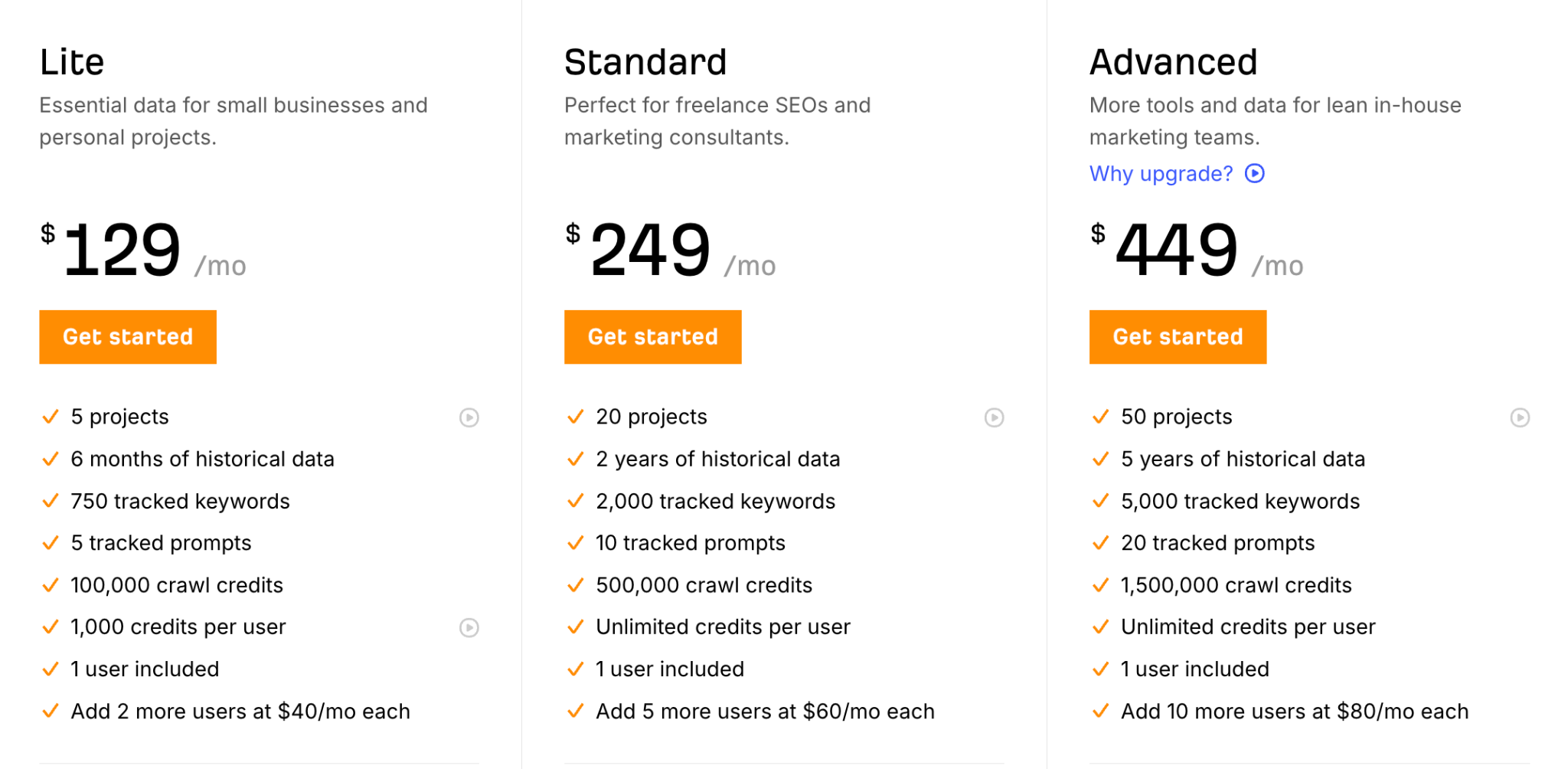
- Starter $29/month (no substantial link-building support)
- Lite $129/month
- Standard $249/month
- Advanced $449/month
- Enterprise $1449/month
Note: Ahrefs does have some free features/microtools, but they only provide surface-level information and are not full-time use link building tools. That being said, they have 3 free microtools you can check out:
- Free Backlink Checker
- Website Authority Checker
- Broken Link Checker
2. Semrush Backlink Gap - Best All-in-One Pipeline from Research to Outreach
The Backlink Gap tool is where most link building campaigns inside Semrush start. Enter your domain alongside up to four competitors, and it generates a comparison table showing every referring domain, sortable by Authority Score (AS in the screenshot below).
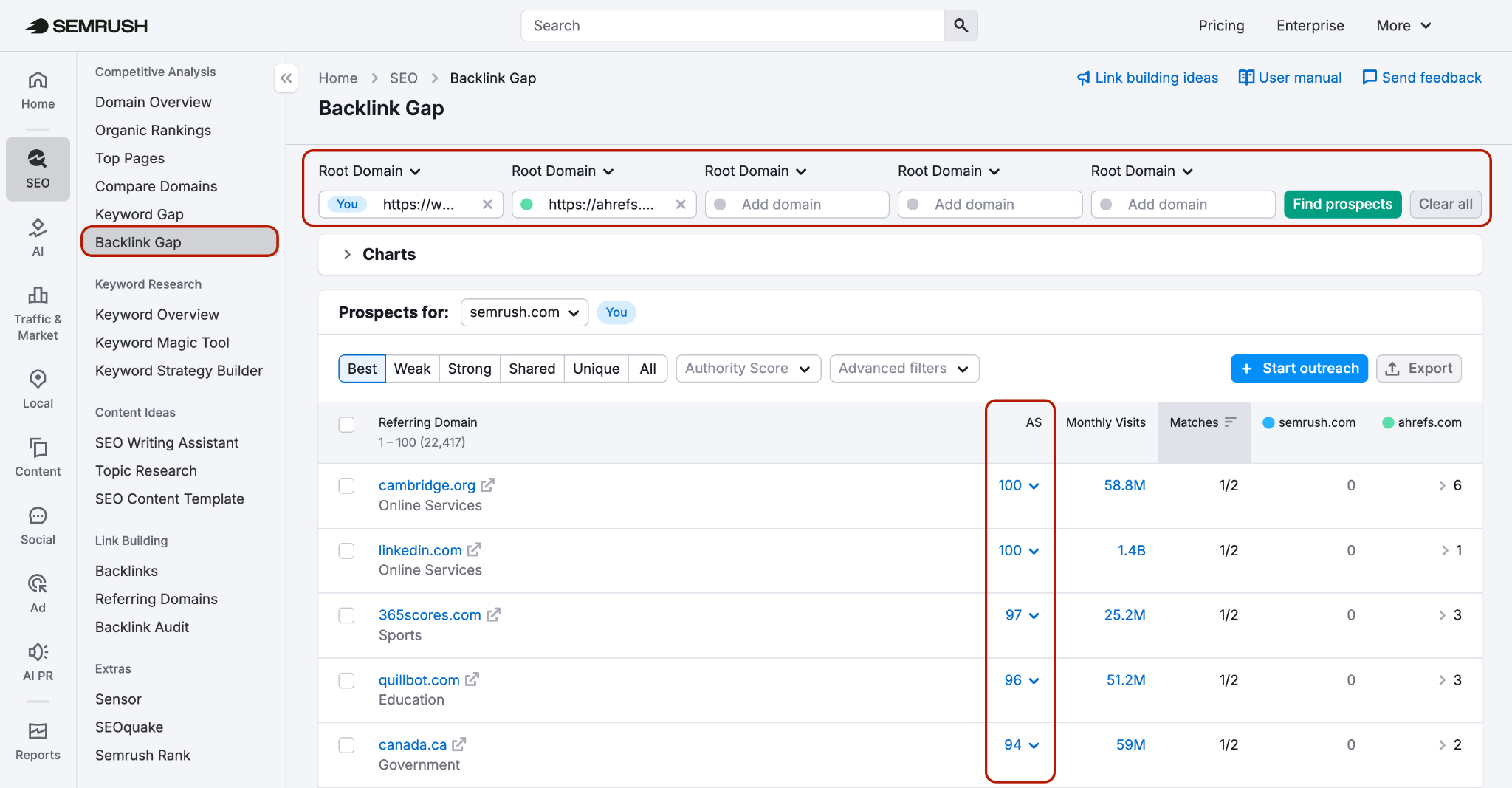
Sites linking to multiple competitors but not to you are the highest-priority targets. They've already demonstrated willingness to link in your space.
From there, prospects feed directly into the built-in Link Building Tool, when you click “Start outreach.” Connect your Gmail, write or choose a template, add personalization fields, and send. The system tracks opens and replies, manages follow-up sequences, and shows you the status of every prospect (in progress, contacted, responded, and link acquired).
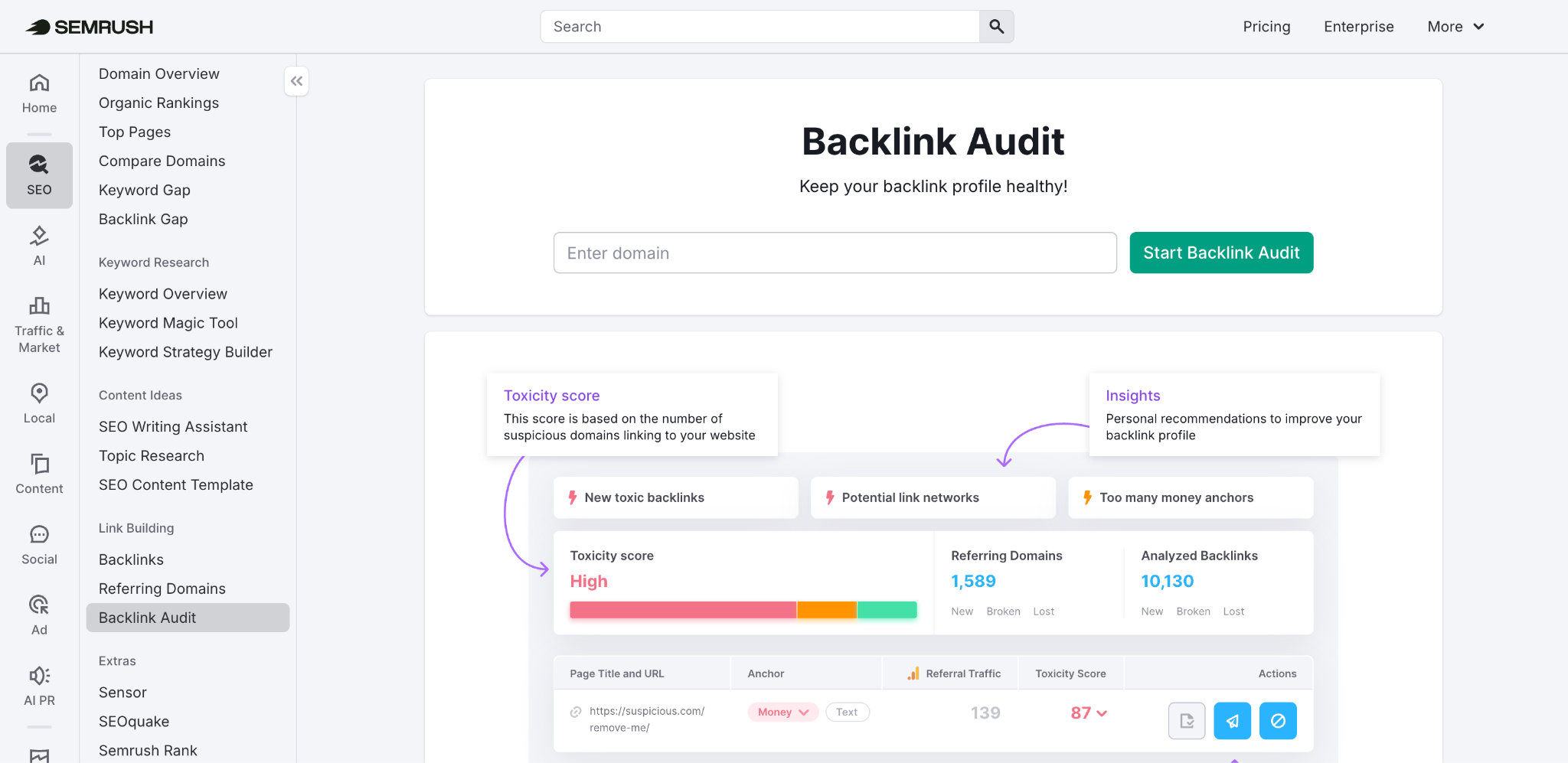
The Backlink Audit tool sits alongside this. It scans your existing profile for toxic links, assigns a toxicity score to each one, and generates a disavow file ready for Google Search Console.
Key Features
- Backlink Gap: compare your domain against up to four competitors instantly
- Built-in Link Building Tool with Gmail integration, sequencing, and reply tracking
- Backlink Audit with toxicity scoring and auto-generated disavow files
- Authority Score metric for fast prospect qualification
- 43 trillion link database, the largest available
Pros and Cons
Pricing
- 10 Free Resquests Available
- 7-Day Free Trial
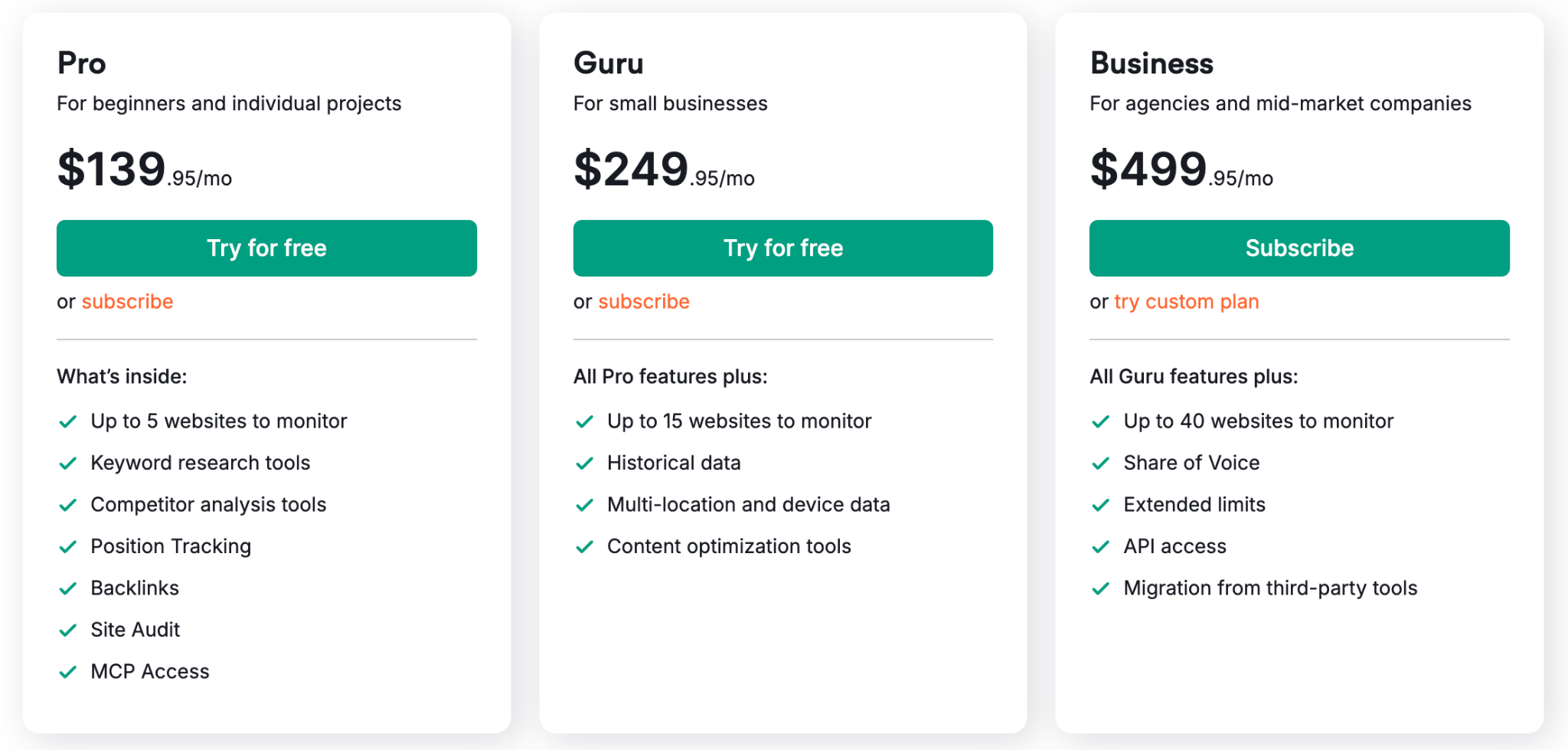
- Pro $139.95/month
- Guru $249.95/month
- Business $499.95/month
3. Majestic - Best for Deep Link Intelligence and Trust Metrics
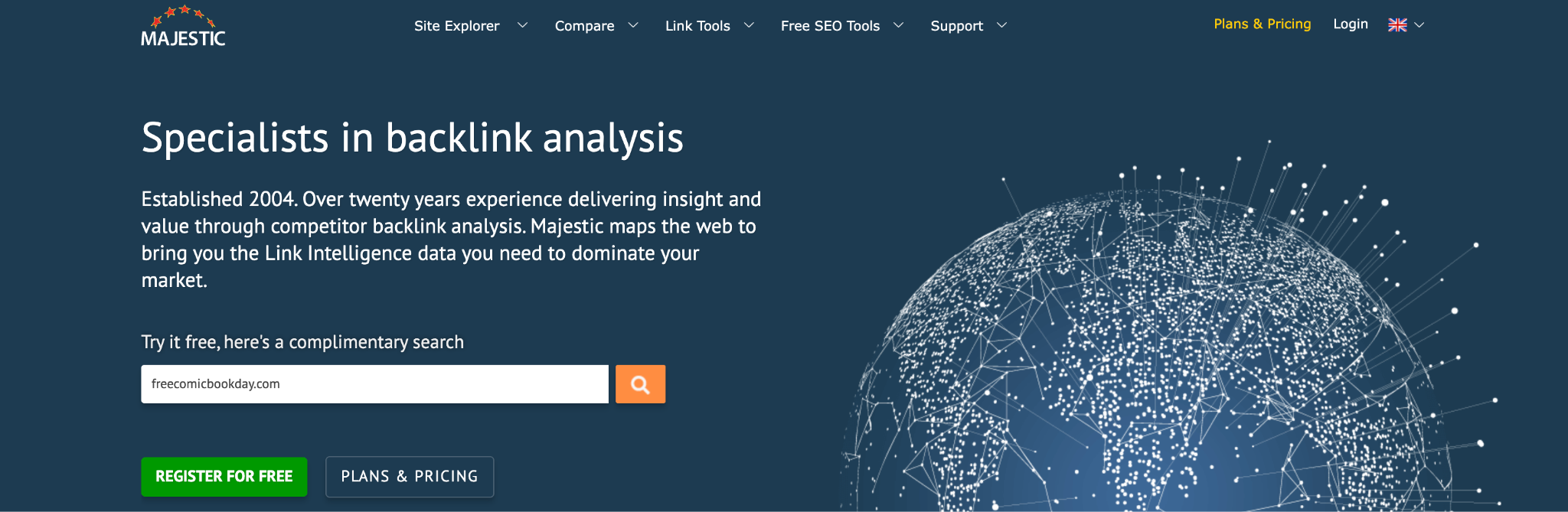
Majestic has been in the market since 2004, and while competitors built keyword trackers and site auditors, Majestic stayed narrowly focused on backlink intelligence. In 2026, that definitely shows in their backlink quality.
Like most link building tools, you start by searching your domain, and get a profile full of information you can use. In Majestic’s case, the backlink intelligence you get is quite deep.
Trust Flow measures link quality - how close a domain's links are to trusted, verified websites. Citation Flow measures link quantity. If Citation Flow is much higher than Trust Flow, it usually means link farms or paid links.
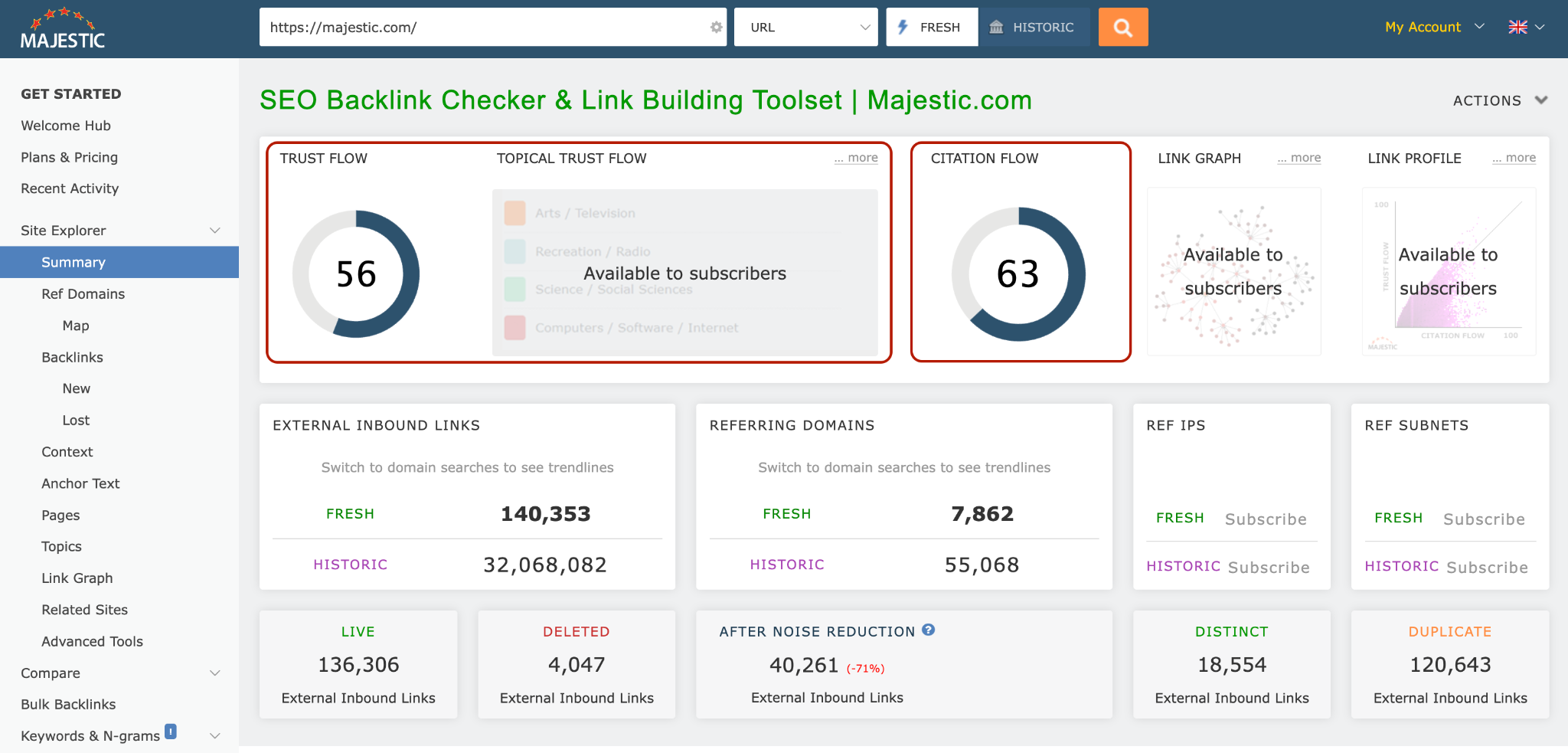
Topical Trust Flow takes it further by showing what topics a domain actually has authority in. If you're building links for a fitness site, a domain with high authority in "Health > Fitness" is worth far more than one with the same overall score spread across random niches.
No other major backlink tool does this.
Key Features
- The industry's most respected link quality metrics - Trust Flow and Citation Flow
- Topical Trust Flow breakdown by content category
- Fresh Index (daily) and Historic Index (back to 2006, 21+ trillion URLs)
- Link Context showing exactly where each backlink sits on the page
- Bulk Backlink Checker for up to one million URLs at once
Pros and Cons
Pricing
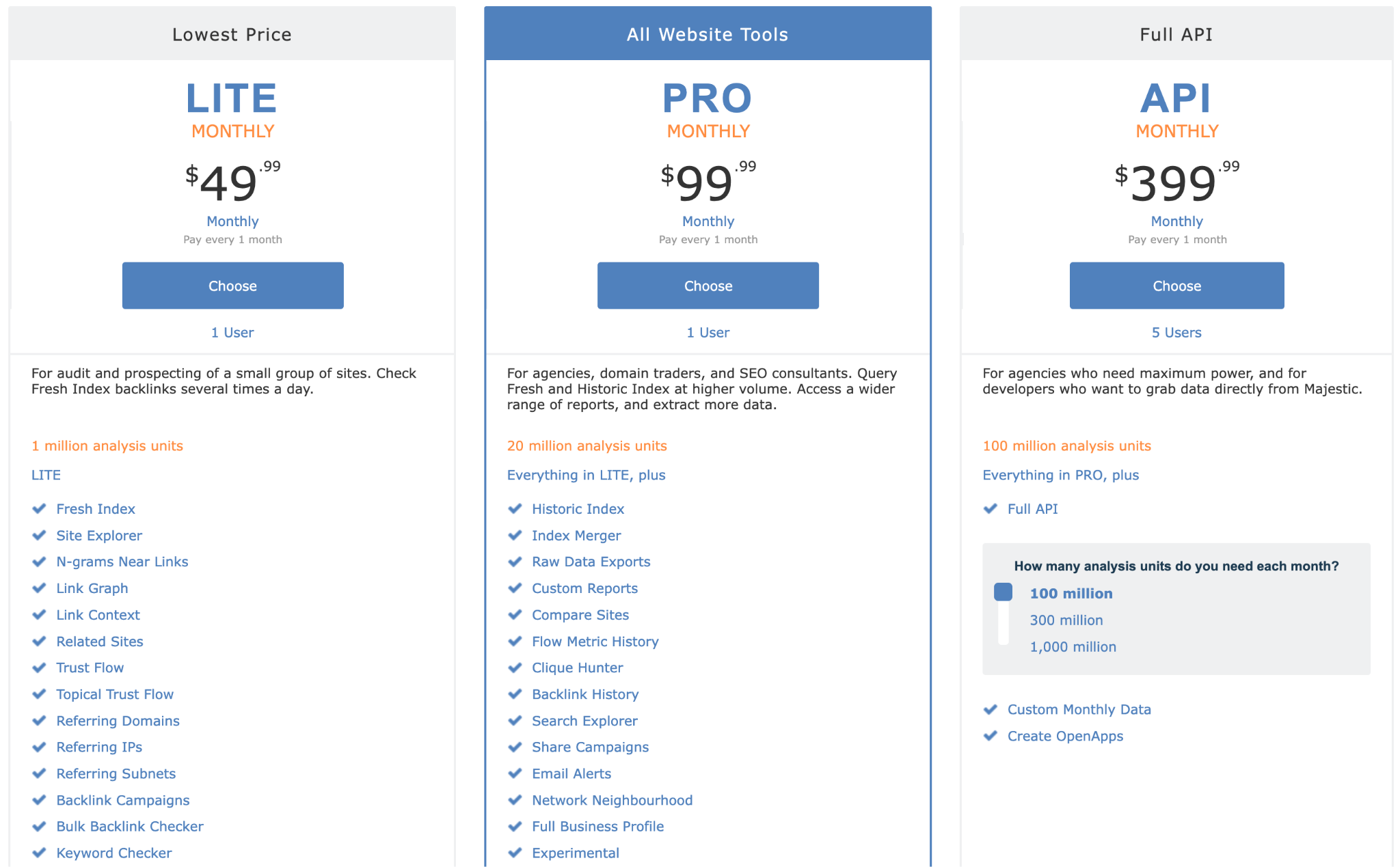
- Lite $49.99/month
- Pro $99.99/month
- API from $399.99/month
Note: There are no free trials or plans, but it has a Free Backlink Checker tool you could use.
4. Mangools (LinkMiner) - Best Budget-Friendly Backlink Analysis Suite
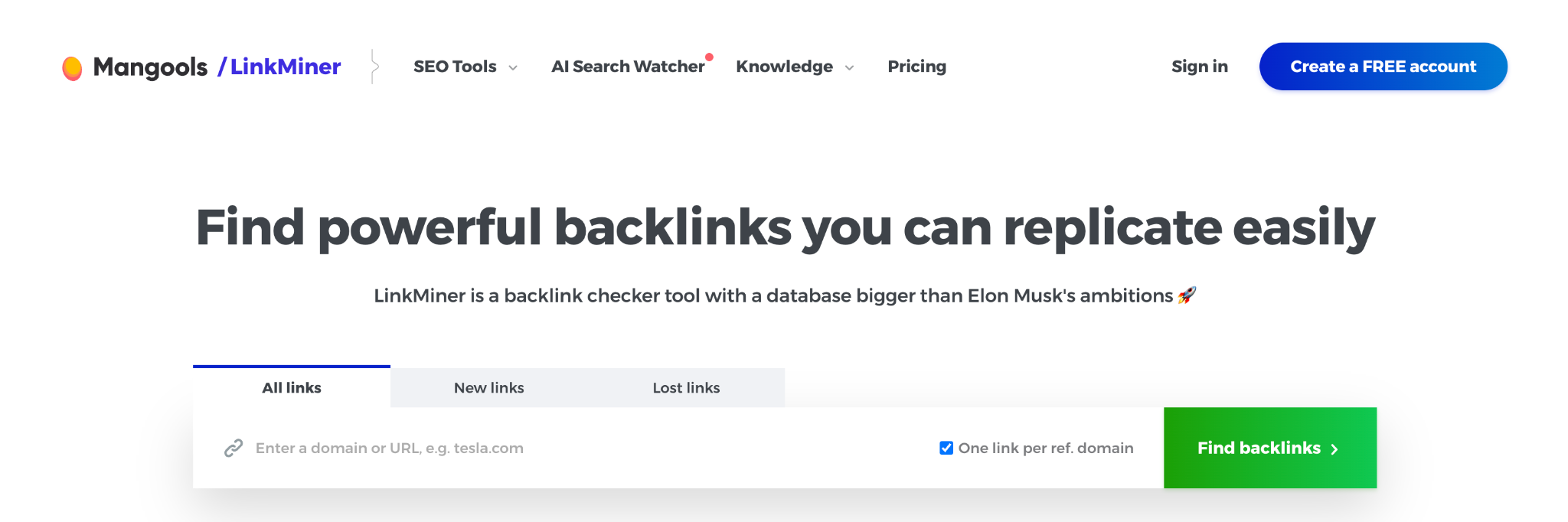
Mangools is a platform that bundles five SEO tools into a single subscription: KWFinder (keyword research), SERPChecker (SERP analysis), SERPWatcher (rank tracking), SiteProfiler (domain metrics), and LinkMiner (backlink analysis).
LinkMiner is what you’d be interested in. It’s powered by Majestic's API, which means you're accessing one of the largest backlink indexes available. Trust Flow, Citation Flow, and Link Strength scores are all present.
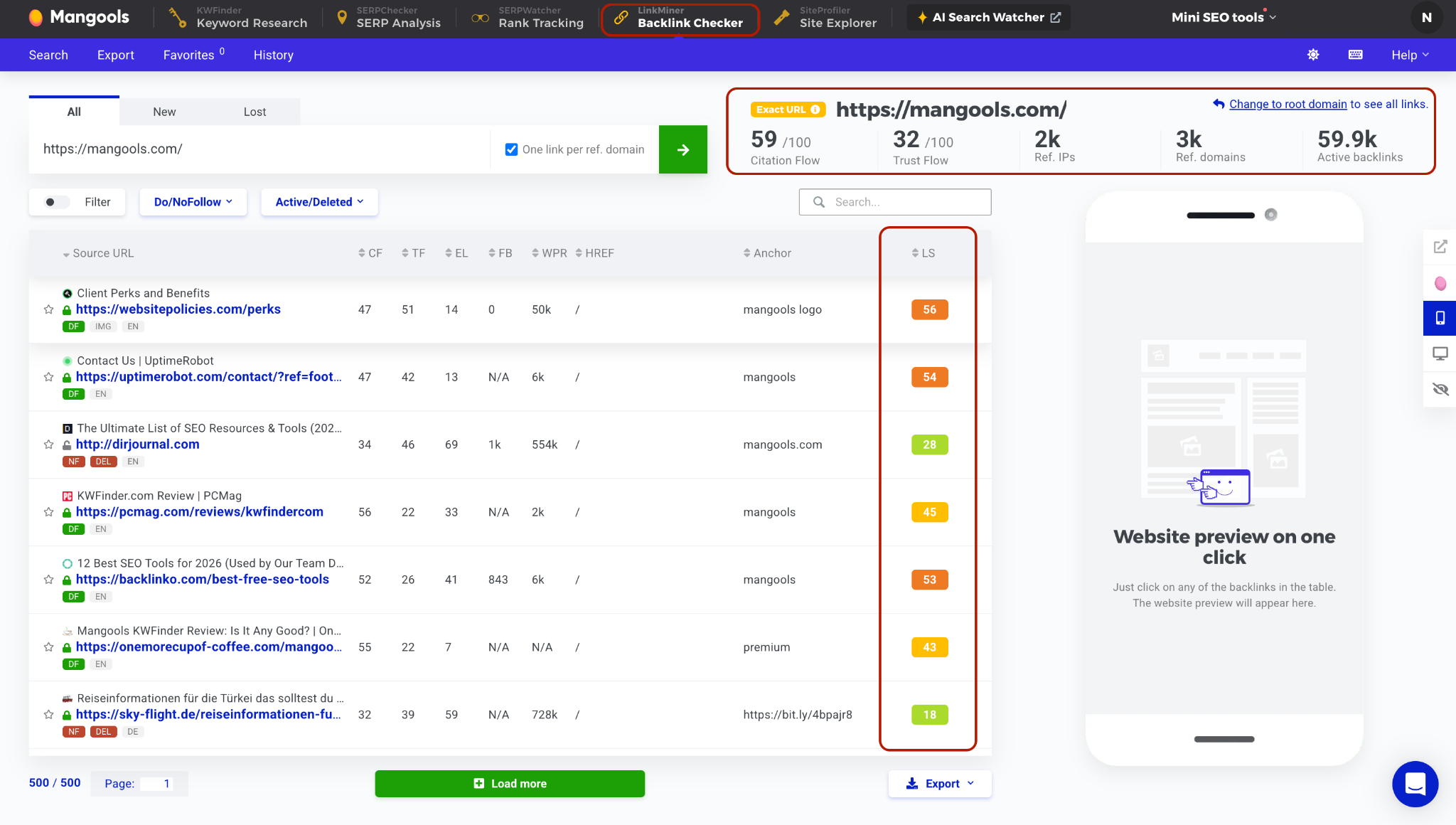
The inline site preview, which shows exactly where a backlink sits on the source page without opening a new tab, is genuinely useful during manual prospect evaluation and something the bigger tools don't offer as smoothly.
It's also worth noting that Mangools added AI Search Watcher in 2025, which tracks how your brand appears across ChatGPT, Gemini, Claude, and other LLM-based search engines. For teams thinking about GEO (Generative Engine Optimization) alongside traditional link building, this is a genuinely differentiated feature.
Key Features
- LinkMiner backlink analysis powered by Majestic's 9.5 trillion link index
- Inline source page preview for fast manual prospect evaluation
- Trust Flow, Citation Flow, and Link Strength scores
- New and lost backlink tracking
- Five-tool SEO suite (KWFinder, SERPWatcher, SERPChecker, SiteProfiler, LinkMiner) in one subscription
- AI Search Watcher for LLM visibility monitoring (newer addition)
Pros and Cons
Pricing
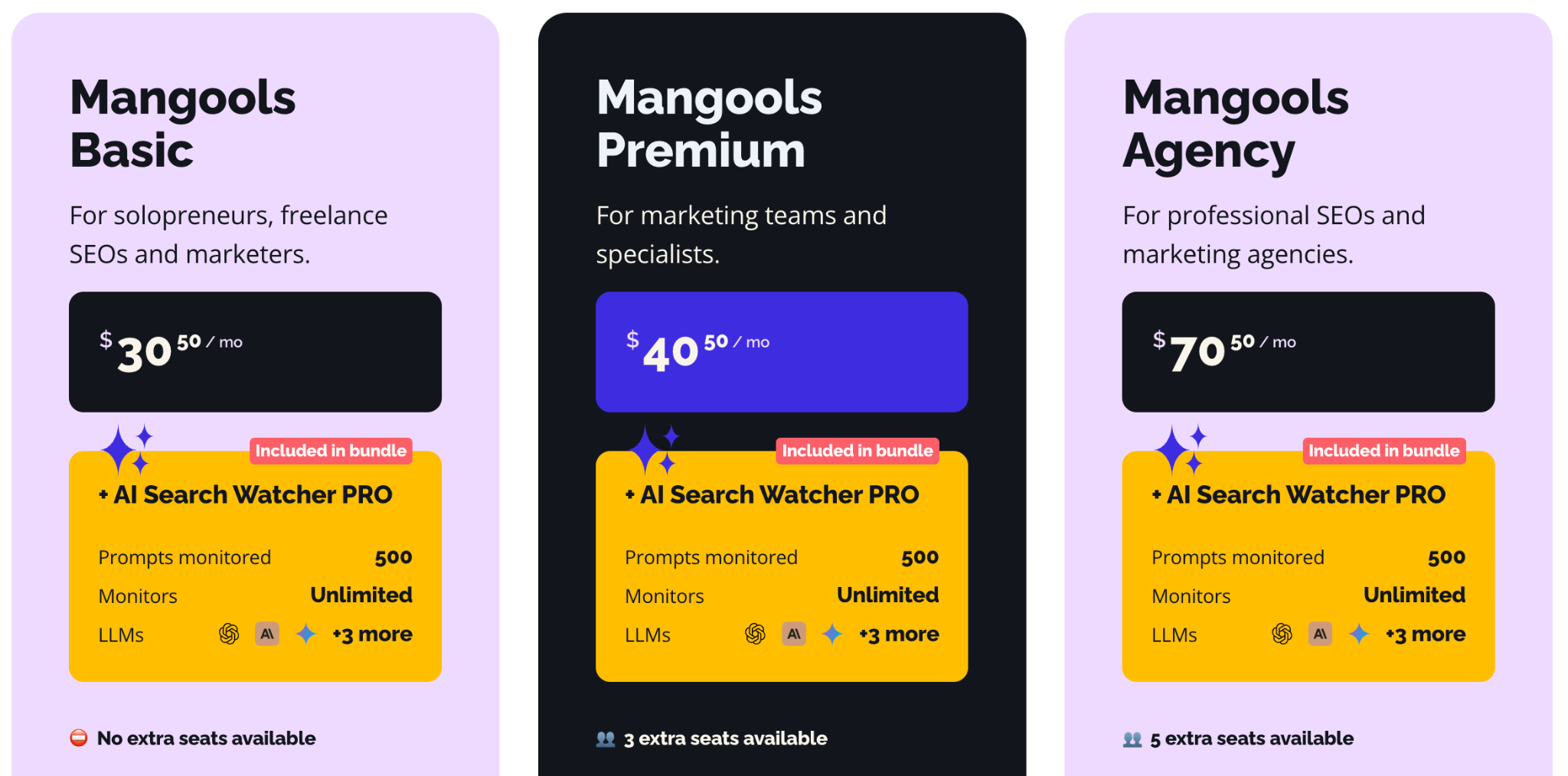
- Free (limited)
- Basic $30.50/month
- Premium $40.50/month
- Agency $70.50/month
Mangools has a 48-hour money-back guarantee for all three plans
5. Linkee.ai - Best Link Building Automation Software
Linkee is an end-to-end link building platform that automates the entire outreach process. It is free to get started. You kick off a campaign by entering a keyword or URL, choosing your link type (guest post or niche edit), and selecting a prospect source:
- Linkee's own database of 12M+ sites,
- a CSV import from Ahrefs or SEMrush, or
- your existing contact list.
From there, Linkee automatically pulls a filtered prospect list with relevancy scores, domain ratings, and organic traffic data already attached.
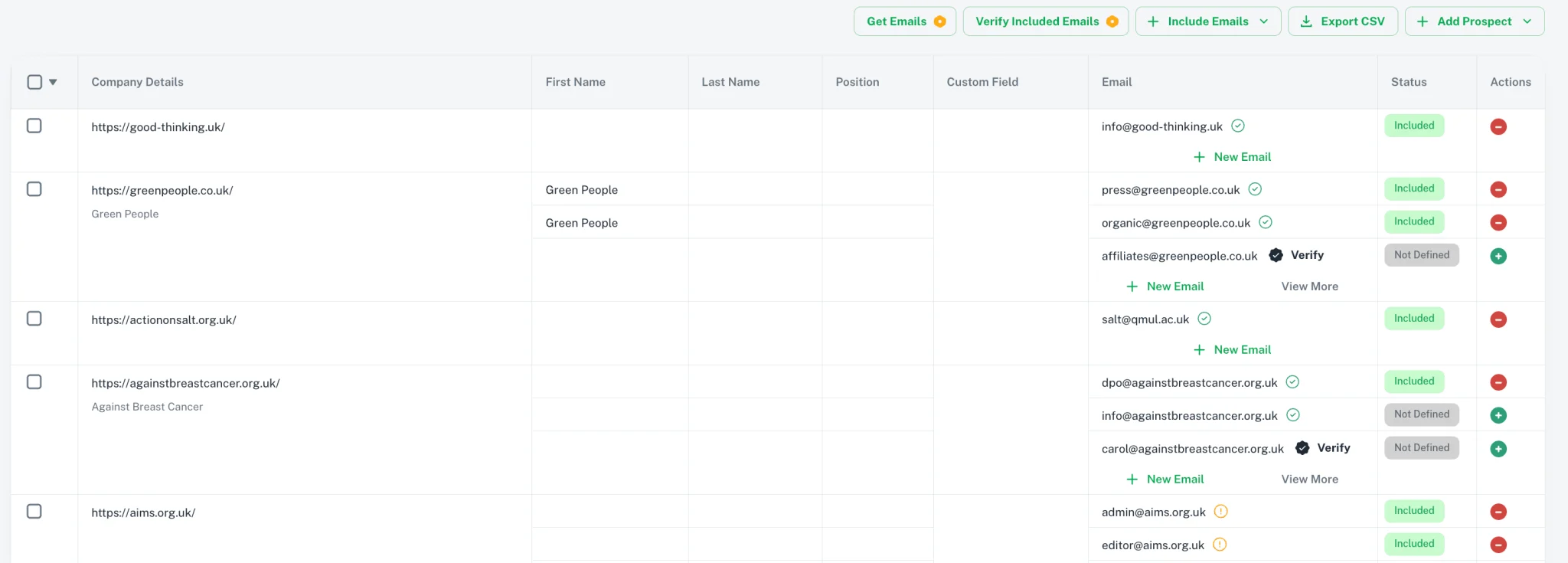
The filtering is where it gets useful fast. You can sort by relevancy score, DR, spam score, niche, and more, then manually approve or exclude prospects with a simple match/mismatch action before anything goes to outreach. It's designed to be quick to pick up, even if you've never run a link building campaign before.
From there, contact finding, email verification, sequencing, and follow-ups all run inside the same platform.
Key Features
- Guest post and niche edit campaign workflows with structured step-by-step setup
- 5M+ website database plus support for importing from Ahrefs/SEMrush
- Contextual relevance scoring between your keywords and prospect domains
- Advanced filtering by DA, spam score, language, word count, and more
- Automated PBN detection, broken link removal, and deduplication
- Built-in email finder with name, position, and third-party integrations
- Email validation to reduce bounce rates before outreach begins
- Website categorization by niche and business type for segmented campaigns
- User role management for agencies handling multiple clients
Pros and Cons
Pricing
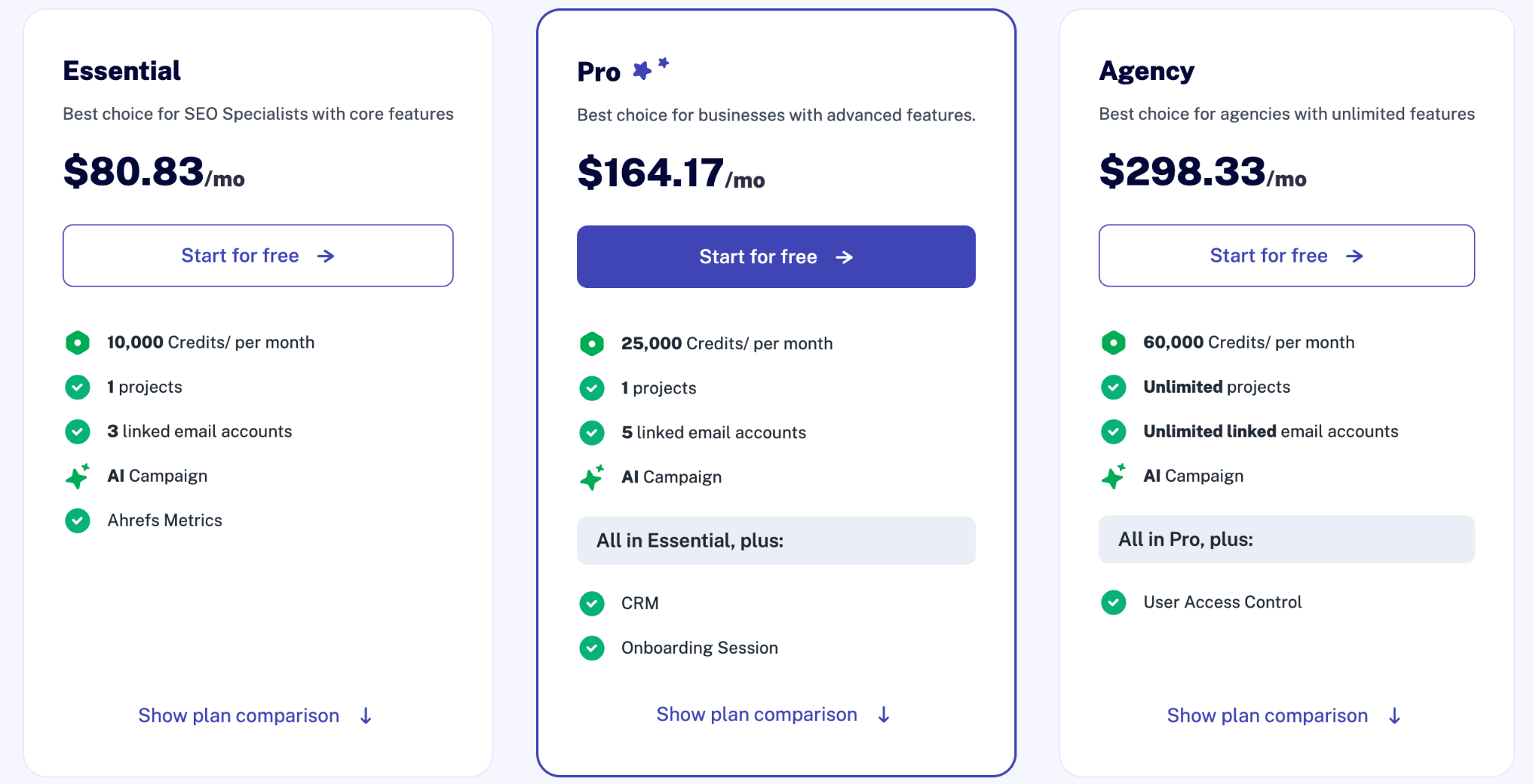
- Essential $80.83/month
- Pro $164.17/month
- Agency $198.33/month
Note: Free trial available for all plans.
6. Monitolink - Best Dedicated Backlink Monitoring & Recovery Tool
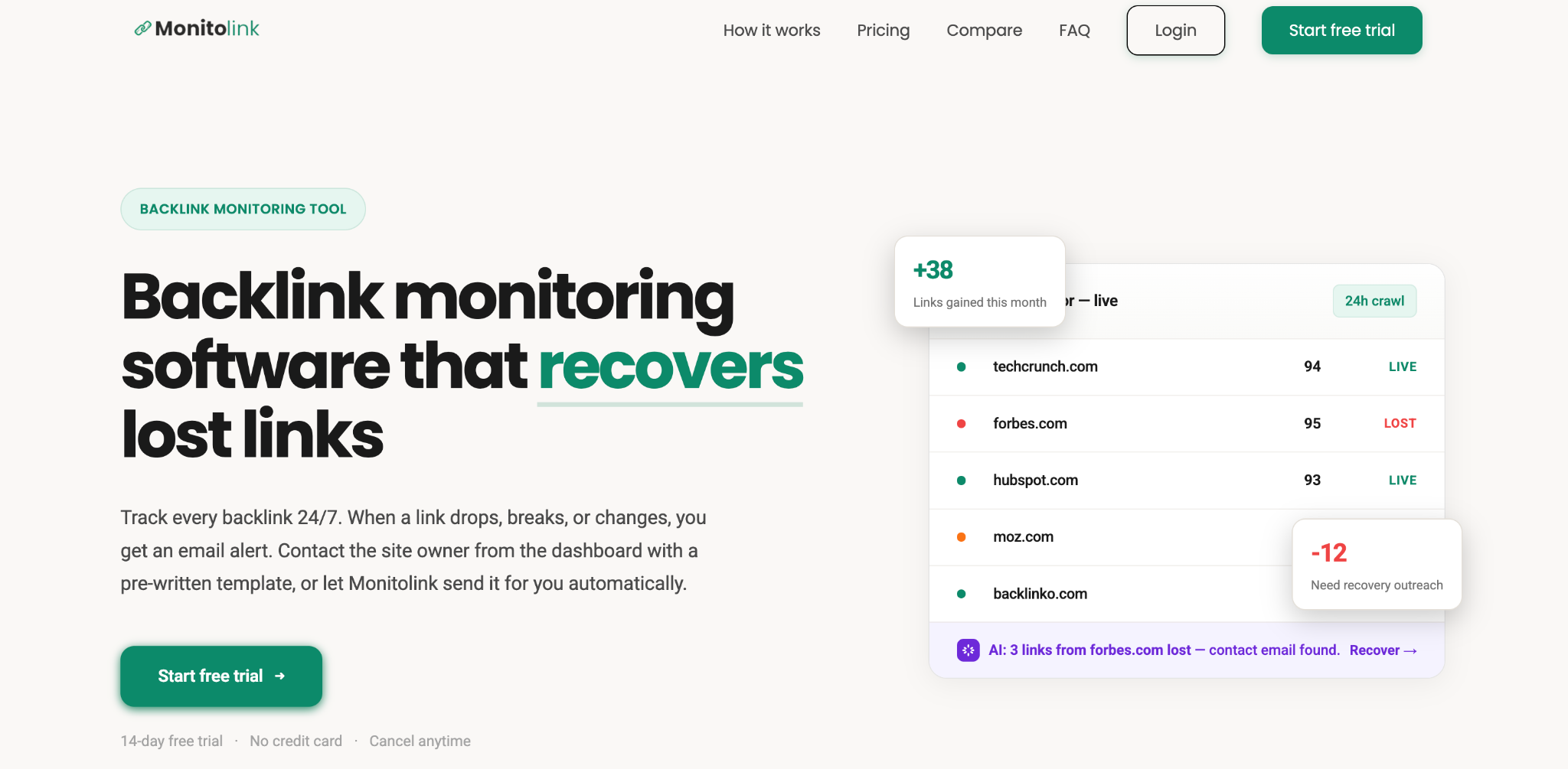
Monitolink is a backlink monitoring tool built to protect the links you've already earned. You use it to track your entire backlink portfolio 24/7, get same-day alerts when a link is lost or changed, and reach out to recover it, without leaving the dashboard. It also surfaces competitor backlink gaps and flags anchor text issues before they become a problem.
To get started, import your backlinks via CSV from Ahrefs, Semrush, or Search Console, assign a contact email and recovery template to each source, and Monitolink handles the rest:
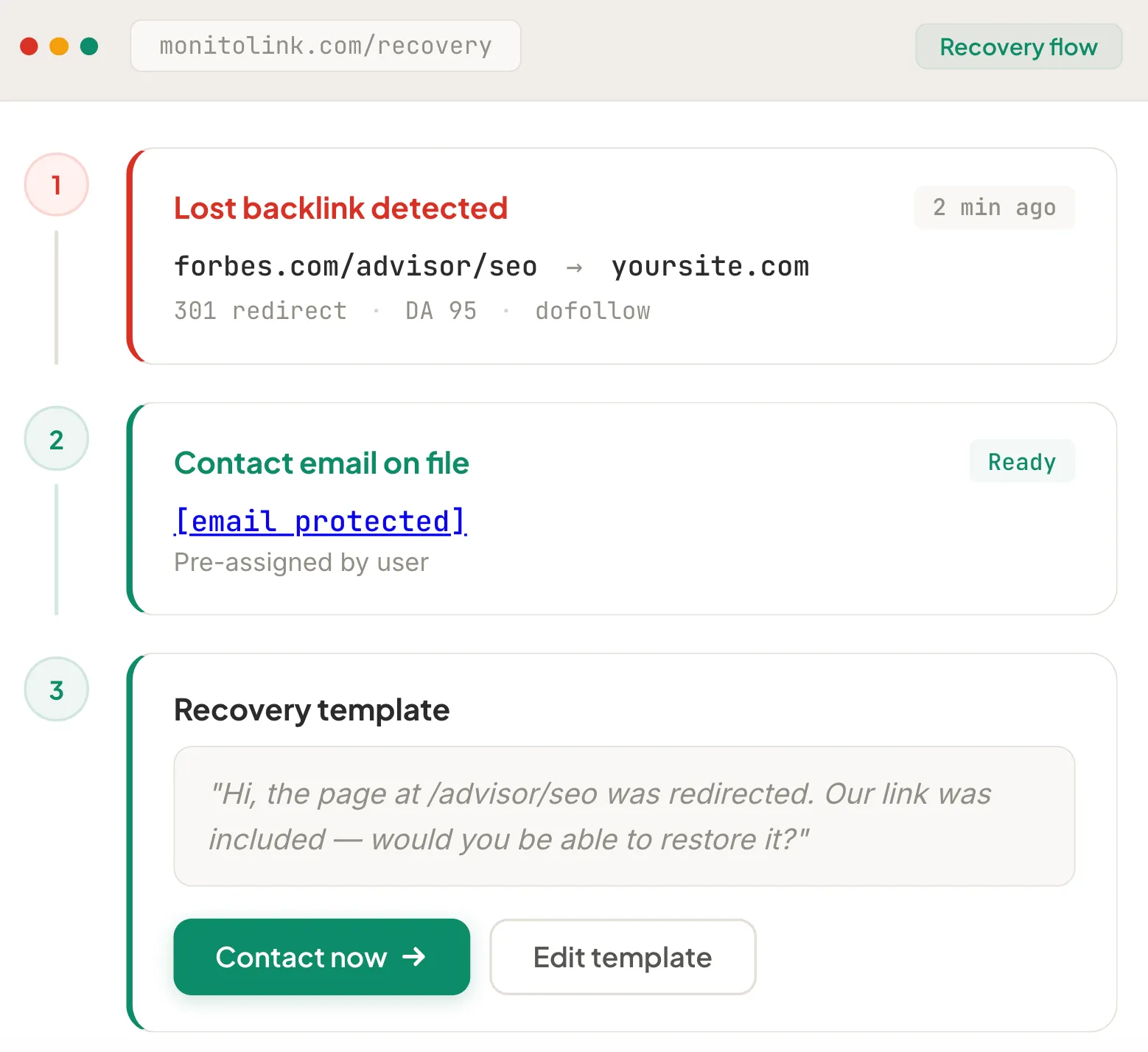
When a link drops, the recovery flow triggers automatically; the contact is already on file and the outreach goes out the same day.
Key Features
- Real-time status monitoring for all tracked backlinks (dofollow/nofollow, live/broken, anchor text changes)
- Competitor backlink tracking to surface new outreach opportunities
- Recover lost links and one-click outreach for lost link recovery
- Anchor text distribution analysis to flag over-optimization risk
- White-label PDF reports for client delivery
- AI insights
Pros and Cons
Pricing
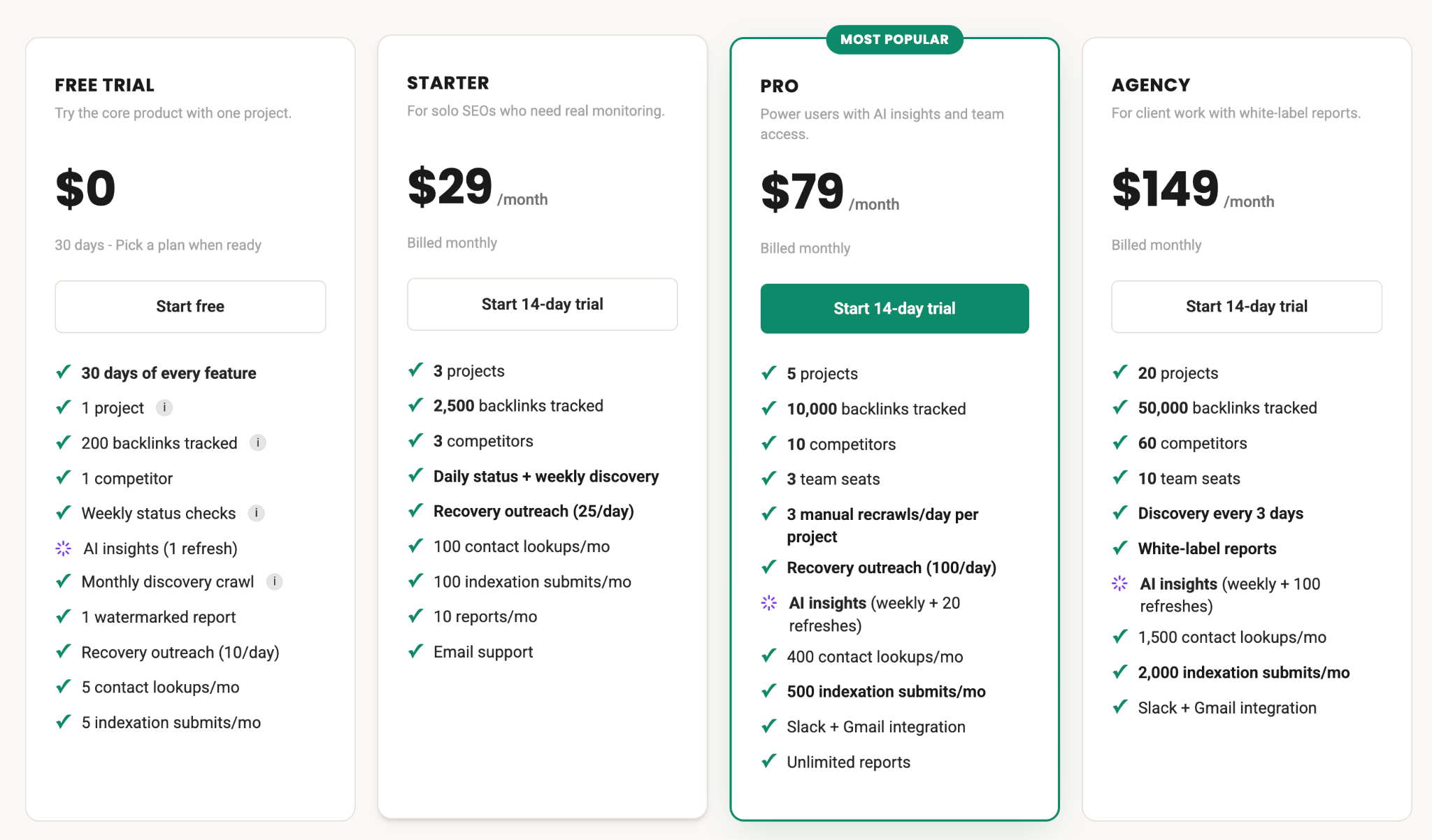
- Starter $29/month
- Pro $79/month
- Agency $149/month
Note: 14-day free trial available on all plans (no credit card needed).
7. Pitchbox - Best for High-Volume Outreach Automation
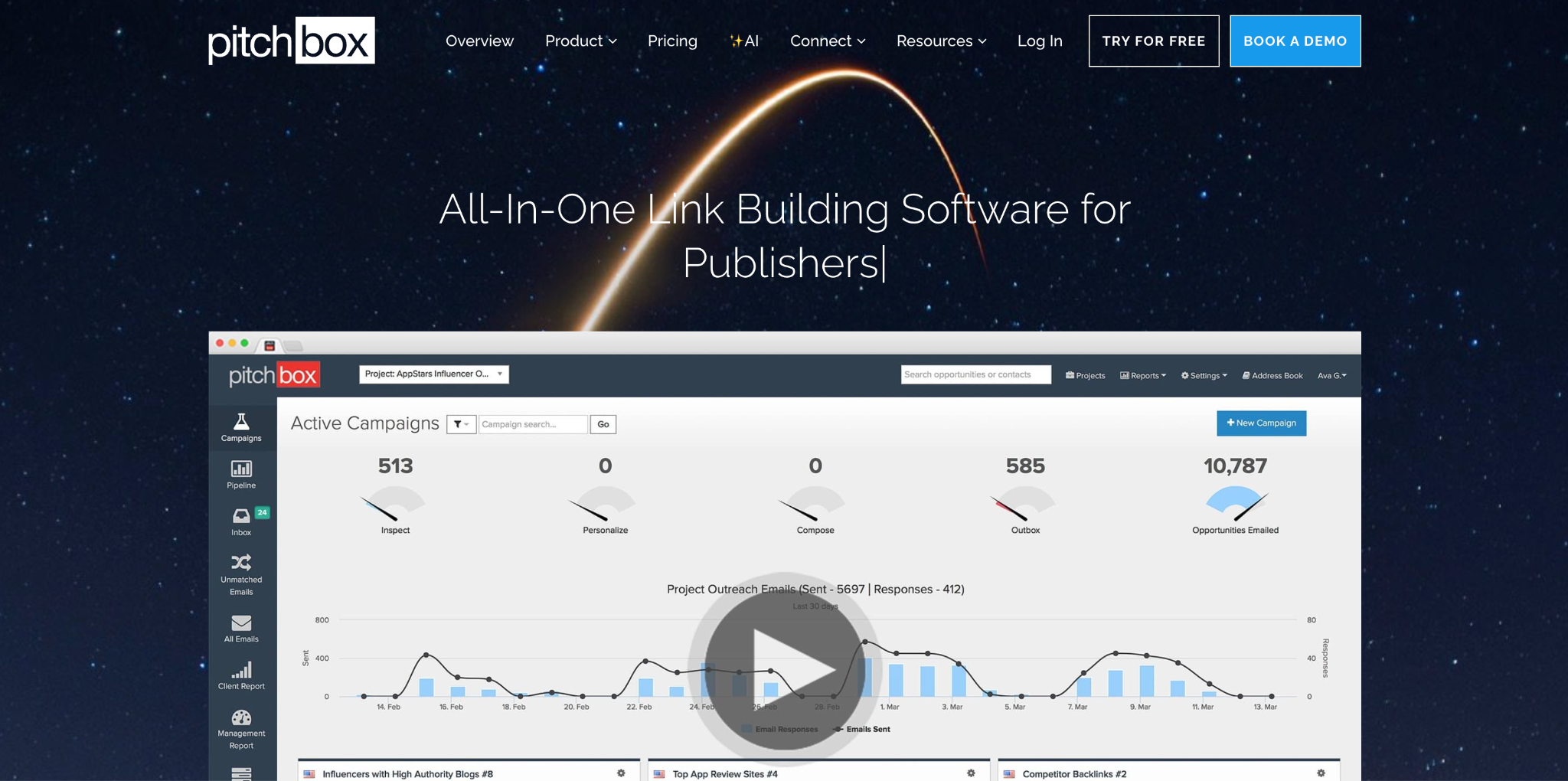
Pitchbox is an end-to-end outreach platform built specifically for link building. You use it to find prospects, manage contact discovery, run email sequences, and track everything through to placement, all in one place. So, I’d recommend it to agencies and in-house teams running campaigns at scale.
To get started, you connect your SEO tools (Ahrefs, Semrush, Moz, or Majestic), set up your first campaign, and build your outreach sequence inside the template editor, as shown below.
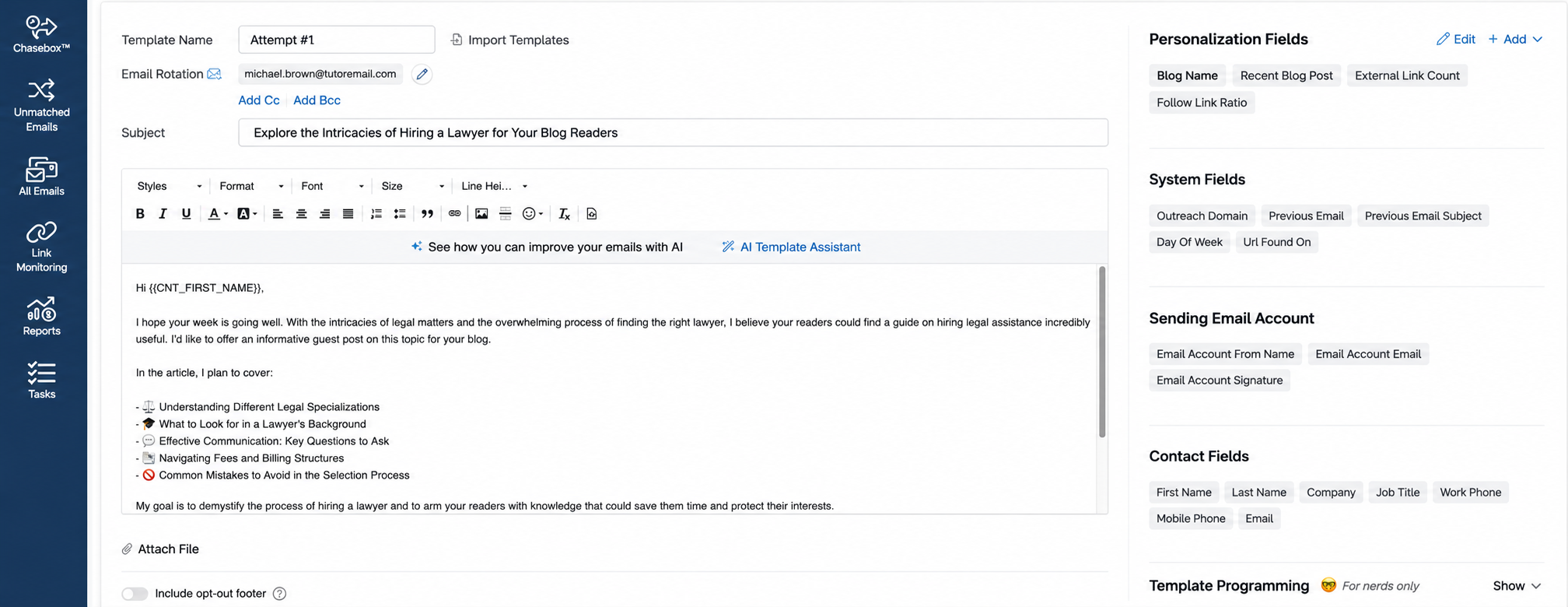
As you can see, the template editor lets you write and personalize your emails, rotate sending addresses, and automatically pull in contact fields.
The interface isn’t the most user-friendly, but the experience is pretty self-explanatory.
Key Features
- Native integrations with Ahrefs, Semrush, Moz, and Majestic for in-platform prospect qualification
- Smart email sequencing with conditional logic, reply detection, and out-of-office snoozing
- Deliverability monitoring: IP blacklists, inbox placement testing, domain reputation, and spam scoring
- AI personalization and reply assistance
- Chasebox™ for automated follow-up sequencing
- Role-based team workflows and white-label client reporting
- Link monitoring and Google indexing verification post-placement
Pros and Cons
Pricing
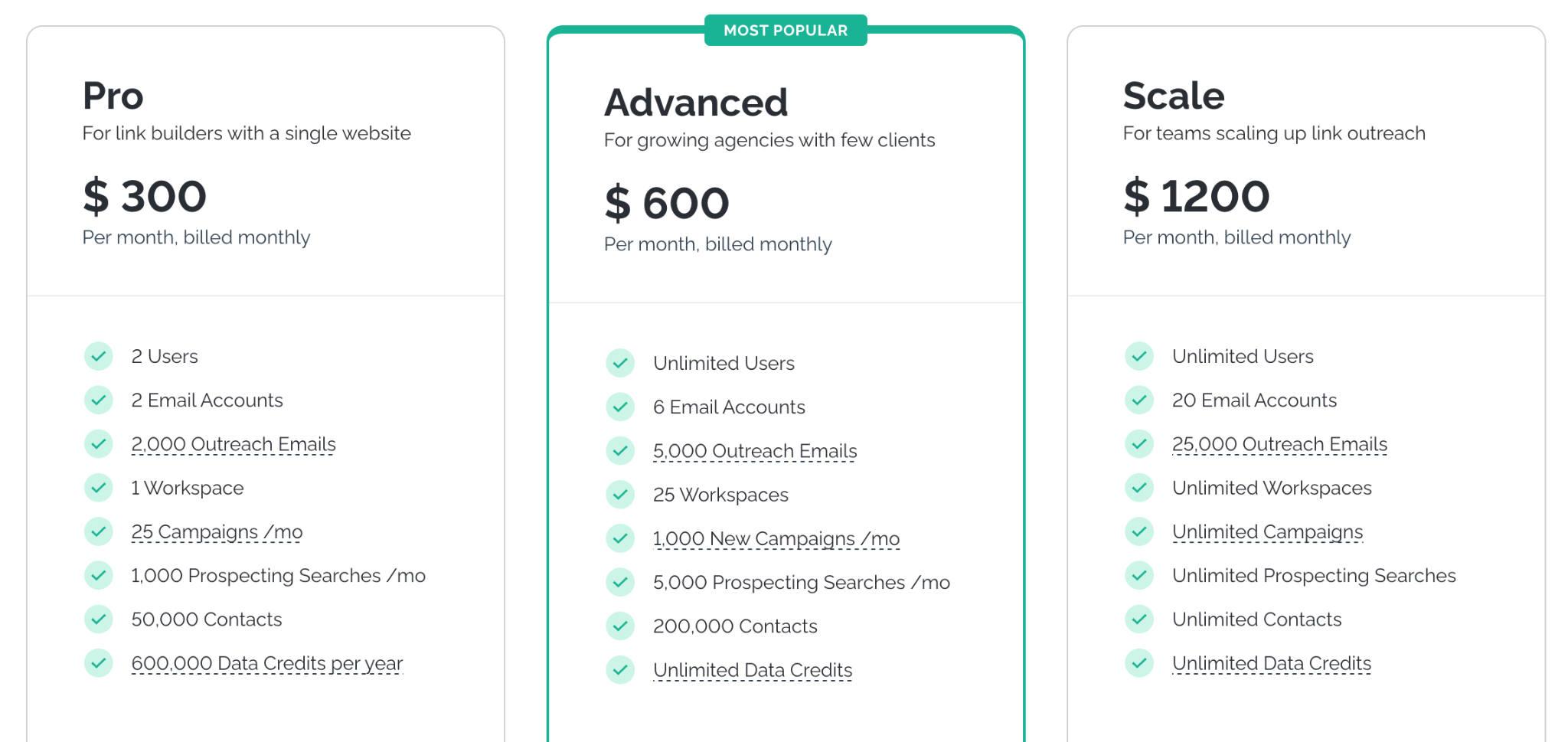
- Pro $300/month
- Advanced $600/month
- Scale $1200/month
- Enterprise custom
Note: Free trial is available on all plans.
8. Moz Pro - Best for Domain Authority Benchmarking and Spam Detection
Moz Link Explorer is the flagship backlink tool inside Moz Pro. It has a free version available, once you register (you get 10 free queries per month).
Enter any URL or domain, and you get a full backlink profile: referring domains, anchor text distribution, linking pages, and both Domain Authority and Page Authority for every source. You can get this metric in Ahrefs and other tools as well, but it’s widely cited that Moz's result is the most trusted.
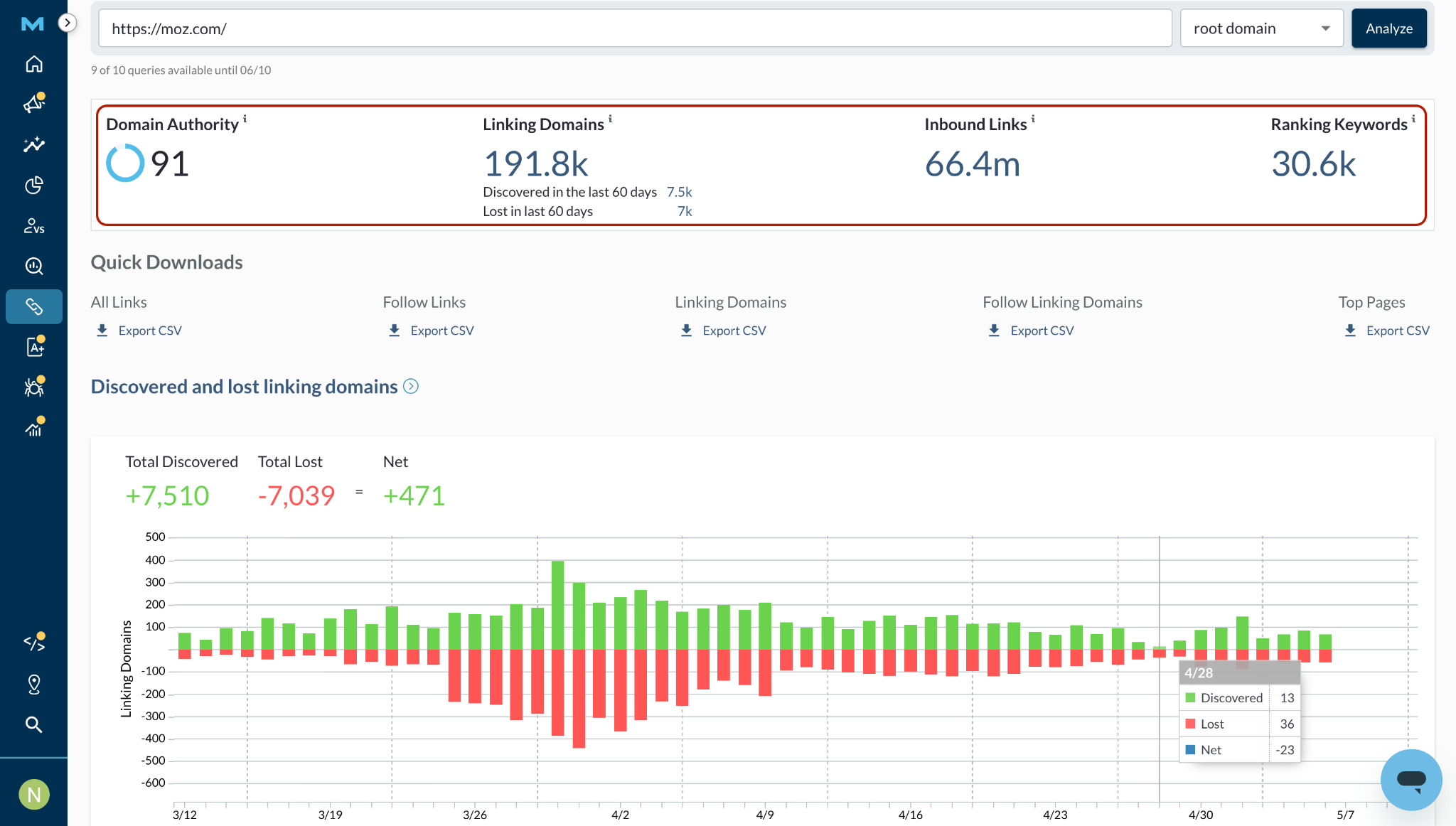
You get this basic information with the free tool, but Moz Pro has other features as well, as you can see below.
Key Features
- The industry-standard quality metrics displace (Domain Authority (DA) and Page Authority (PA))
- Spam Score detection for identifying low-quality or toxic link sources
- Link Intersect for competitor gap analysis
- Anchor text analysis and distribution tracking
- Lost and New link tracking
Pros and Cons
Pricing
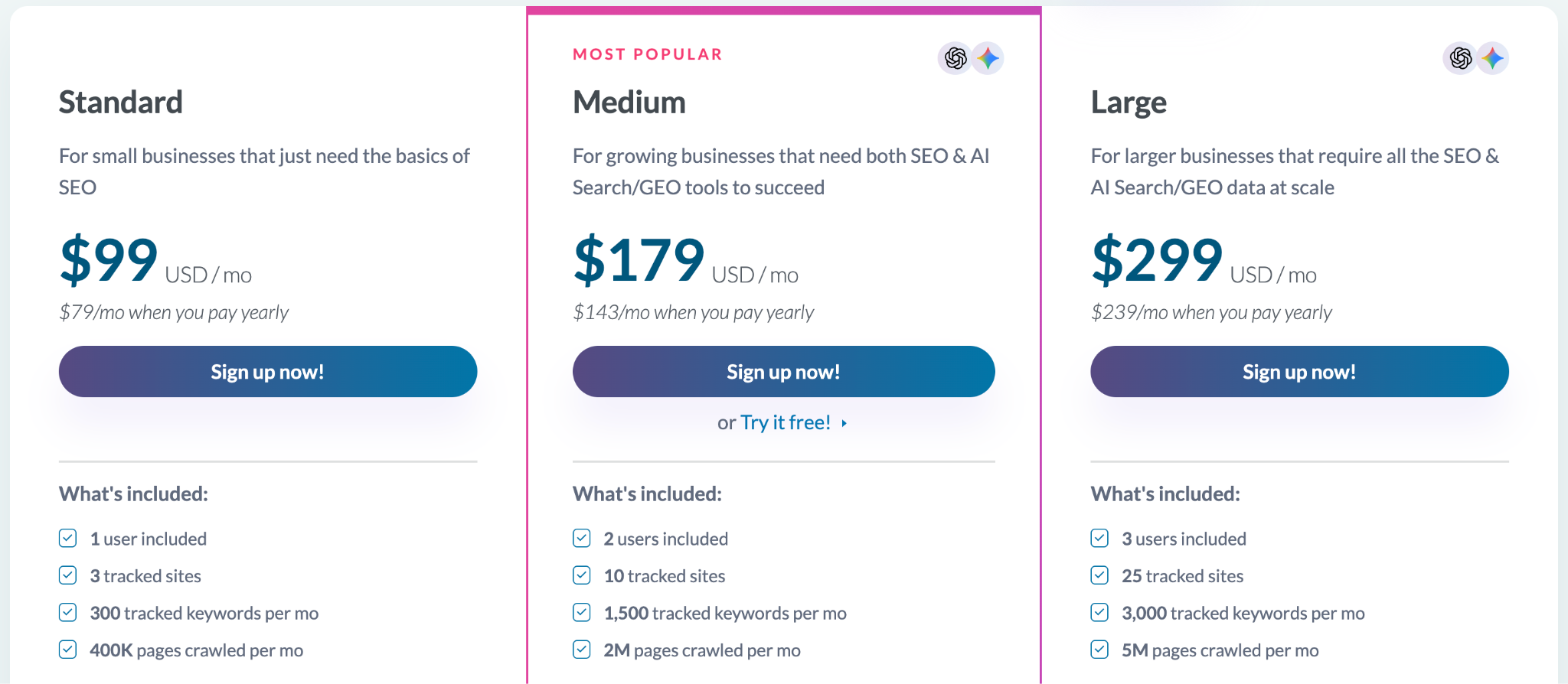
- Standard $99/month
- Medium $179/month
- Large $299/month
Note: It has a free SEO tool called Link Explorer (10 free queries per month upon registration).
9. Respona - Best for AI-Powered Content-Driven Outreach
Respona is a content-first outreach platform built for link building, digital PR, and podcast booking. Unlike most outreach tools I’ve worked with, you don't start with a domain list here. You start with a keyword, and Respona finds relevant, published content to pitch.
To get started, you create a campaign, enter your target keyword, and Respona pulls live results from across the web, with DR, backlink counts, and a Respona Score already attached.
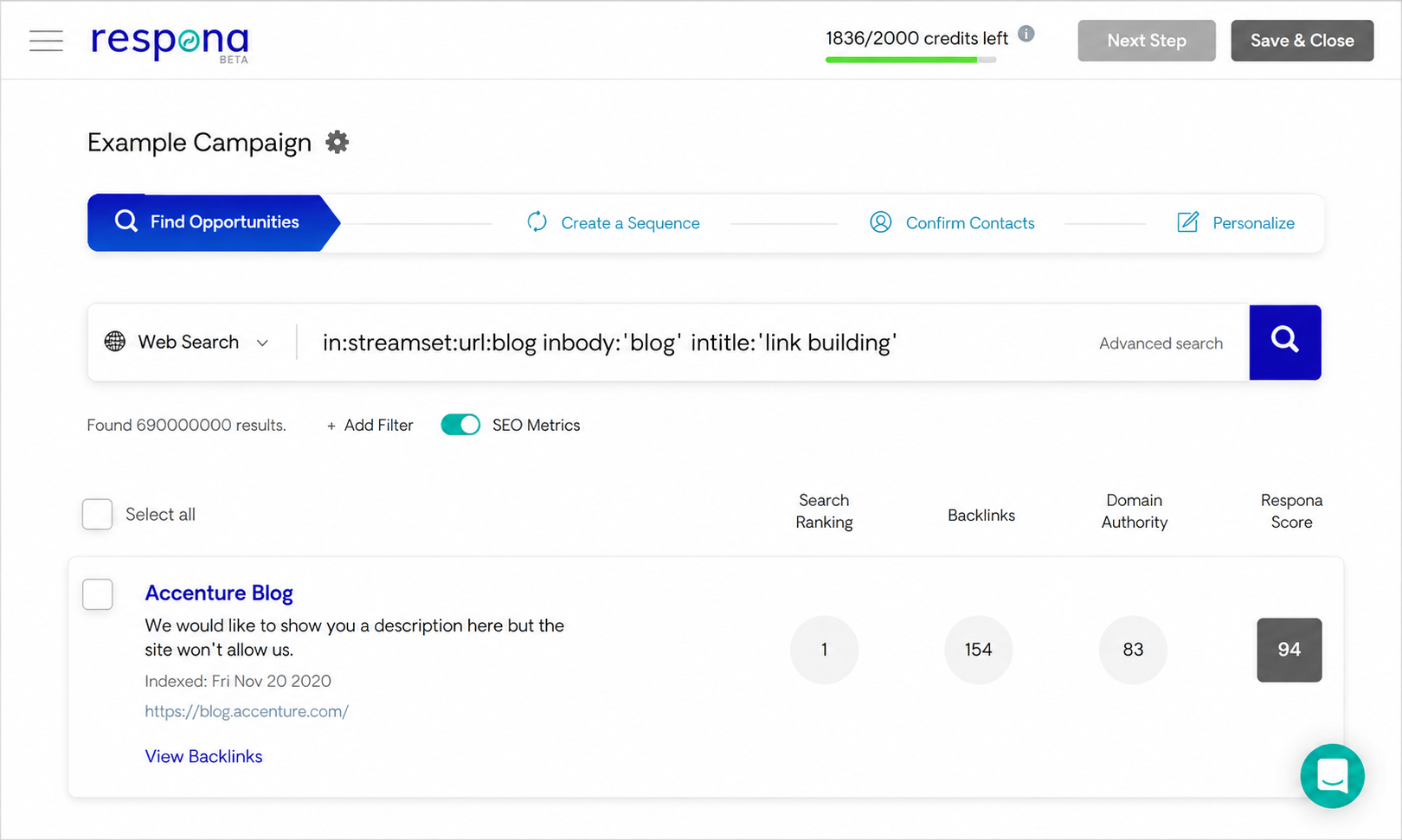
From there, you filter your prospects, confirm contacts, build your sequence, and personalize, all inside the same workflow.
The AI personalization goes further than most tools. It analyzes prospect content and generates first-line variations that reference specific articles, recent posts, or company details. That specificity lifts reply rates in ways that template-and-merge approaches can't.
Key Features
- Content-first prospecting: find relevant articles and podcasts in real time, not just domain lists
- AI-driven email personalization based on prospect content analysis
- Contact finder using 24+ data sources with job title and seniority filters
- Automated sequences with reply detection
- Shared team inbox and outreach tracking
- Ahrefs integration for in-platform prospect qualification
- Done-for-you placement service with pay-per-result pricing
Pros and Cons
Pricing
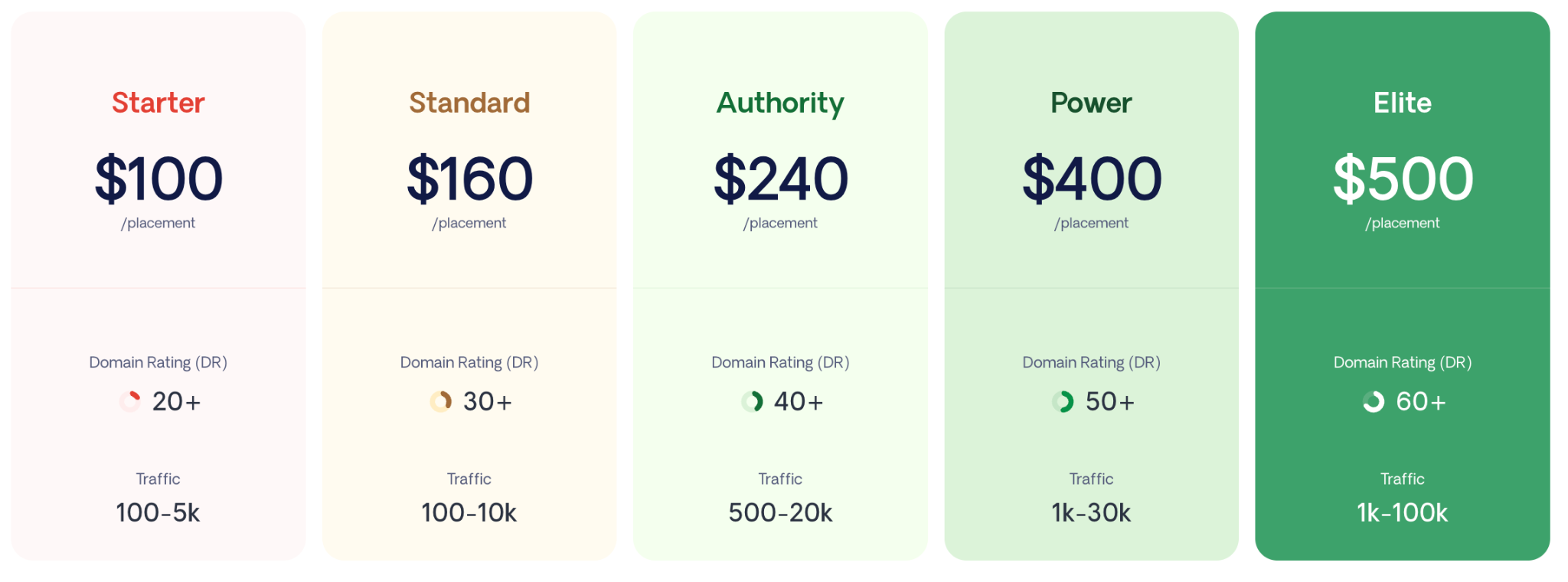
- Starter $100/placement
- Standard $160/placement
- Authority $240/placement
- Power $400/placement
- Elite $500/placement
Note: Plans scale by credits and features.
10. Hunter.io - Best for Email Finding and Verification
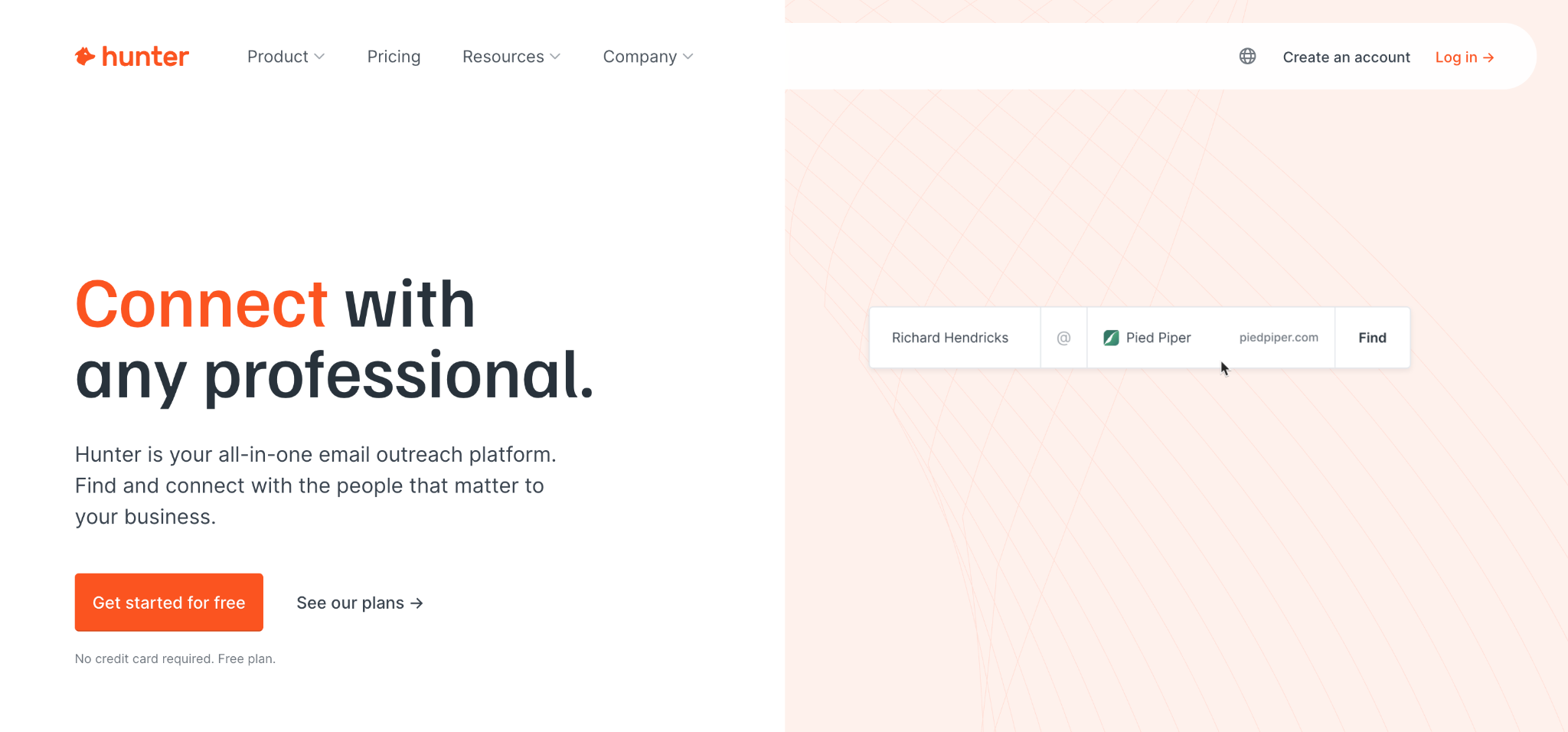
Hunter operates three core functions:
- Domain Search (all professional emails associated with a company website),
- Email Finder (locate a specific person's email by name and company), and
- Email Verifier (check deliverability before sending).
It also has a Chrome extension that can really help your workflow. While you're reviewing a prospect site, one click surfaces all associated email addresses with confidence scores.
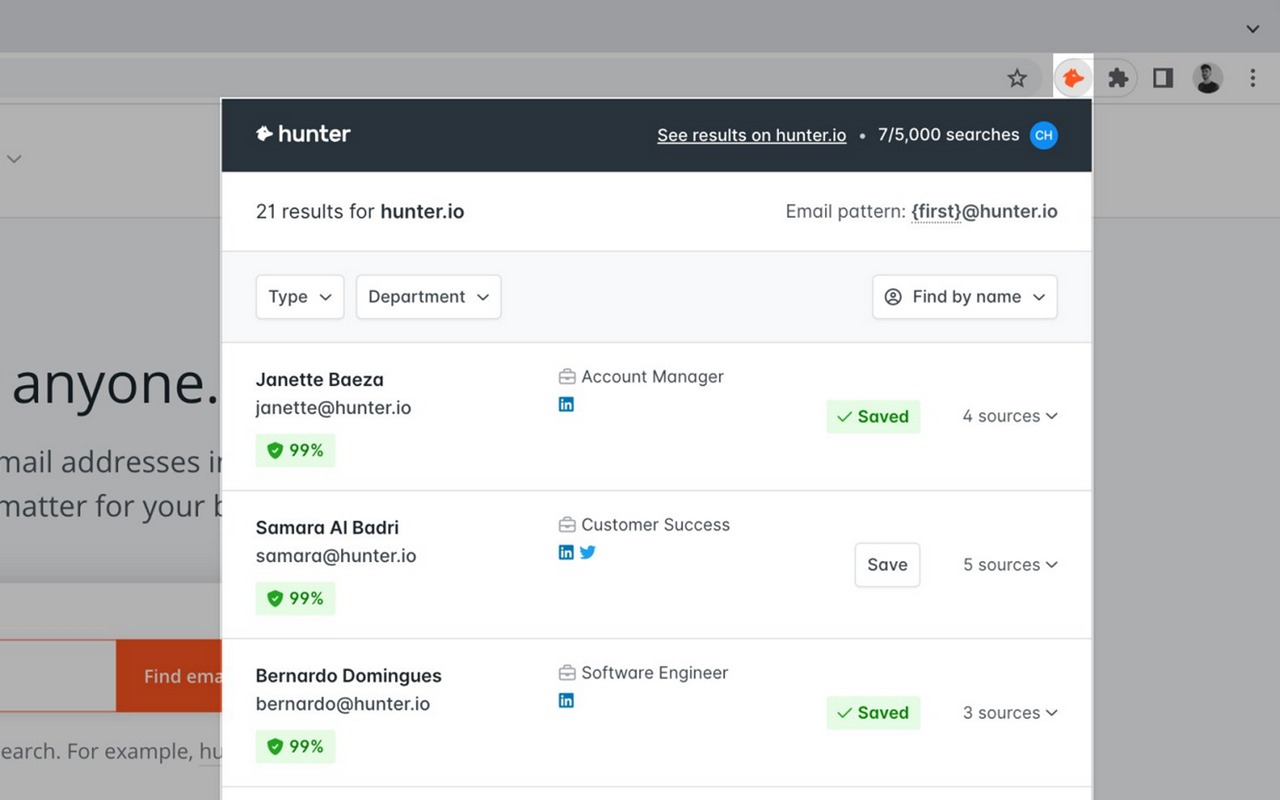
For teams doing manual prospect research, this saves the equivalent of hours per week.
Key Features
- Domain Search: all emails associated with any company website
- Email Finder: locate specific contacts by name and company across 76+ million indexed domains
- Email Verifier: format, domain, and mail server level verification
- Chrome extension for one-click prospect email discovery while browsing
- Bulk CSV processing for list-level verification
- Built-in Campaigns for basic email sequences with Gmail and Outlook integration
Pros and Cons
Pricing
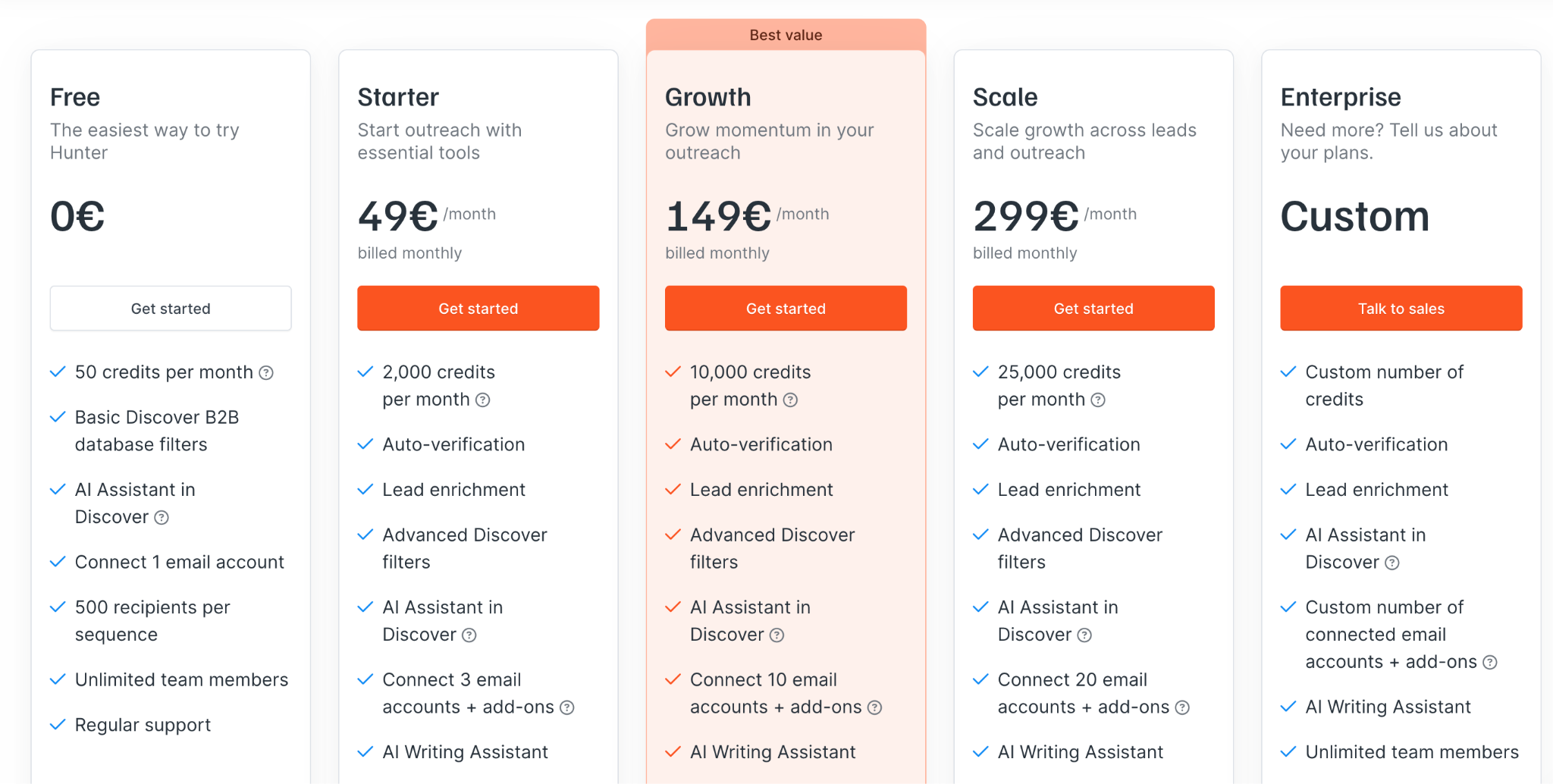
- Free (limited)
- Starter $49/month
- Growth $149/month
- Scale $299/month
- Enterprise custom
11. BuzzSumo - Best for Content Research Before You Build Links
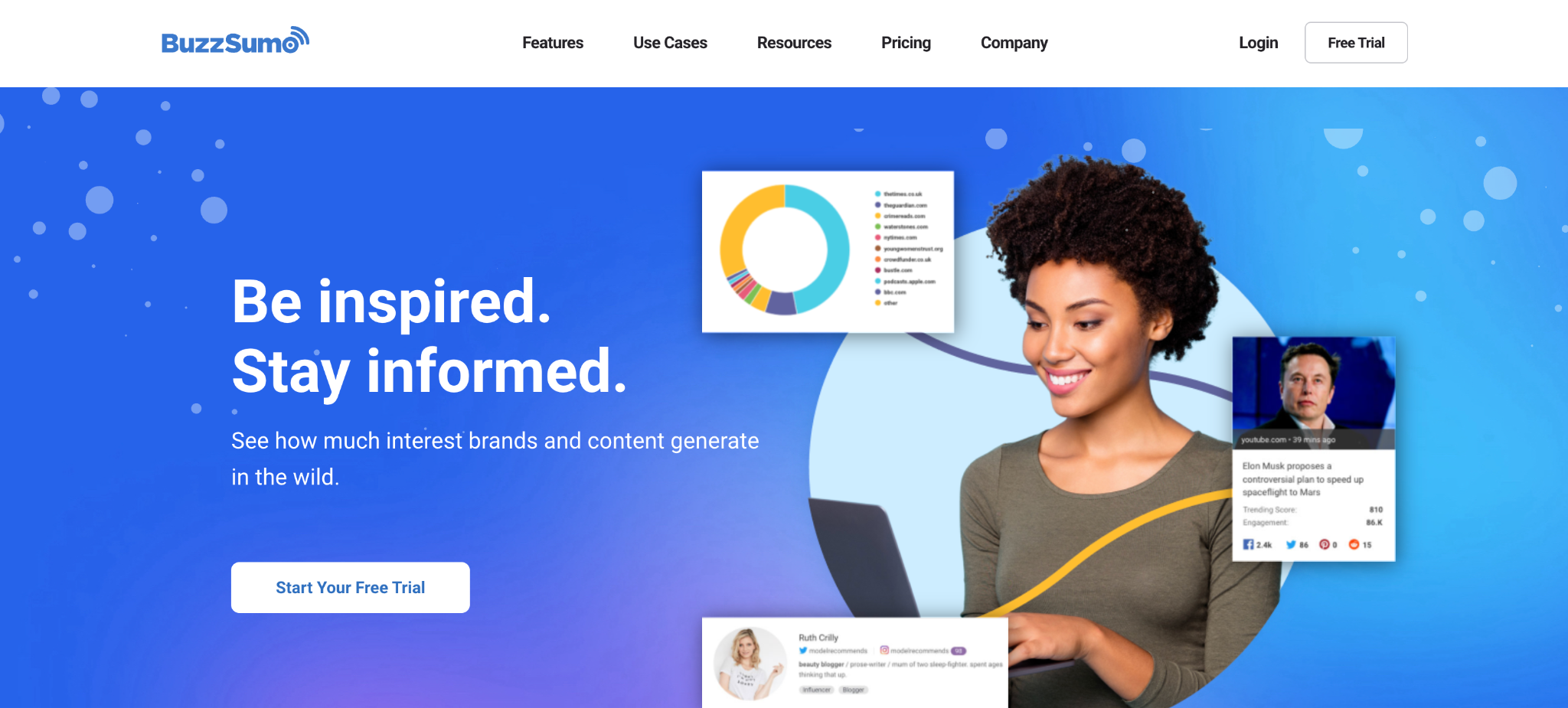
BuzzSumo is a content intelligence tool used for link building prospecting. You use it to find high-performing content in any niche, spot unlinked mentions, and identify bloggers and journalists worth reaching out to. It's not an outreach tool! But it's where you build your target list before outreach begins.
To get started, you will need to head to the Content Analyzer, enter your target topic, and BuzzSumo surfaces the most engaged content across social platforms, Reddit, and the web, with engagement metrics and backlink counts already visible:
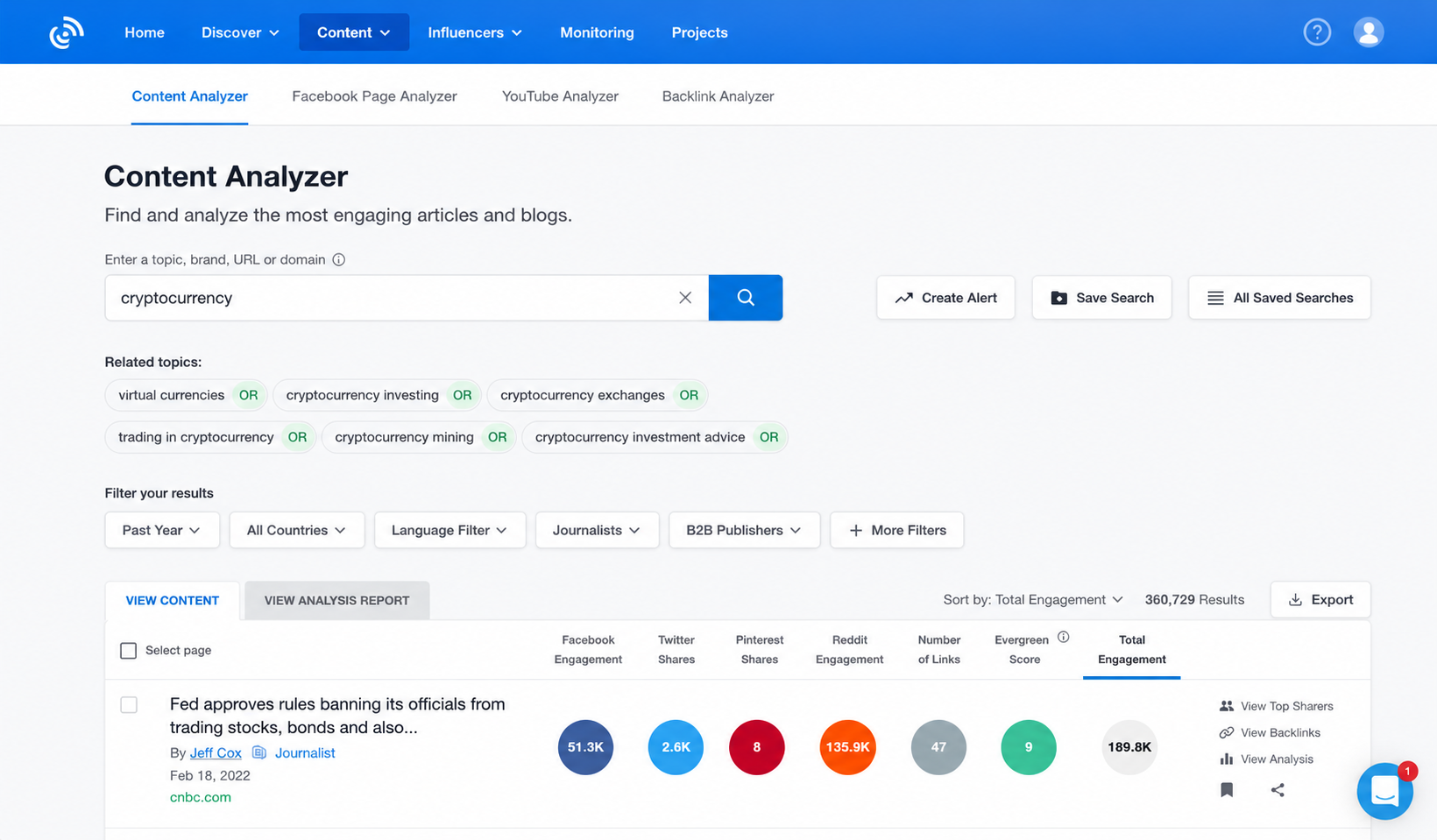
From there, you select the most relevant pieces as your outreach base.
Key Features
- Content Analyzer: find the most shared and most linked content on any topic
- Journalist and influencer database with 700,000+ profiles and recent coverage
- Backlink Analyzer for any URL
- Brand Mentions with unlinked mention filtering
- Trending content feeds for timely outreach opportunities
- Competitor content intelligence
Pros and Cons
Pricing
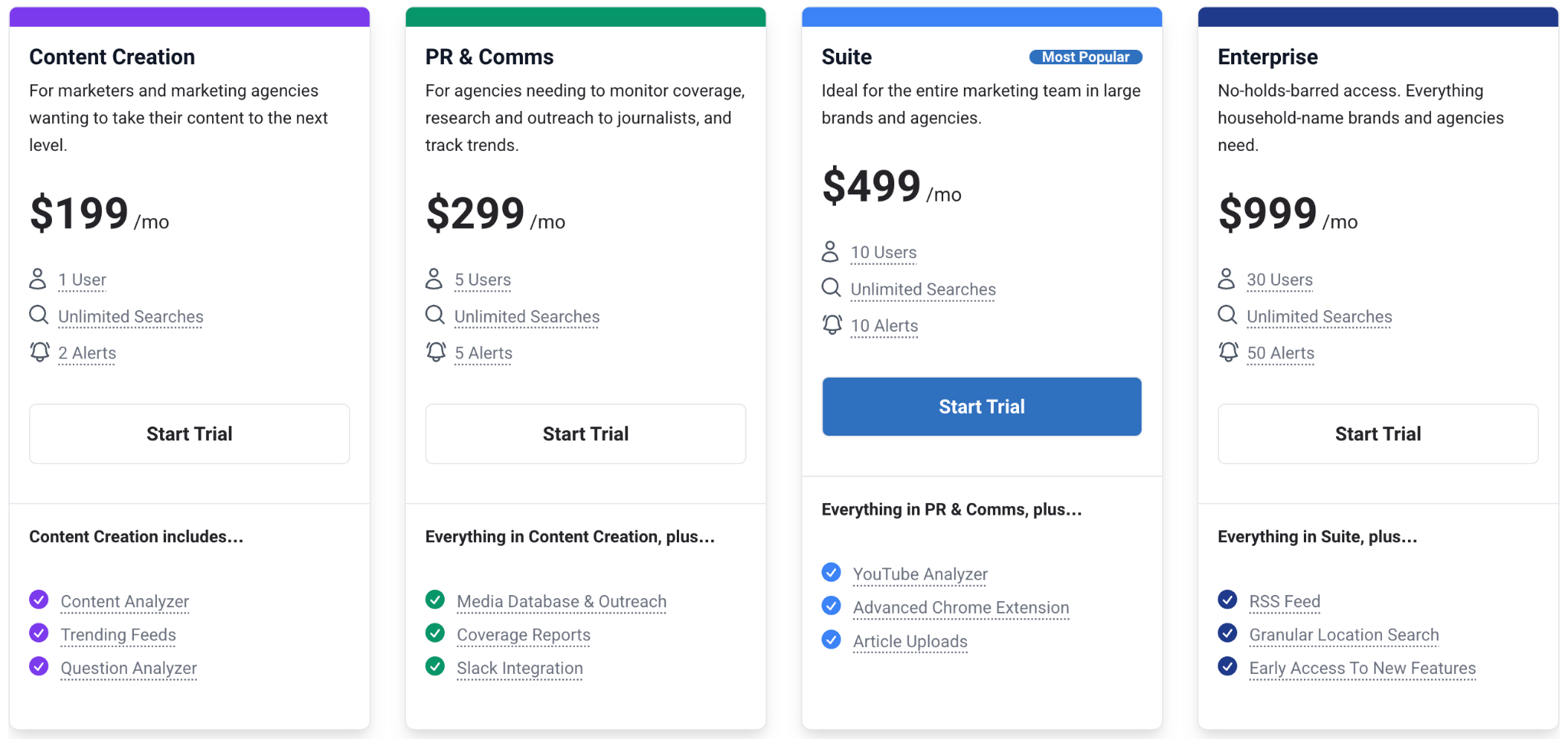
- Trial available
- Content Creation $199/month
- PR & Comms $299/month
- Suite $499/month
- Enterprise $999/month
12. HARO (Help A Reporter Out) - Best Free Source for High-Authority Editorial Backlinks
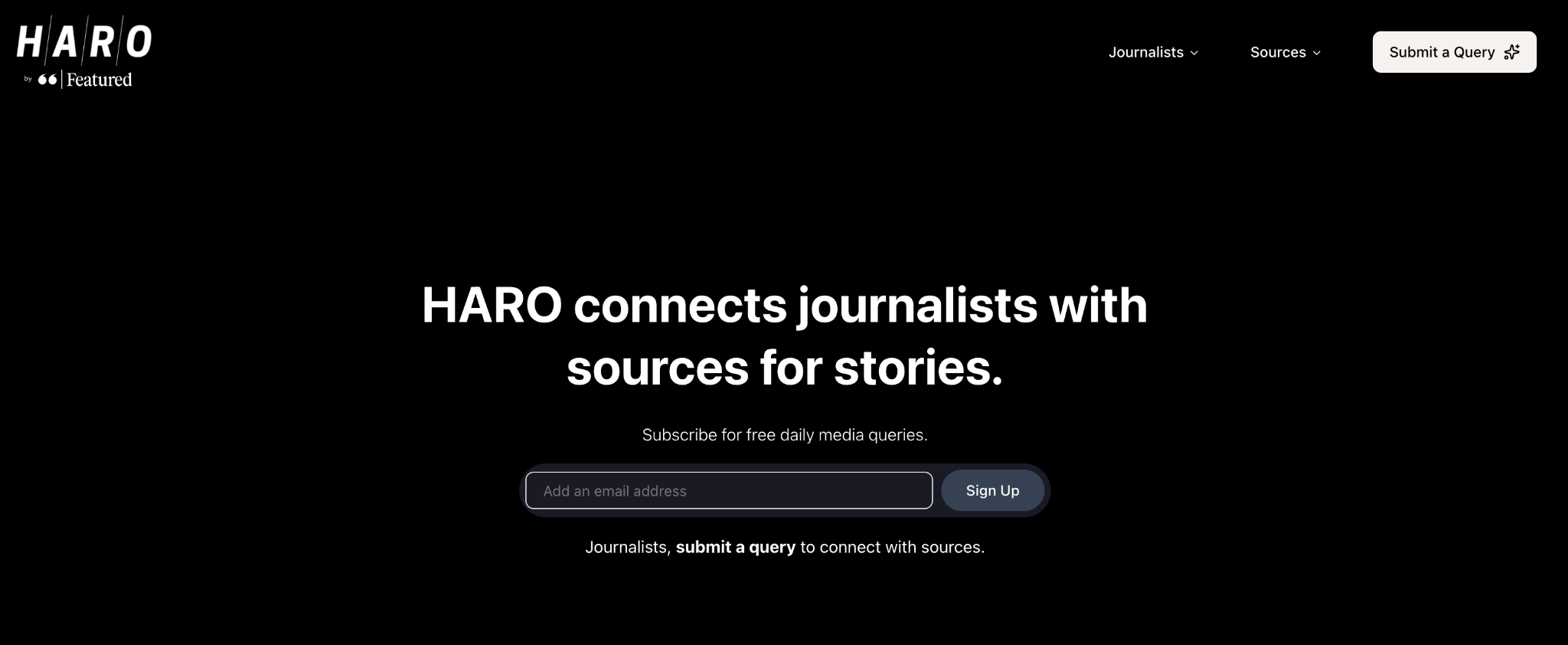
HARO (Help a Reporter Out) is a digital PR tool used for earning editorial backlinks. Journalist or content creator submit a query, and you, as experts, pitch back with quotes and insights, and they credit you in their content, usually with a link back to your site.
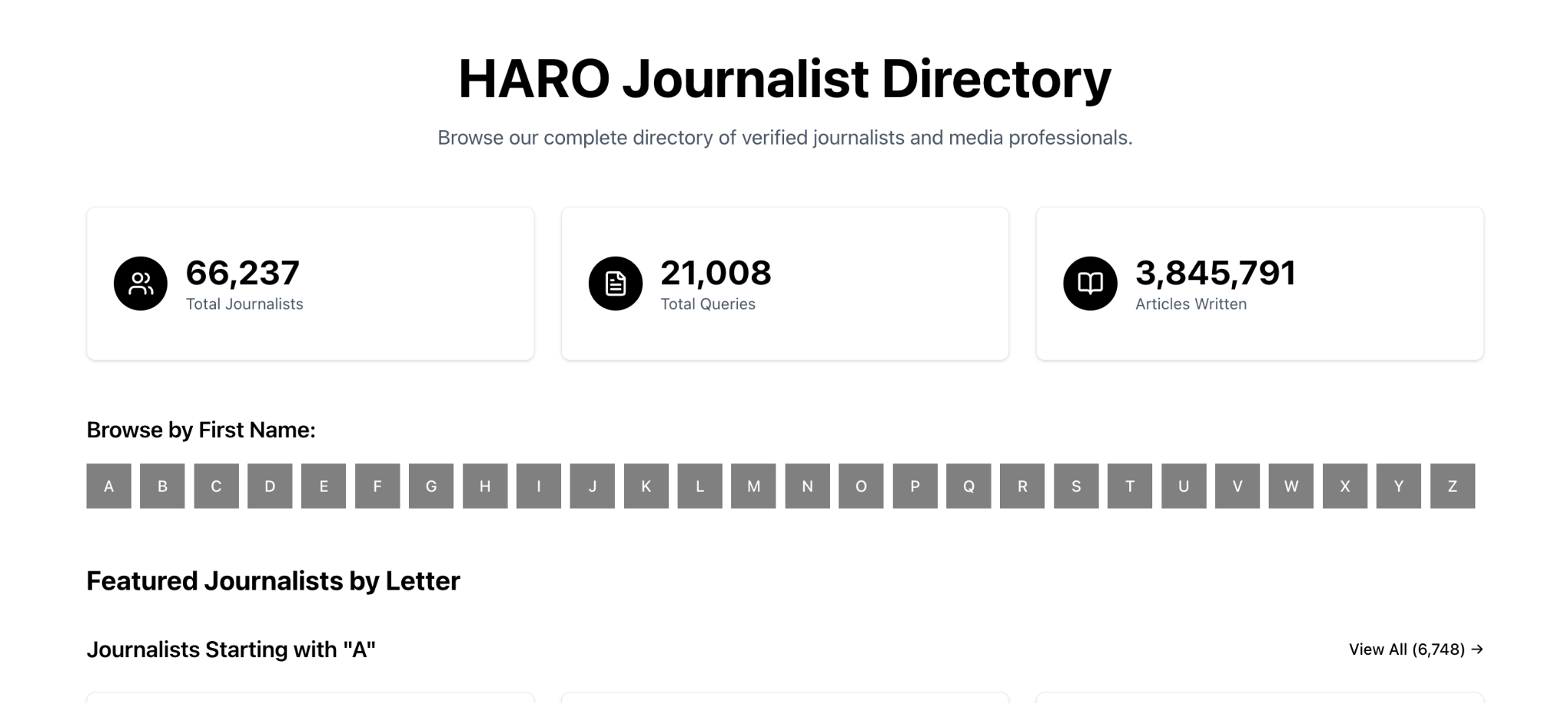
By the way, the new version of HARO (since 2025) has focused heavily on cleaning up the spam and AI-generated response problems. Verification systems now include AI content detection, LinkedIn validation, and community reporting, so the quality of the content you suggest for digital PR should be high.
Key Features
- Three daily email digests of journalist queries by category
- Free access for both journalists and sources
- Covers publications from niche blogs to major national media
- Relaunched April 2025 under Featured.com ownership with improved spam filtering
- Source verification via AI content detection and LinkedIn validation
Pros and Cons
Pricing
- Free for sources and journalists
13. Qwoted - Best for Premium Journalist Connections
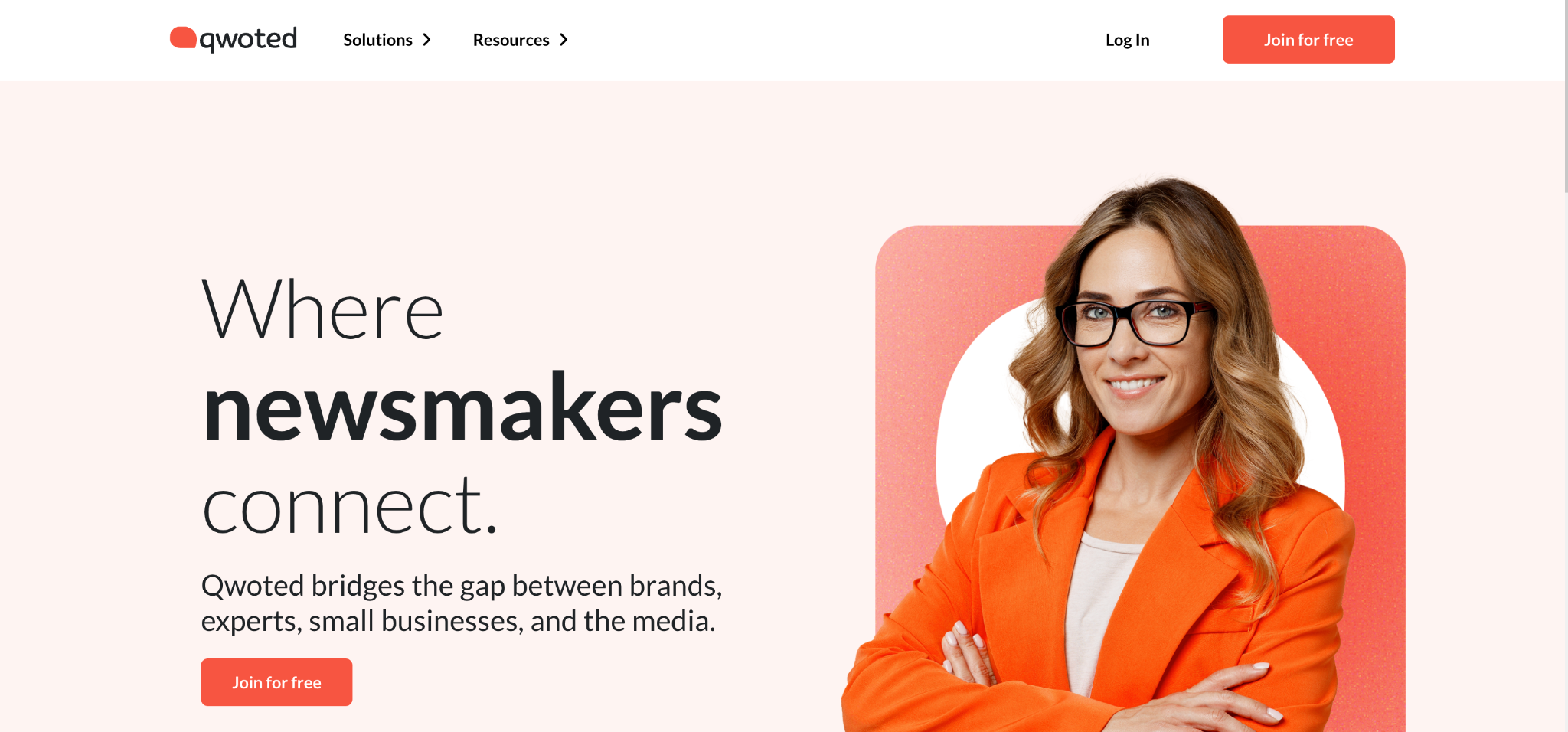
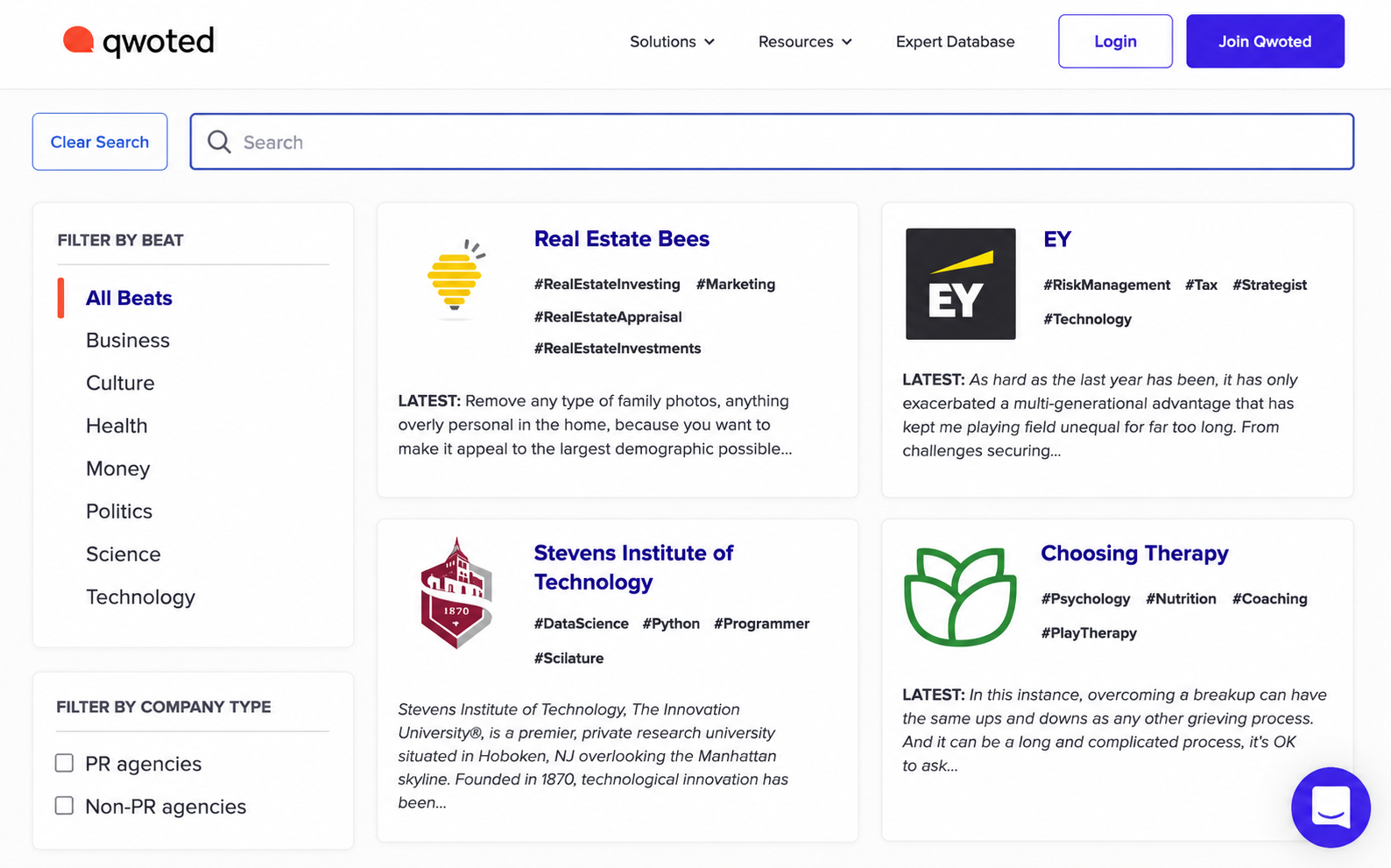
Qwoted has a similar role to HARO, but the core difference is that Qwoted functions like a professional network rather than a mailing list. You build an expert profile that journalists search directly. Real-time alerts notify you of relevant queries.
You pitch inside the platform with direct messaging. And you see read receipts - you know when a journalist has opened your pitch, which changes the follow-up dynamic entirely compared to email-blind systems like HARO.
The Pitch Intelligence feature surfaces trending topics, commonly used keywords, and active journalists in your area. This helps you align pitches with what reporters are actually working on, rather than guessing from query text alone.
Key Features
- Real-time journalist queries with searchable expert profiles
- Direct in-platform messaging with read receipts and pitch analytics
- Real-time alerts by topic, keyword, and media outlet
- Pitch Intelligence: trending topics, reporter preferences, and audience data
- Expert profile discovery (journalists can find and contact you directly)
- Free plan (2 pitches/month with 2-hour delay); Pro plan with real-time access
- Team plans for PR agencies
Pros and Cons
Pricing
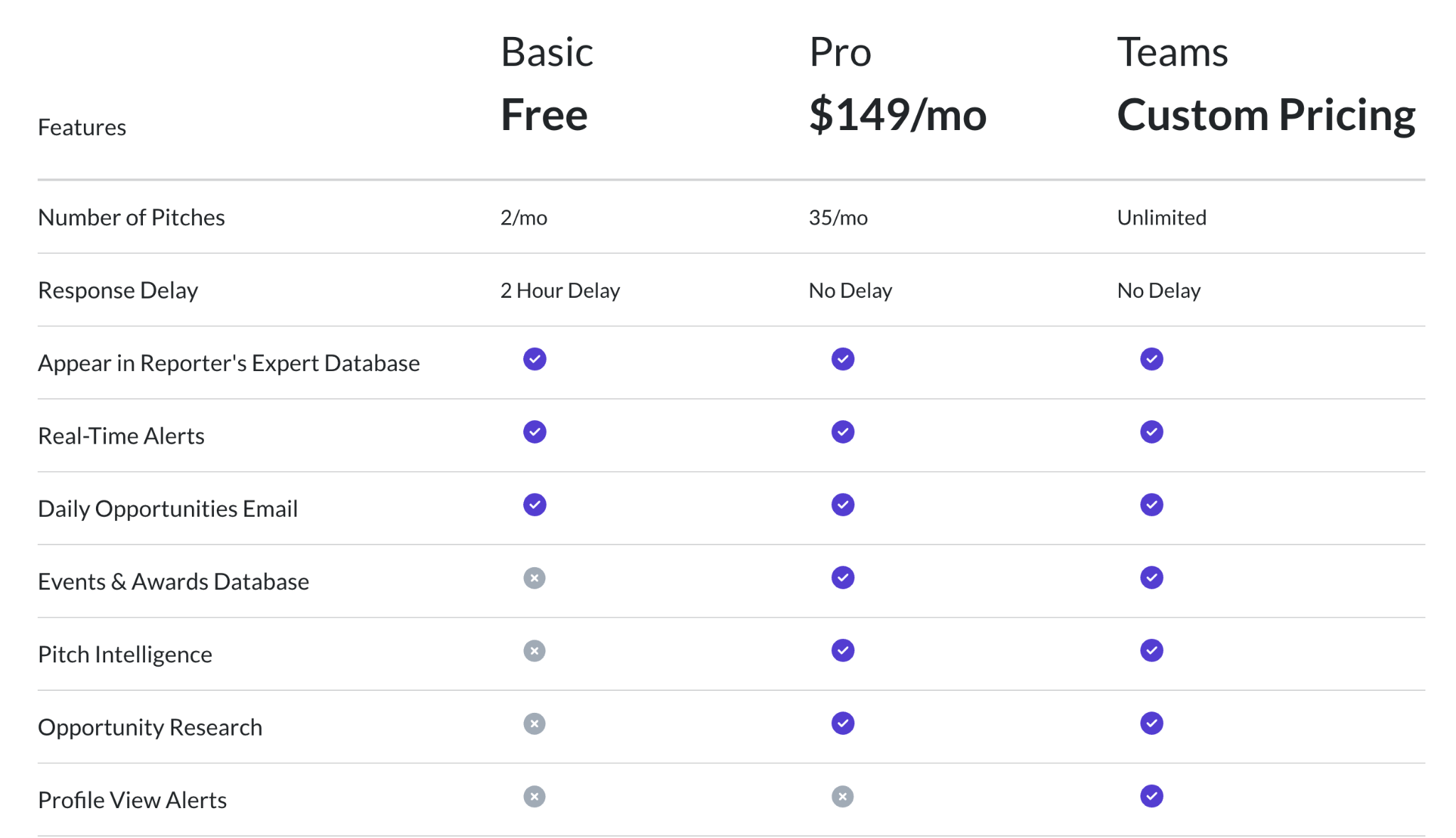
- Basic free (2 pitches/month)
- Pro $149/month
- Teams custom
What to Look for Before You Buy
Backlink Database Size and Freshness
A backlink index is only as useful as its data is current. Ahrefs updates every 15–30 minutes. Semrush claims the largest database at 43 trillion links. Majestic runs a Fresh Index (last 120 days) and a Historic Index back to 2006. For active link building, recency matters more than archive depth.
Prospect Quality
Anyone can give you 500 prospects - the question is how many are worth anything. DR, DA, organic traffic, topical relevance, and spam score filters are what separate useful tools from ones that dump 5,000 irrelevant domains on you.
Outreach Workflow Depth
Some tools stop at research and leave you in Gmail. Others run the full pipeline: sequences, follow-ups, reply detection, deliverability monitoring. At 50 emails a month, Gmail works fine. At 500, you need a dedicated platform.
Contact Data Accuracy
Bounce rates above 10% push you into spam folders. Any tool surfacing contact data should verify it or integrate with something that does. Tools confidently returning "contact@" addresses are a red flag.
Integrations
Check whether the platform connects to your email, SEO data sources, and workflow tools. Native integrations save you from endless CSV exports.
Pricing Model Clarity
Credit-based models are the ones to scrutinize - it's easy to burn through your allocation on a single competitor analysis. Understand what "unlimited" means before you commit.
Final Verdict: Are These Link Building Tools Enough?
There's no single best link building tool. The right answer depends on which phase of your workflow is the bottleneck.
If your campaigns stall at the research phase, you're not finding enough qualified prospects, the answer is Ahrefs, Semrush Backlink Gap or Linkee.ai.
If your campaign emails going unanswered, you have high bounce rates and poor tracking, you need a dedicated outreach platform, like Pitchbox, Mangools, or Respona.
If you're losing links you've already built, add Monitolink, and for digital PR efforts, use HARO or Hunter.io.
Everything else in this guide is either a specialist that does one thing better than the others - Majestic for trust metrics, Qwoted for simpler digital PR process, BuzzSumo for content-lead link building process.
Depending on your main bottleneck, choose your tool, and fix it with the right tool.
FAQs About Link Building Tools
What's the best free link building tool?
For research, Google Search Console is free and shows all links Google has indexed to your site.
How do I evaluate backlinks for SEO value?
Focus on three things:
- Relevance (is the linking site in your niche or a related one?),
- Authority (check DR or DA, but also look at organic traffic — a high-DR site with no real traffic is often a red flag), and
- Placement (an editorial link in the body of an article is worth far more than a footer or sitewide link). Avoid links from sites that exist purely to sell links — Google has gotten good at spotting them.
What are AI backlink builders? Are they worth using?
They're tools that automate parts of the link building process, usually prospecting, personalization, or outreach copy, using AI. Some are genuinely useful for speeding up research and first drafts.
Can link building tools build backlinks automatically?
No tool builds real backlinks automatically. Tools that claim to "auto-build" backlinks are creating low-quality, often harmful links that trigger Google penalties. The tools in this guide automate the research, contact finding, and outreach workflow.
How do I avoid getting penalized by Google while building links?
- Focus on editorial quality: pursue links from sites where a human editor decided to include your link because it was genuinely useful to their readers.
- Diversify your anchor text - over-optimized exact-match anchors are a consistent penalty signal.
- Avoid link farms, PBNs, and any scheme that sells guaranteed placements in bulk.
- Use the Backlink Audit in Semrush or Majestic's Trust/Citation Flow ratio to identify toxic links already in your profile, and disavow them proactively.