%20(250%20x%20100%20px).png)




.webp)
The rumours of HARO's death were only half true. Its previous owner officially pulled the plug in December 2024, but in a massive plot twist, Featured.com acquired the brand and revived it in April 2025.
Now it is back to its roots as a free email newsletter, but it is entering a permanently changed competitive landscape. As someone who has built links for SaaS companies for years, I’ve tested every major outreach platform across dozens of niches. The reality is that today's top HARO alternatives consistently outperform this relaunched version on link quality, conversion rate, and overall ROI.
Here are the 7 platforms actually worth your time, how to use them, and which one fits your specific strategy.
What Happened to HARO? (Quick Context)
For anyone confused about the current state: Cision rebranded HARO as "Connectively" in 2023, gutted what made it work (the simple email format and free access), and shut it down entirely in December 2024.
Featured.com then bought the HARO brand from Cision in April 2025 and relaunched it as a free newsletter, bringing back the original email-based model with one major upgrade: spam filters using AI content detection, LinkedIn profile verification, and fake headshot analysis.
Is the new HARO worth using? It's better than the Connectively era, but it's still crowded, still broad, and the platforms below consistently produce better results for link builders focused on quality over volume.
So, let’s look at the alternatives instead.
Best HARO Alternatives at a Glance (2026 Edition)
Competition level = how heavily other SEOs are gaming that platform right now, based on my experience across all of them.
The 7 Best HARO Alternatives for Link Builders
1. Source of Sources - Best Free HARO Alternative
My take: The closest thing to what HARO was in 2015. Low competition, high quality control, and completely free. This is where I'd start anyone who's new to media-based link building.
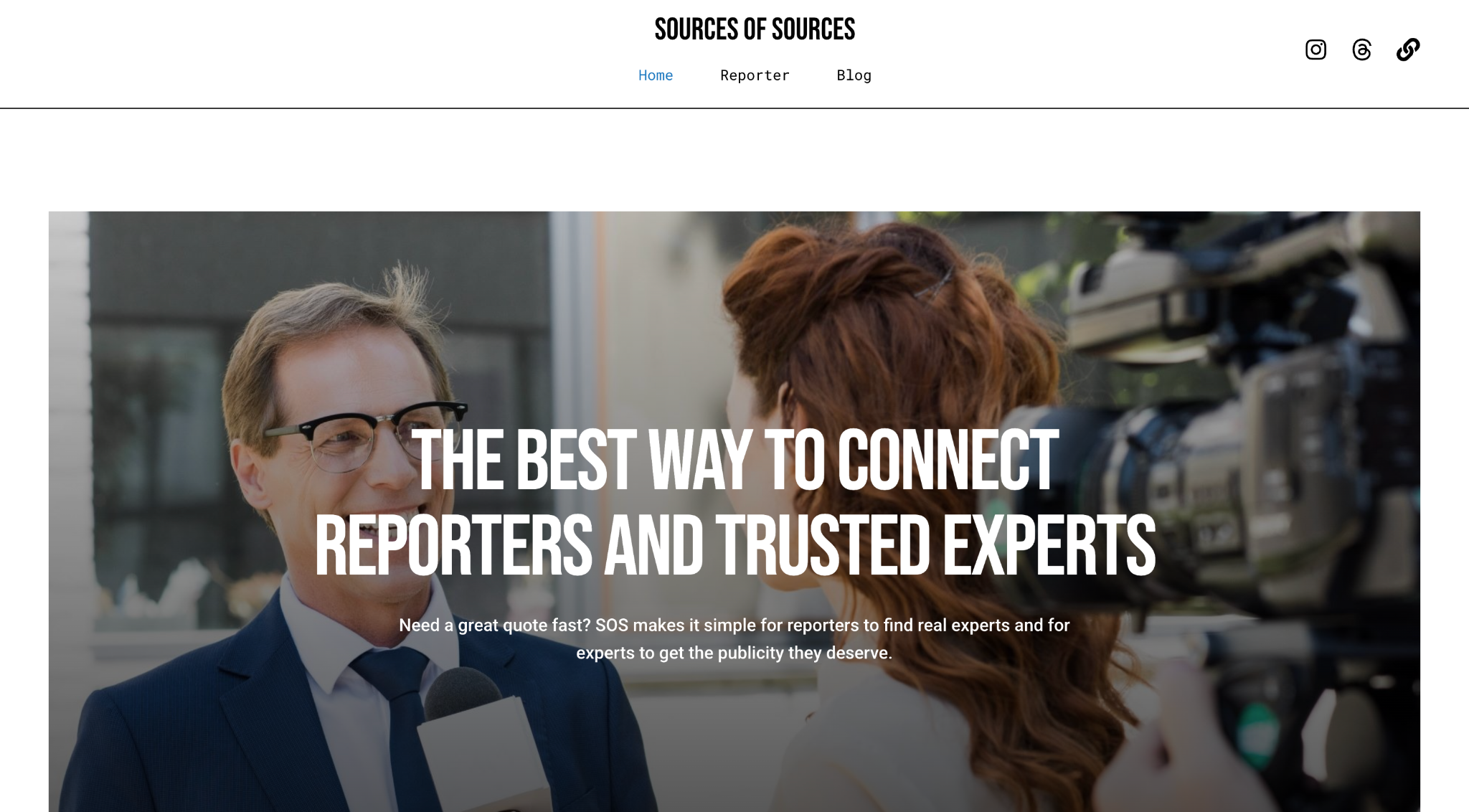
Source of Sources (SoS) is a daily email digest (sent up to 3 times a day) featuring journalist requests from real publications looking for expert sources. If you think your input fits what journalists want, you just reply directly.
Its key advantage is the enforcement. Signups and responses are manually reviewed. If a journalist reports that you sent an off-topic pitch, you're removed immediately, no appeals. That has kept the AI spam and mass-pitching agencies from taking over, at least for now.
My experience: I've used SoS across SaaS campaigns in the marketing, productivity, and HR tech spaces. The volume is lower than Featured or Qwoted, but the conversion rate on relevant opportunities is surprisingly high, because there's less noise. For early-stage SaaS clients without a big link budget, this is often the first tool I put in their stack.
How to Use Source of Sources for Backlinks
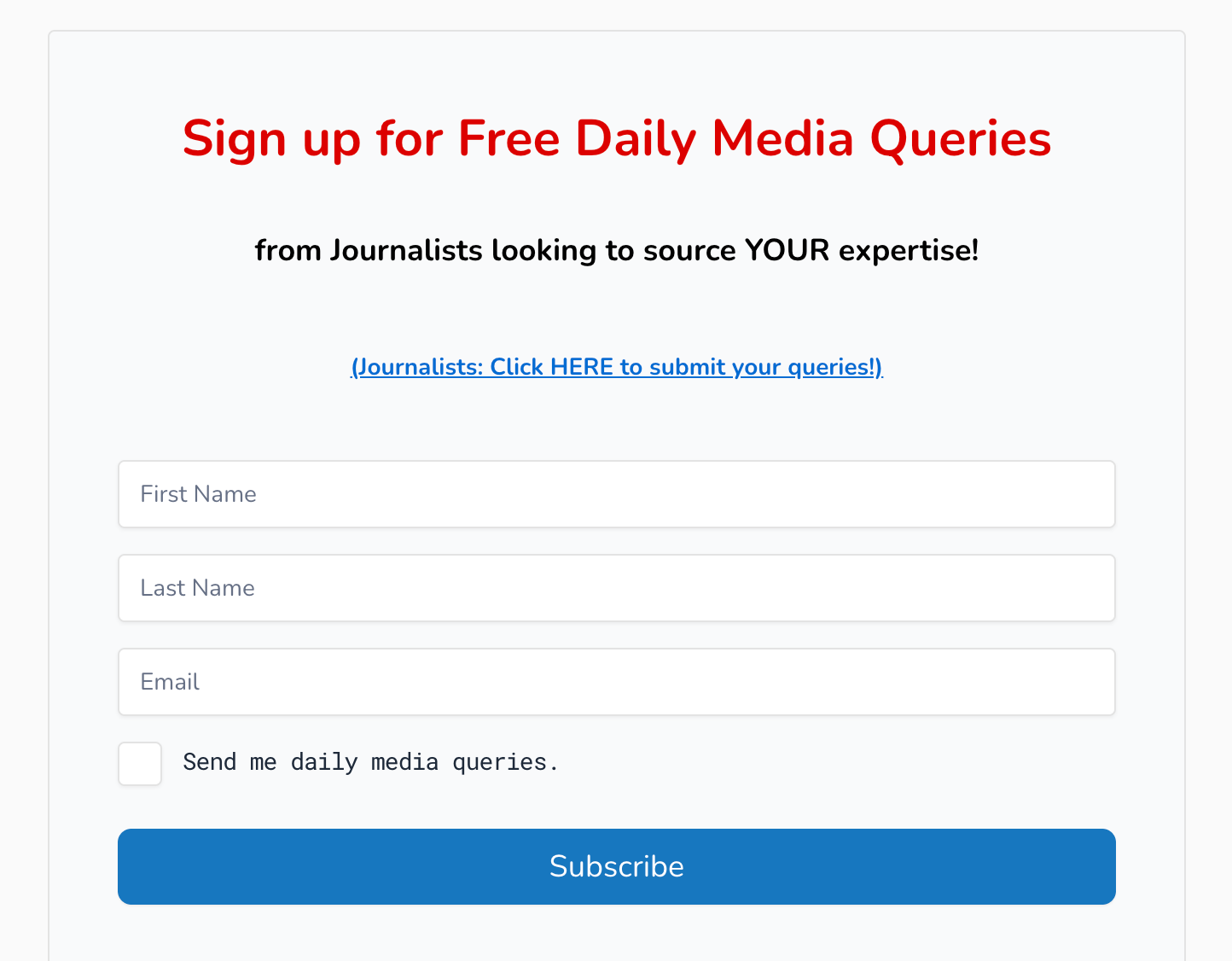
Signing up is simple: you just register with your name/email and start receiving daily emails you can respond to.
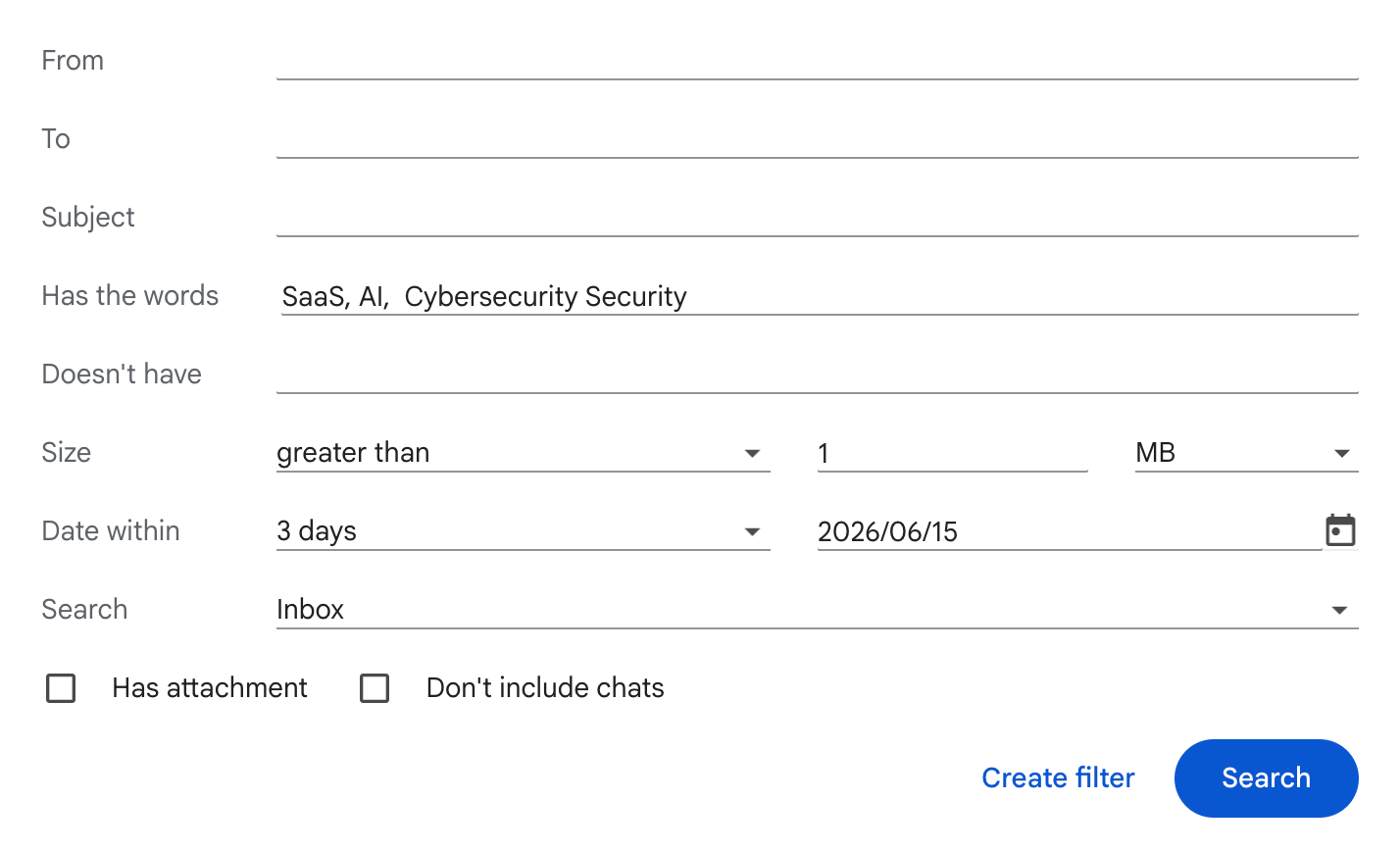
The downside is that your email might be flooded with requests from journalists outside your niche or industry. But for that, I usually use Gmail’s filtering tools. I just put a few relevant keywords there to only see the relevant requests and skip the rest.
Besides this, it’s good to write your pitch before you find the opportunity. Have 3-5 expert angles ready to go as templates you can quickly adapt. Speed wins here, with only 4-6 sentences of the pitch.
Pros: Free, genuinely low competition, familiar workflow, high editorial standards enforced by a human.
Cons: No dashboard, no DR/traffic data, low volume, no niche filtering within the platform.
Pricing: Free.
2. Featured.com - Best for High-Volume DR 70+ Link Building
My take: The highest conversion rate of any platform I've tested. If you're serious about building editorial links from Forbes, Inc., Fast Company, and similar publications, this is the most efficient way to do it.
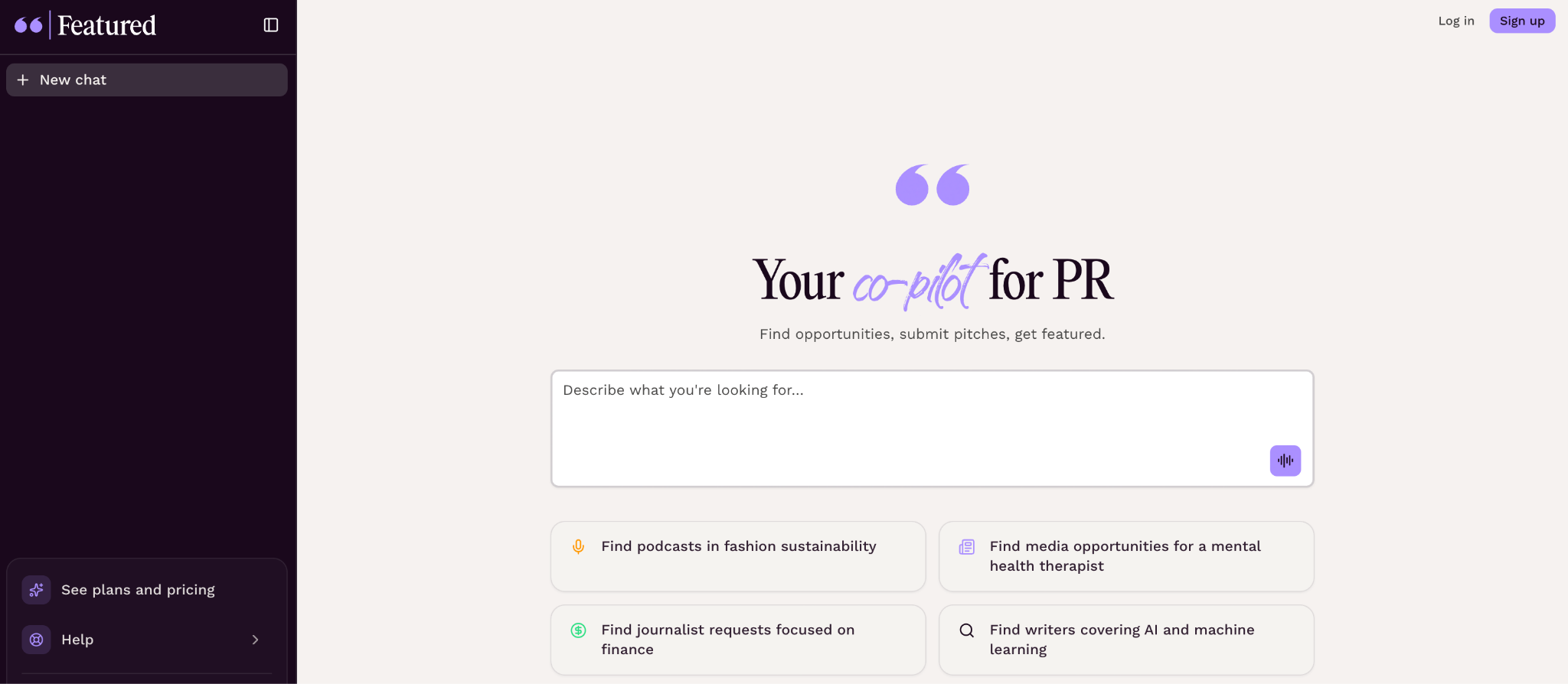
In 2026, Featured.com (formerly Terkel) launched a co-pilot, so the way it works is way different now than it was months ago. Now, it’s an AI-powered platform, that crawls the opportunities accorss other platforms and find the best opportunities for you.
For paid plans, you also get automated outreach workflows and ability to manage multiple projects.
My experience: Featured is the first paid platform I recommend to SaaS clients who need consistent, scalable link building from authoritative sources. The paid plans open more opportunities, and if you have the budget, getting an automated workflow could be a good choice for you.
I've gotten placements for SaaS clients in niches ranging from cybersecurity to HR software using Featured. You can see some of those results in our SaaS link buidling case studies.
How to Use Featured.com for Backlinks
You search whatever type of publication/media you want to contribute to into the search box, and the engine gives you the 10 most relevant opportunities across Connectively, HARO, Qwoted, and other platforms.
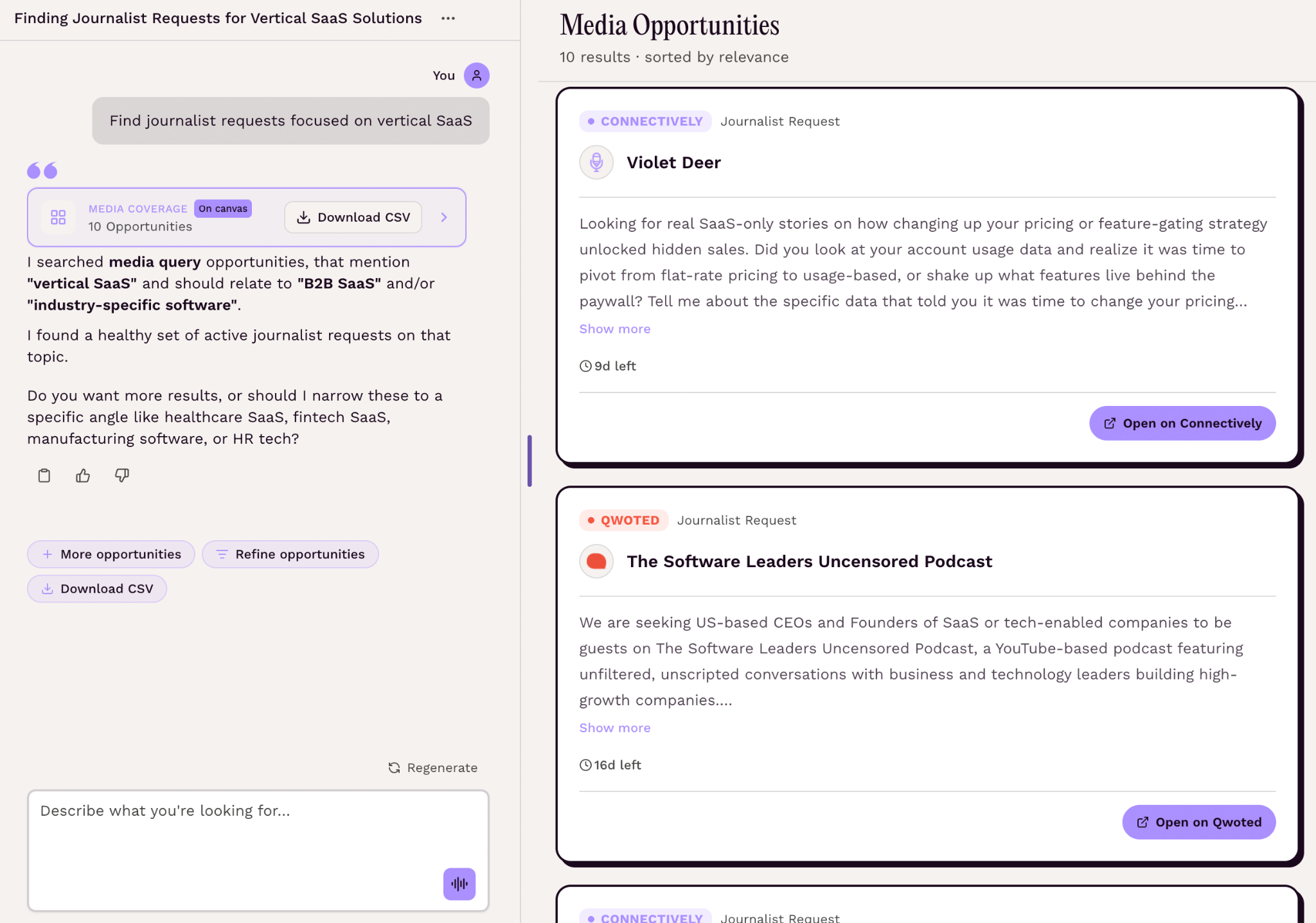
From there, you can open the opportunity and submit the pitch directly.
If you're running a digital PR for SaaS campaign and need reliable output, this is your primary tool.
Pros: Highest conversion rate, access to DR 70-90 publications, pitch status tracking, DA data shown per opportunity, strong editorial filtering.
Cons: Free plan is functionally limited (3 answers/month), all content carries Featured.com attribution, heavier on business/marketing verticals than lifestyle or deep tech.
Pricing:
- Free (3 answers/month)
- $39/month - Lite
- $99/month - Pro
- $299/month - Pro+
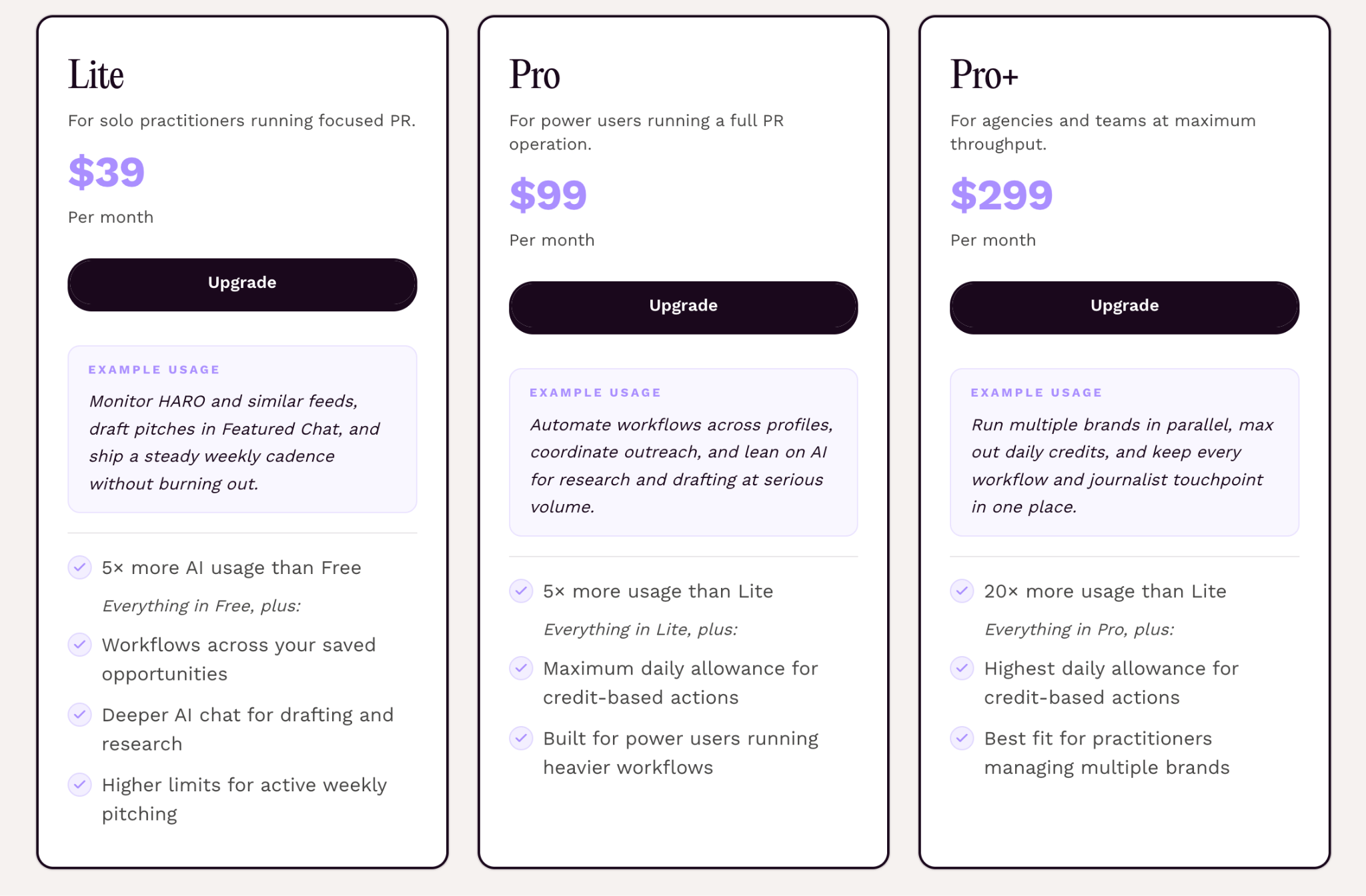
There are also plans for larger companies and teams that give access to wider features.
3. Qwoted - Best for Premium and Niche Publications
My take: If you're building links in finance, health, or tech and need Forbes-tier placements, Qwoted's vetting process and journalist quality are worth the price premium.
Qwoted uses interviews and identity verification on the journalist side, which means the requests you're pitching to are coming from real reporters at real publications, not content mill writers or low-DA blogs.
The Qwoted 100 scoring system ranks experts by pitch quality, credibility, and responsiveness. As your score improves, your profile gains more visibility among journalists looking for sources. It's a compounding advantage that rewards consistent, high-quality participation.
My experience: Qwoted is the platform I reach for when a client needs a specific high-authority link - finance niche, health niche, or a major tech publication. The free plan's two-hour delay is essentially unusable for competitive opportunities (journalists often close requests within the first hour), so you need the Pro plan to compete.
How to Use Qwoted for Backlinks
When you set up your and your company’s accounts, make sure to use relevant and specific tags, like "SaaS marketing", "content strategy", "B2B sales" rather than umbrella terms like “marketing.”
This is what the publications will see, and they will filter based on specific terms:
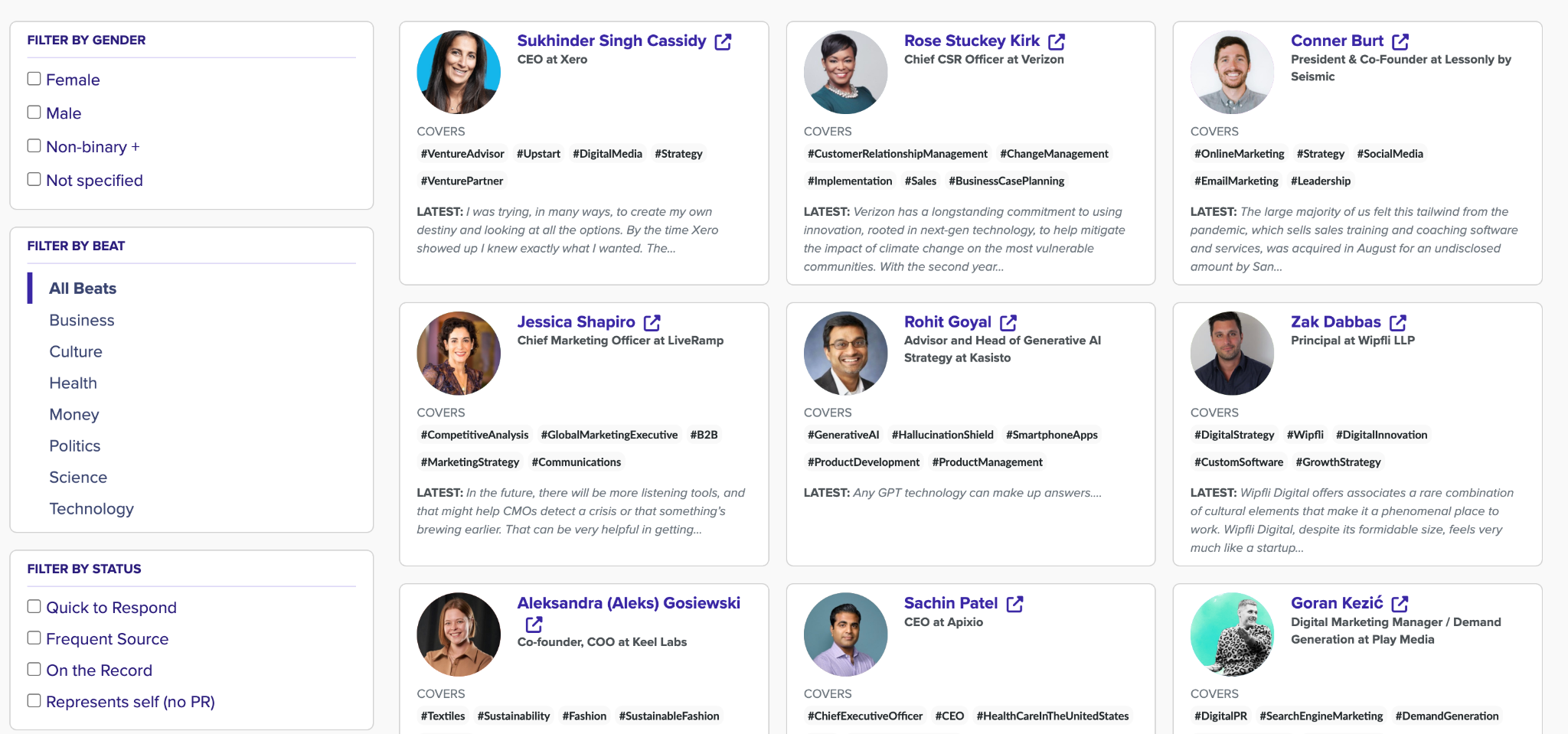
Also, complete your profile to 100%+, add recent media placements, link your social profiles, and add a portfolio. Journalists check profiles before selecting sources.
My most important tip is to respond within the first hour (on the Pro plan). Journalists on tight deadlines often pick from early responses.
Pros: Highest average publication quality, strict vetting on both sides, quoted 100-scoring rewards consistency, pitch intelligence shows competition level, strong for relationship building.
Cons: $149/month minimum to compete effectively, steep learning curve, limited pitch visibility once submitted, free plan is nearly unusable.
Pricing:
- Free (2 pitches/month, 2-hour delay)
- $149/month (Pro, 35 pitches/month)
- Custom (unlimited pitches).
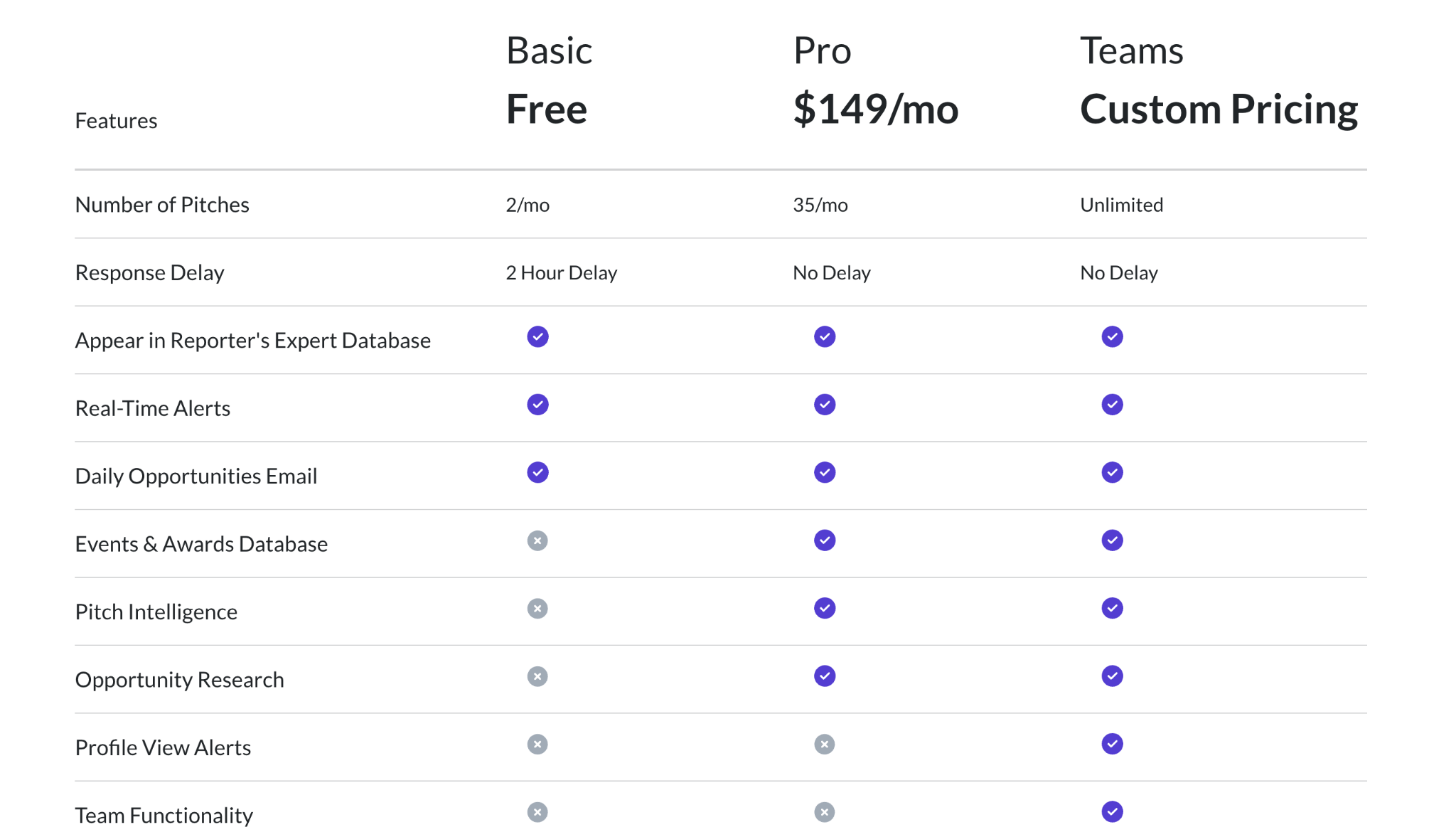
You can start for free, and then adjust as you go.
4. MentionMatch (Help a B2B Writer) - Best Free Option for Link Building
My take: The most underused platform on this list. If you're in B2B SaaS, marketing, or any tech-adjacent vertical, MentionMatch gives you a clean, spam-free feed of relevant opportunities at zero cost.
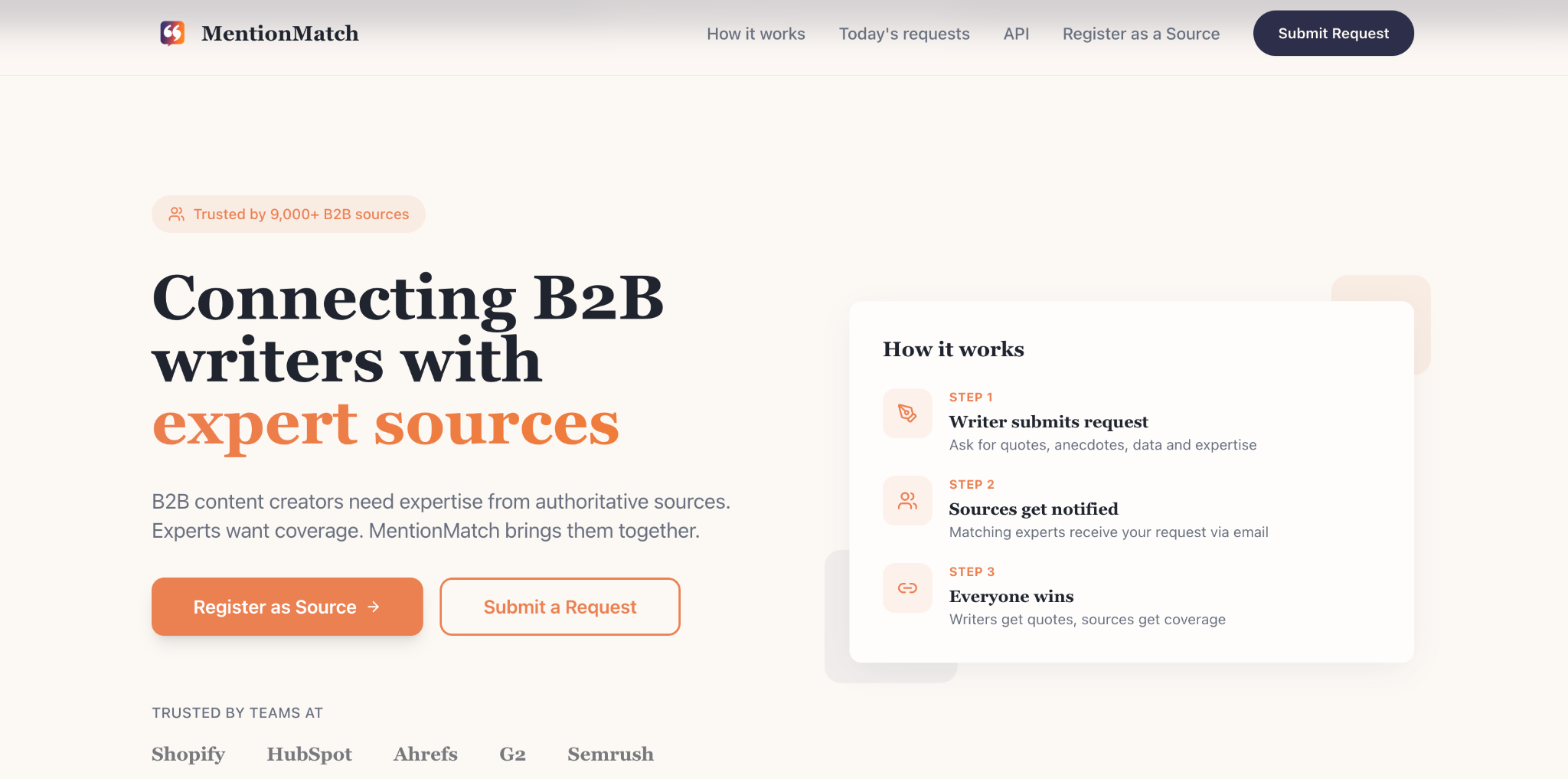
MentionMatch (rebranded from Help a B2B Writer) connects B2B writers (primarily content marketers at SaaS companies and B2B publications) with expert sources. Unlike HARO's catch-all approach, every request on MentionMatch is specifically about a B2B topic.
When you sign up, you choose your "wires" (expertise categories), and you only receive requests that match.
The platform is ruthless about AI-generated responses. If you get caught sending AI slop, you're removed.
My experience: This is consistently one of the highest-ROI platforms I use for SaaS clients, purely because of the relevance match. When a HubSpot writer needs a quote about email marketing strategy, and you're building links for an email SaaS, the contextual alignment is perfect.
How to Use MentionMatch for Backlinks
You're onboarding via email - you input your email address and receive a message to select your wires. Pick your categories carefully.
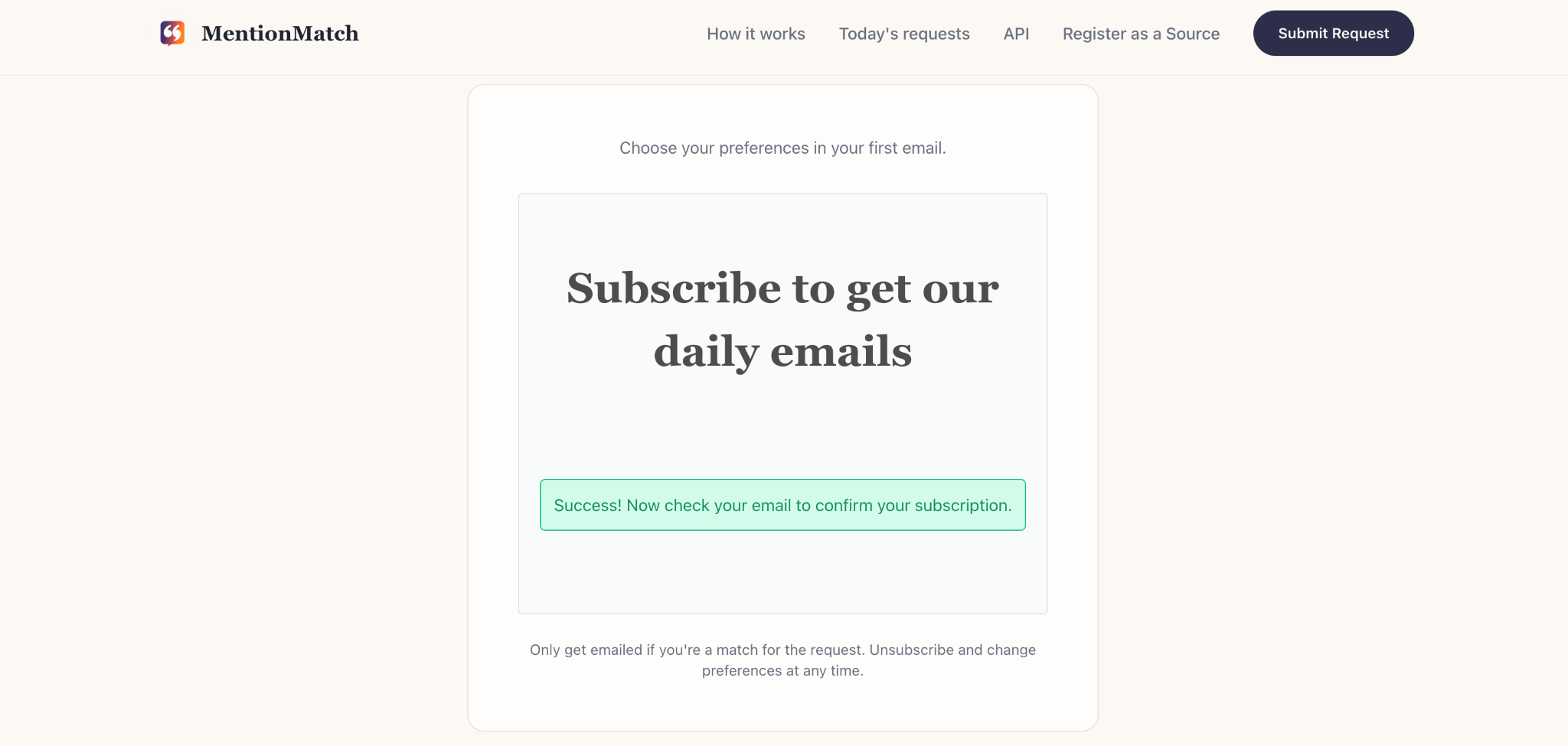
Then it follows a similar logic as other platforms - you receive notifications, write pitches, get answers.
You'll get 2-5 relevant requests per week depending on your niche. Each one matters.
Pros: Completely free, strictly B2B so relevance is high, anti-AI enforcement keeps quality up, can land HubSpot/Semrush-level links.
Cons: Low volume, B2B-only, clunky email-based onboarding, no built-in analytics or tracking.
Pricing: Free.
5. JournoFinder - Best for Proactive Outreach at Scale
My take: Every other platform on this list is reactive - you wait for a journalist to post a request and then pitch. JournoFinder lets you go on offence.
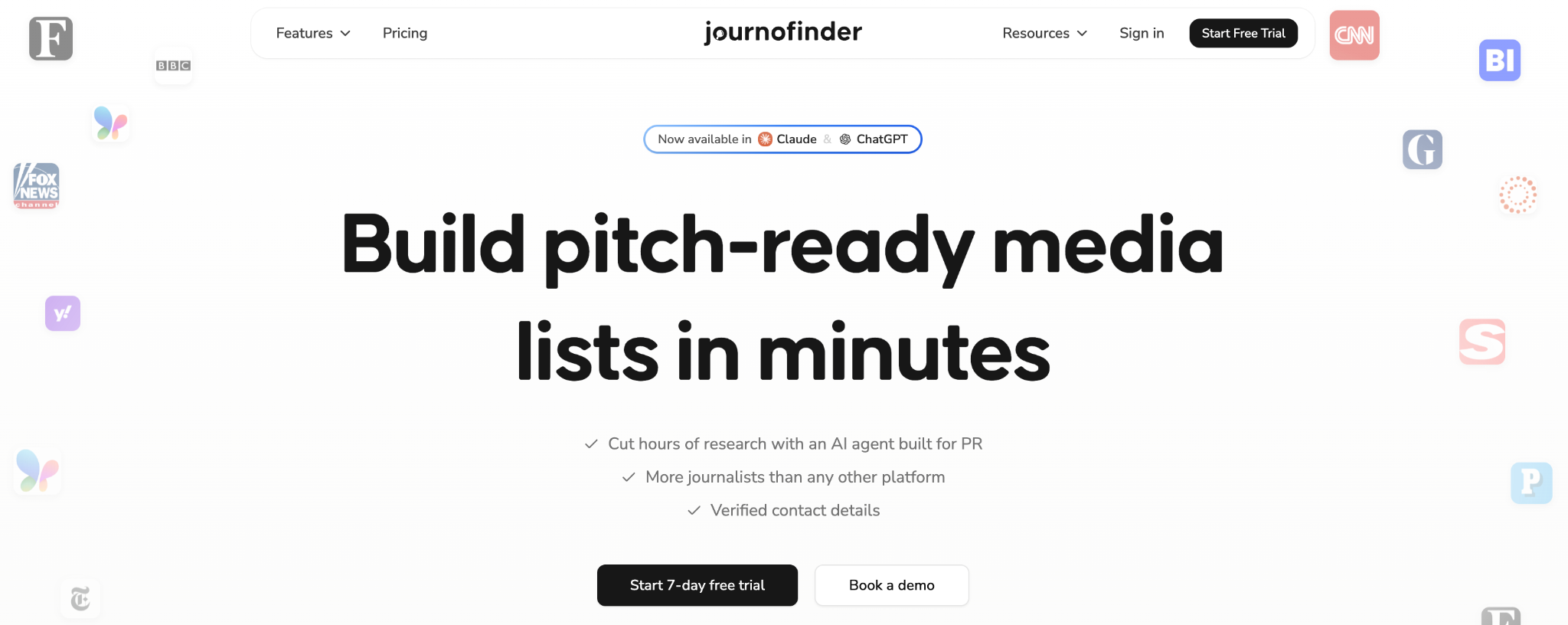
JournoFinder is an AI-powered journalist database with over 1 million contacts, searchable by keyword, country, domain authority, publication date, and publication type. Rather than waiting for journalists to come to you, you identify the reporters who cover your niche, find their contact information, and pitch them directly with a story idea or expert angle.
It also has a built-in #JournoRequest monitoring feature that aggregates requests from X and other social platforms into one dashboard, so you get the reactive side covered as well.
My experience: I use JournoFinder primarily for proactive SaaS digital PR campaigns - when a client needs coverage on a specific publication rather than just "any DR 70+ link." The search filters let you get very granular: find journalists who've written about SaaS HR tools in the last 6 months, at publications with DR 70+, in the US. That kind of targeting is impossible on the other platforms.
How to Use JournoFinder for Backlinks
You sign up and navigate the dashboard to search using keywords and industry-specific terms. You can filter by media type, outlet, and other metrics to find the right journalists for you.
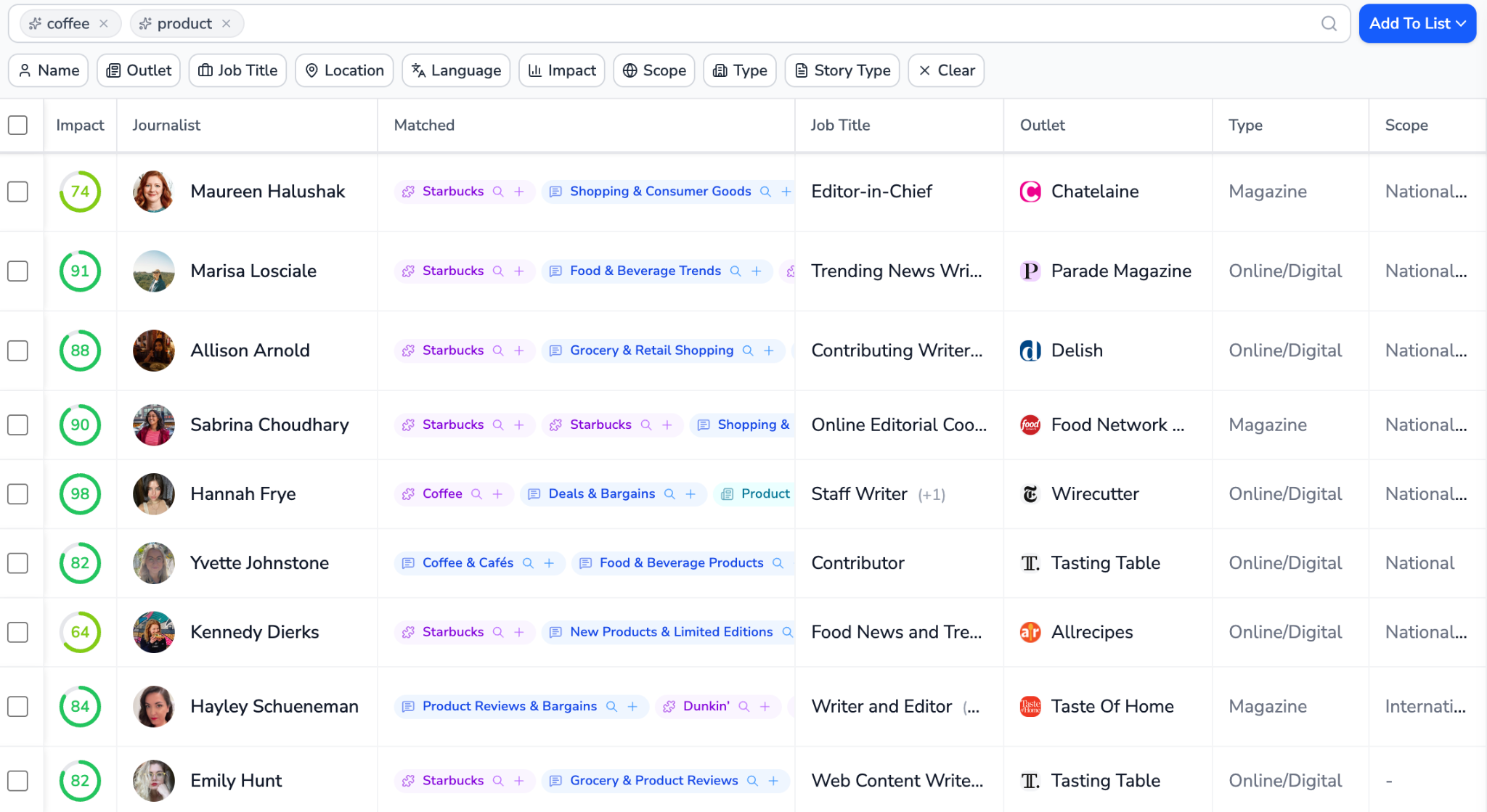
The platform gives you an automated impact score that compares what you want to achieve to whether you can do it with the respective journalist.
I’d suggest cross-checking domain rating and traffic in Ahrefs before adding a contact to your outreach list. JournoFinder gives you the journalist; you verify the publication quality externally.
Pros: 1M+ journalist database, granular search filters, built-in social monitoring, proactive outreach capability, local media filtering.
Cons: Requires a compelling story pitch (not just expertise to offer), need external tools to verify DA/traffic, primarily English-language markets.
Pricing:
- From $189/month ($99/month with an annual plan)
- 7-day free trial available; you could also book a demo session (free)
6. #JournoRequest on X and LinkedIn - Best Free Real-Time Option
My take: Underrated, but requires systems. Journalists constantly post requests on social media, often before they hit any platform, so you can be first if you're monitoring closely.
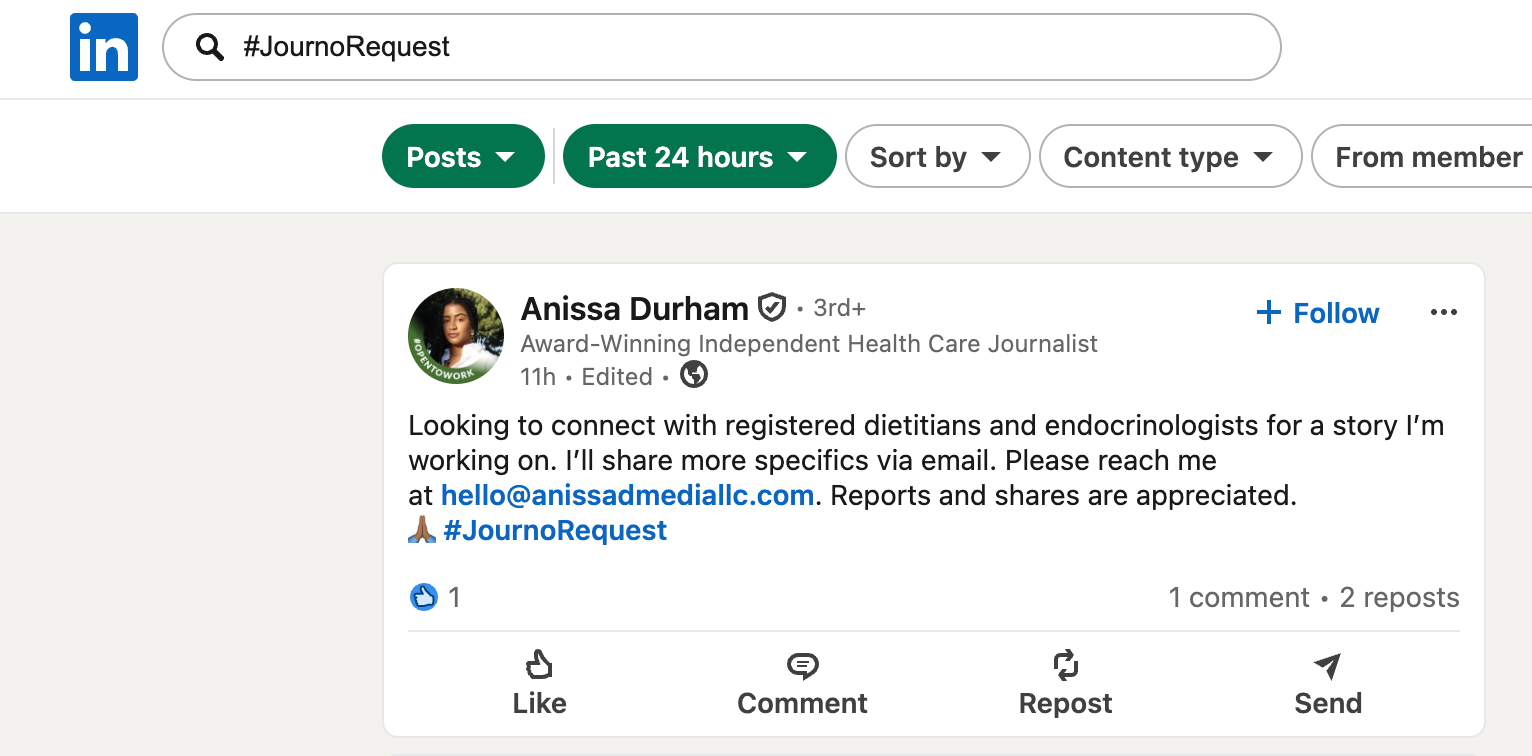
Journalists use hashtags like #journorequest, #PRrequest, #mediarequest, and #bloggerrequest on X and LinkedIn to find sources quickly. These posts often go up before the same journalist submits to any paid platform, which means the pool of respondents is smaller and the opportunity window is wider.
Key caveat: the majority of journorequest posts come from UK-based journalists. If you're doing US-focused link building, use this as a supplement. For UK campaigns, it punches well above its weight.
My experience: I've used X journalist requests primarily for clients in marketing, tech, and business, where there's solid UK and US journalist activity on the hashtags.
How to Use #JournoRequest on X and LinkedIn for Backlinks
If you don’t want to do it the old-fashioned way (manually), set up keyword monitoring on Sprout Social, Keyhole, or a TweetDeck column for #journorequest [your niche]. Check it daily, or set push notifications for high-priority keywords.
Monitor multiple hashtags: #journorequest, #PRrequest, #mediarequest, #bloggerrequest, #FindASrc.
Respond publicly with a one-line hook, then offer to DM details. This signals credibility to other journalists who see the thread.
Pros: Free, real-time opportunities, direct journalist relationships, works across X, LinkedIn, Bluesky.
Cons: Requires constant monitoring, UK-heavy, lacks a dashboard or tracking, and has a high noise-to-signal ratio without proper keyword filtering.
Pricing: Free. Monitoring tools like Sprout Social or Keyhole add cost if you want automation.
7. SourceBottle - Worth Knowing, Best for ANZ and eCommerce Supplements
My take: Not a priority tool for most link builders, but if you have clients in Australia or New Zealand, or eCommerce/lifestyle brands that can offer product giveaways, it fills a gap nothing else on this list covers.

SourceBottle connects journalists and bloggers with expert sources, operating primarily across Australia, New Zealand, the US, UK, and Canada. The standout feature is its giveaway/product sample category - journalists can post requests specifically for products to review or feature, which is a genuinely different use case from the other platforms here.
My experience: I use SourceBottle selectively - primarily when I have a client with ANZ media goals or a product-based brand that can offer samples.
How to Use SourceBottle for Backlinks
Subscribe to your 10 free keyword alerts immediately - these filter your daily email digest to relevant callouts only.
If you're using it for product placements, move to a paid plan and post your own giveaway opportunities. On paid plans, Featured Profiles let journalists discover you proactively.
For case study sourcing in ANZ campaigns, being clear about what you're offering (phone interview, product sample, photo) significantly improves response rates.
Pros: Free to start, good ANZ coverage, unique giveaway/product sample mechanic, keyword-filtered email digests.
Cons: Mostly low-to-mid DR publications for US campaigns, limited free plan, overpriced at the paid tier compared to Featured.
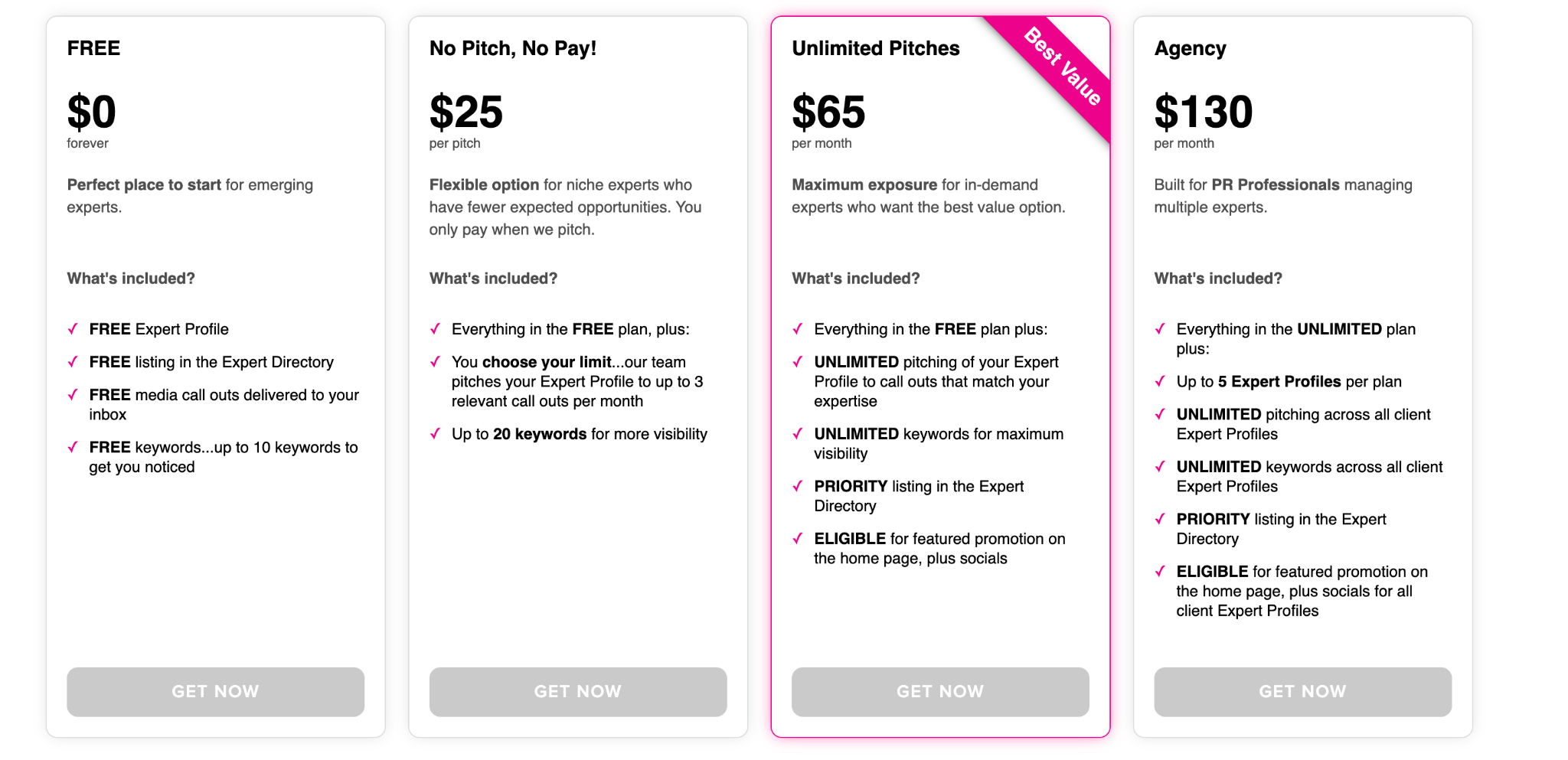
Pricing:
- Free
- $25/month
- $65/month (unlimited pitches)
- $130/month (agency)
Top-Tier Pitching Tips that Work in HARO Alternatives
The platform matters less than the pitch quality. Here's what separates the pitches that land from those that don't, based on running these campaigns with dozens of SaaS clients.
Speed is the single biggest variable. On most platforms, journalists pick from the first handful of relevant responses. Being 30 minutes faster than your competitors is worth more than having a marginally better pitch. Set up keyword alerts and respond immediately.
Write like a human, not a template. Journalists identify AI-generated responses immediately, and most platforms now actively filter them. Vary your sentence lengths. Use specific examples. Reference your actual experience.
Match your angle to the publication's audience. A pitch for an Inc. article reads differently from a pitch for a niche B2B SaaS blog, even if the question is identical. Read a few of the publication's recent articles before you pitch. This takes 3 minutes and meaningfully improves your selection rate.
Build a pitch library, not a pitching habit. Keep 5-7 pre-written expert angles aligned with your genuine areas of expertise. When a relevant request comes in, adapt one of those angles rather than writing from scratch. This dramatically reduces response time and keeps quality consistent.
Track your placements externally. Set up Google Alerts for your name and company. Use Ahrefs backlink monitoring to catch links as they go live. Most platforms don't notify you when you're published. Our guide on manual link building covers how to build a systematic tracking workflow.
4-6 sentences is almost always the right length. Lead with the direct answer to the journalist's question. Follow with one specific supporting example or data point. Close with a one-line credential signal. That's the format that gets selected across every platform I've tested.
Use fewer platforms better. Two platforms executed well - consistent monitoring, fast responses, quality pitches - outperform five platforms done half-heartedly. Start with one or two and scale only when the workflow is dialled in.
Final Thoughts
Several of the best HARO alternatives are objectively better tools for link building than HARO was even at its peak. Less competition, better filtering, and platforms that reward expertise over pitch volume.
If you need more than just tools (and if you are in any SaaS niche), get in touch with us to discuss specific strategies you can use with these tools.
Frequently Asked Questions
Is HARO still active in 2026?
Yes. HARO was relaunched in April 2025 after Featured.com acquired the brand from Cision. It operates as a free email newsletter with improved spam filters. It's usable, but the platforms above generally deliver better ROI for link builders today.
What is the best free HARO alternative?
Source of Sources for general link building; MentionMatch for B2B SaaS specifically. Both are completely free and maintain higher editorial standards than the new HARO due to active spam enforcement.
What's the best HARO alternative for B2B SaaS link building?
MentionMatch for relevance and zero cost, Featured.com Pro for volume and publication authority. For premium placements in finance or enterprise tech, Qwoted. The right answer depends on your niche and budget.
How is Featured.com different from HARO?
Featured creates the content for publishers rather than just connecting journalists with sources. Their editorial team curates responses and assembles the final article, so your pitch competes in a curated pool rather than landing directly in a journalist's inbox. Featured also acquired the HARO brand in April 2025.
Is Qwoted worth it for link building?
Yes, if you're in finance, health, or enterprise tech niches and need links from major publications. If you're in a broader or lower-competition niche, Featured or MentionMatch will deliver better ROI at lower cost.
How many link-building platforms should I use at once?
Start with two: one free (SoS or MentionMatch) and one paid (Featured). Add a third only when you have consistent workflows on the first two. Pitching quality degrades when you're spread too thin.
Can you build backlinks using Twitter/X journalist requests?
Yes, and it works well for UK-focused campaigns or anyone with an active social presence. Set up keyword monitoring for #journorequest and related hashtags rather than checking manually.
Do these platforms work for early-stage SaaS with a low DR?
Yes. Your DR doesn't affect whether journalists select your pitch - your expertise and pitch quality do. The links you earn through these platforms help build your DR over time.
I've used this approach for SaaS clients starting from DR 15-20 and seen meaningful authority growth within 6-9 months of consistent pitching. The workforce management SaaS case study is a good example of this in practice.