%20(250%20x%20100%20px).png)




AI is eating the top of your funnel, and if you run a SaaS website, you've probably already felt it. To show up in AI search results, you need to become a brand and website that AI engines trust and cite. And that’s done with SaaS-specific GEO.
Now, let me share the strategies and tactics our SaaS link building company uses to support GEO for SaaS websites.
What Is GEO for SaaS?
GEO stands for Generative Engine Optimization. It's when you structure your content, data, and digital presence so that AI search engines like ChatGPT, Perplexity, Google's AI Overviews, Gemini, and others cite you when they answer questions in your category.
So, a machine is deciding whether your content is trustworthy enough to be repeated to a human.
This is especially important for the SaaS industry, and here is why.
When the question to the AI becomes something like, “What does [your product] integrate with?” or “How does [your product] compare to [competitor]?” - you can be sure that the AI will respond to that question. The accuracy of this response, along with its favorable mention of your company, hinges solely on your content organization.
SaaS sites are full of exactly the pages AI loves to pull from, like pricing pages, feature specs, integration lists, and comparison pages. These are high-intent, factual, and specific.
But there's a darker side to this. SaaS products change fast. Features get added. Pricing tiers shift. If your content is stale or if your product information is inconsistent across the web, AI models can and do hallucinate details about your product and present them confidently to prospective customers.
How AI Models Decide What to Cite
To optimize for GEO, you need to understand (at a basic level) how these systems work.
Most of today's AI assistants that pull from the live web use something called RAG, Retrieval-Augmented Generation. This basically means that they retrieve relevant documents from the web in real time and then generate a response grounded in that content.
The question is: which documents do they retrieve? And which content from those documents gets surfaced?
From what we've observed working across dozens of SaaS clients, AI models tend to prioritize content that answers four specific types of queries:
- Definition queries - "What is [tool/category]?" Clean, concise definitions get cited heavily.
- Specification queries - "What does [tool] support?" or "Does [product] have [feature]?" Structured, specific, factual content wins. Tables are better than paragraphs. Lists beat prose.
- Comparison queries - "[Product A] vs [Product B]" - these are goldmines for AI citation. If you don't control your own comparison narrative, someone else will.
- Use-case queries - "Best tool for [specific job]" - these are not feature lists. AI models look for content that maps features to real-world scenarios within the lists.
There's also the concept of Entity Confidence, essentially, how consistently and confidently the AI "knows" what your company is, what you do, and how you're described. If your LinkedIn says one thing, your Crunchbase says another, and your website says a third, AI models will either pick one at random or lower confidence in citing you at all. So, consistency is key here.
The Core GEO Strategies for SaaS Websites
1. Build an Original Data Moat
The single most reliable way to get cited by AI is to publish data that nobody else has.
AI models love citing primary sources. When you publish proprietary research, even simple things like "We analyzed 500 SaaS onboarding flows and found that...", you become the origin point for that information. Third-party sites reference you. AI cites those references. Your authority compounds.
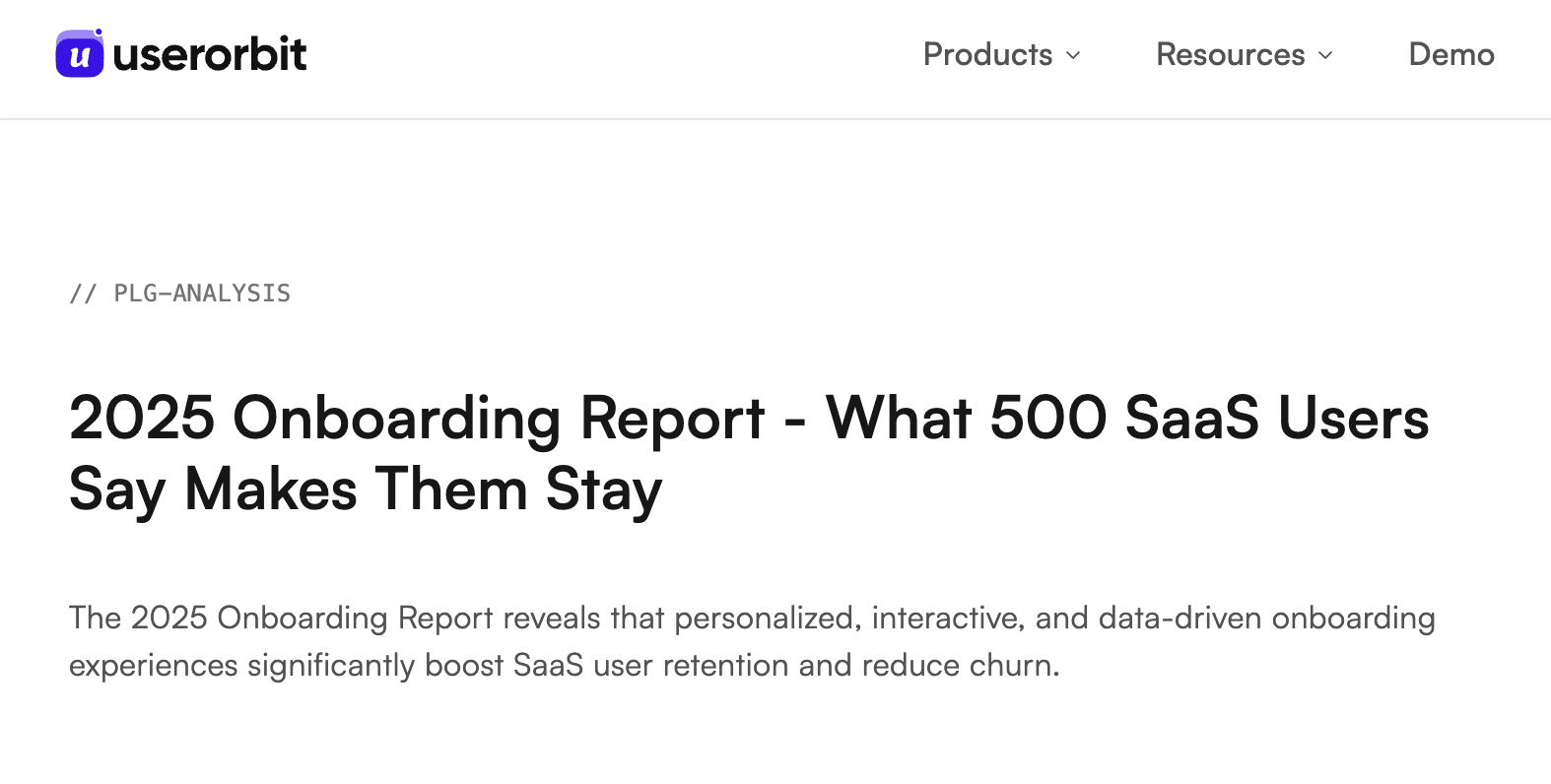
This doesn't mean you need a massive research team. You already have internal statistics, usage data, customer survey results, and industry benchmarks for your customer base.
You just need to make the data findable, clearly attribute it to your company, and structure it so a machine can easily extract the key claim.
2. Achieve Semantic Topic Completeness
AI models assess your SaaS website as a whole on its comprehensive, trustworthy authority on a topic. It doesn’t look at individual pages.
Let’s say you sell project management software, but you only have content about "task management" and don’t touch related subtopics like workload visibility, sprint planning, or resource allocation. AI models may view your site as a partial authority and prefer a competitor who covers the full cluster.
This is a bit different from traditional keyword targeting. The goal here is to make sure that when an AI model reconstructs the topic map of "project management software," your site fits into that map coherently and completely.
To use this strategy today, you just need to run a content gap audit. Map out every relevant subtopic in your category. For each gap, ask: Is there a page on our site that meaningfully addresses this? If not, that's your GEO content roadmap.
3. Solve Real Problems in Plain Language
This one sounds obvious, but it's consistently where SaaS content falls short.
AI models aren't impressed by brand language. They're looking for content that matches how real people describe real problems.
Here is a clear example I see on SaaS websites all the time:
- "Streamline your workflow" → noise, used a lot on SaaS sites, not liked by LLMs
- "How to stop your team from missing sprint deadlines when half the team is remote" → clear and direct signal for LLMs
So, just write about problems the way your customers describe them and not the way your marketing team packages them. Use the language from your support tickets, sales call recordings, and customer interviews. That's the language AI is being trained on. That's what users are asking.
4. Keep Everything Fresh
AI models have a freshness bias, and you can take advantage of it by just adding "Last Updated" dates to every substantive page.
Reference the current year in relevant headers. Keep your product screenshots up to date as well! A 2022 screenshot of a UI that has changed three times since then is a red flag to both humans and LLMs.
For SaaS specifically, your pricing page, your feature pages, and your integration lists should have an update cadence baked into your workflow. Set a calendar reminder and treat it like product maintenance.
5. Build Third-Party Citations and Digital PR
This one doesn't change between SEO and GEO: external validation matters.
AI models trust what third parties say about you more than what you say about yourself. Being cited in high-authority, neutral sources like industry publications, research associations, press outlets, tells AI that your information is credible enough for others to repeat.
There are two primary tactics here:
Listicles and Roundups
Getting featured in "best [category] tools" lists on trusted domains is still one of the highest-leverage activities for GEO. These pages get crawled, get cited, and create the kind of cross-domain entity validation that AI systems use to build confidence. You need high-quality listicle link building for your SaaS website at all times.
For example, for our client Zero Bounce, we conducted targeted outreach and got them listed in top articles cited by LLMs, such as a listicle on “11 Best Email Verification Tools in 2026” published on mailtrap.io.
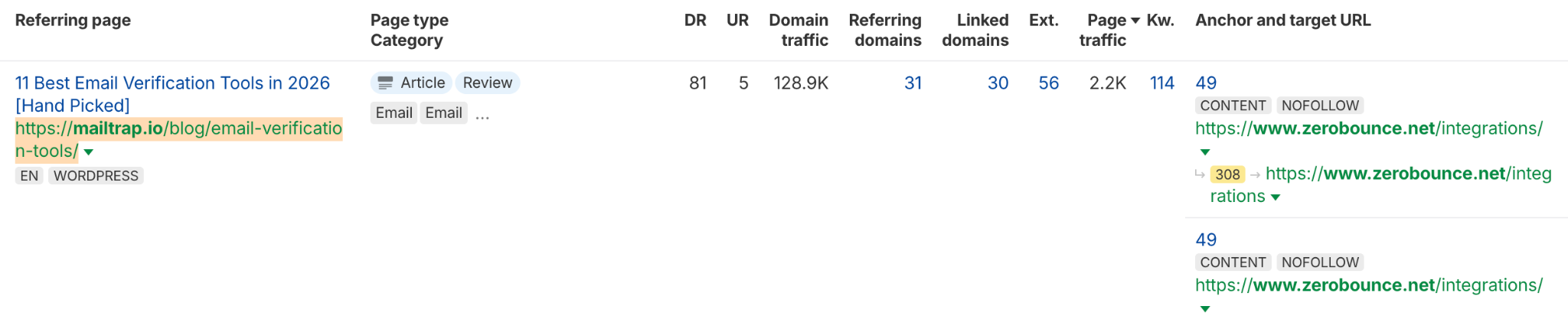
Being mentioned in this and other highly-cited listicles helped them to show up more on AI search results. You can read more on how we help them go from 0 AI Citations to 700+ in our case study on email validation SaaS.
The second one is digital PR.
Digital PR
It means earning unpaid mentions in high-value press articles, analyst reports, and association publications. A quote in TechCrunch or a mention in a Forbes report is worth far more than 10 blog posts on your own domain, from an AI citation standpoint. Think of your PR efforts as entity-building for machines, not just brand awareness for humans.
SaaS-specific digital PR links are often not so easy to earn, but they bring real long-term value.
For example, when we published an in-depth thematic research piece on digital business cards for our client, Wave Connect, on TechCrunch, their authority and citations from LLMs increased drastically.
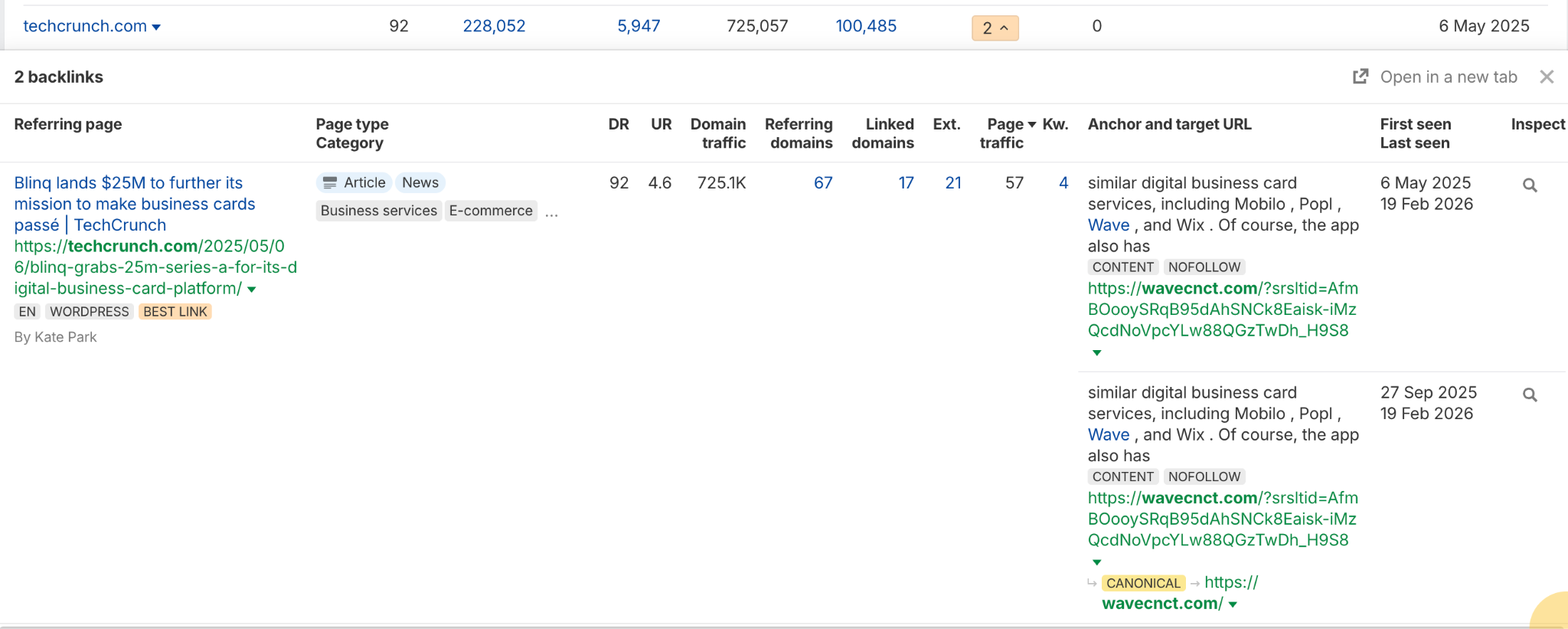
Read more about how digital PR, combined with other methods, can boost your visibility in our case study on digital business card SaaS.
6. Optimize for Multimodal AI
Increasing numbers of AI algorithms will analyze images along with text. For the SaaS industry, this means that screenshots and demo videos are an integral part of the content.
Each screenshot or video needs to include alt text. By that, I mean something more than “dashboard” but something like “Project Management Dashboard displaying task allocation by team member and deadline compliance.”
Important note: Do not use stock photos in the form of screenshots. The vision-enabled AI models can differentiate between these two types, and using actual UI screenshots makes your content more authoritative.
7. Apply the 40-Word Definition Rule
Every high-intent page on your site needs an immediate, concise definition right after the H1.
If your page is titled "Automated Invoice Processing Software," the very next sentence, or within the first 40 words, should define clearly what the product does, who it's for, and what the core value is.
This is the content AI pulls when it answers definition and specification queries. If you bury your definition three paragraphs down, you're losing citation opportunities to pages that lead with clarity.
Here’s a small exercise for you: open your five most important pages on your SaaS website, find the first 40 words after the H1, and ask whether they would serve as a self-contained answer to "What is [your product]?"
8. Use HTML Comparison Tables
Your versus pages and pricing pages should be structured as clean HTML tables, not designed as custom image-heavy layouts or JavaScript-rendered comparisons that machines can't read.
AI models scrape these pages to answer comparison queries. If they can't parse your feature comparison table because it's built in a way that obscures the underlying HTML, they'll pull from your competitor's table instead.
When making these, make sure to include:
- Pricing tiers,
- Feature availability,
- Integration lists,
- Security standards,
- Limits (user counts, storage, API calls).
Make it scannable for humans and machine-readable for AI.
9. Stack Your Schema Markup
Schema markup is structured data that tells machines exactly what type of content they're looking at. For SaaS, the core stack includes:
- SoftwareApplication schema on your product pages
- FAQ schema on your help content and landing pages
- Article schema on your articles and documentation
This doesn't guarantee AI citation, but it makes it more likely. It tells the model: here is a SaaS product, here is how it's priced, here are the answers to common questions. LLMs that are already leaning toward citing you will do so more confidently.
10. Ungate Your Documentation
If your API docs or technical documentation are behind a login wall, or if they're rendered client-side with JavaScript (meaning a crawler sees a blank page), your visibility to AI is a bit more limited than the competitors that have it public (and updated).
If you can, open your docs. Make sure they're server-side rendered.
And critically: add use-case summaries to technical pages. Pure reference documentation doesn't get cited often because it's too dense, too context-free. A short paragraph at the top of each documentation page that explains what it is for and who uses it makes that page citable.
11. Run a NAP + Entity Consistency Audit
NAP refers to Name, Address, Phone. It is terminology from local SEO. In terms of SaaS, it becomes even broader: your company name, description in one line, your products' categories, and your contact information must match in all directories, including G2, LinkedIn, Crunchbase, and your company's website.
The slight inconsistency of even a company name or description can affect the confidence levels of the AI model to identify your entity. The machine will look for matches among sources; therefore, provide them with something to match.
How Do You Measure GEO Success for SaaS?
Share of Model (SoM) is your new primary metric for GEO success. It’s essentially how often AI mentions you when answering queries in your category. You can measure this manually or with tooling.
The most practical approach is building a "Golden Query" test set: 20 to 30 questions that your ideal customers would realistically ask an AI assistant. Run them across ChatGPT, Perplexity, Gemini, and Claude. Track whether you're cited, how you're described, and whether the description is accurate.
Run this test periodically. Document changes. It becomes your GEO benchmark.
In tooling, the space is evolving quickly, and our team has tested various tools: Ahrefs, AthenaHQ, RankScale, Otterly AI, Semrush's AI Suite, and more. None of them is perfect yet, but they're getting better at tracking AI citation visibility at scale. Now, we’re using an internally developed specialized AI visibility tool.
On the measurement side, we use a combination method. Here’s what one of our GEO strategists shared:
“To measure GEO success, we track AI visibility with our internal tool and dig into Google Search Console using regex filters to find which phrases are brining traffic. Together, they tell us not just whether we're being cited, but which topics real users are searching for.”
I'd recommend this approach for any SaaS team serious about measuring GEO impact.
Here’s another indirect signal worth tracking: flat organic traffic combined with rising branded search volume. It’s not as complicated as it sounds. If fewer people are clicking through from Google but more people are searching your brand name directly, it likely means AI is introducing your product to people who then come looking for you. That's GEO working, even if your analytics don't know how to show it.
Conclusion
Your SaaS website is no longer just a brochure for humans. It's a structured database that AI systems read, evaluate, and decide whether to quote.
There’s one thing you can do today: Run your product name through ChatGPT, Perplexity, and Gemini. Ask each one a question your ideal customer would ask. See what comes back. That's your baseline. Everything in this article is about improving it.
If you need more support in getting brand mentions for LLMs, feel free to contact us for a free proposal.
FAQs
What's the difference between SEO, GEO, AEO, and LLMO?
These terms get used interchangeably, but they're not quite the same thing.
- SEO (Search Engine Optimization) is when you optimize content and sites to rank higher in traditional search results, like Google's blue links. It's built around click-through, ranking positions, and keyword targeting.
- GEO (Generative Engine Optimization) is the practice of optimizing content for AI-generated responses, aiming to get your content cited by AI systems like ChatGPT, Perplexity, or Google's AI Overviews.
- AEO (Answer Engine Optimization) is often used as a near-synonym for GEO, with a slight emphasis on featured snippets and direct-answer formats. Some use it specifically to refer to optimizing for voice search and zero-click answers. In practice, most of the tactics overlap significantly with GEO.
- LLMO (Large Language Model Optimization) focuses specifically on how your content is represented within the training data and retrieval systems of large language models. It's the most technical framing, focused on entity recognition, knowledge graph representation, and how models learn about your brand over time, rather than just on what gets cited in any given query.
In short, SEO is for Google rankings. GEO and AEO are about getting cited in AI-generated answers. LLMO is about how AI systems fundamentally understand and represent your brand. For most SaaS marketing teams in 2026, SEO & GEO are the most actionable places to start.
What are the best GEO visibility tools SaaS companies can use?
There are a few tools we’ve tested that work well for GEO visibility checking: Peec AI, Ahrefs, AthenaHQ, RankScale, Otterly AI, and Semrush's AI Suite. Other tools known in the industry are Goodie AI, Scrunch AI, and MarketMuse.