%20(250%20x%20100%20px).png)




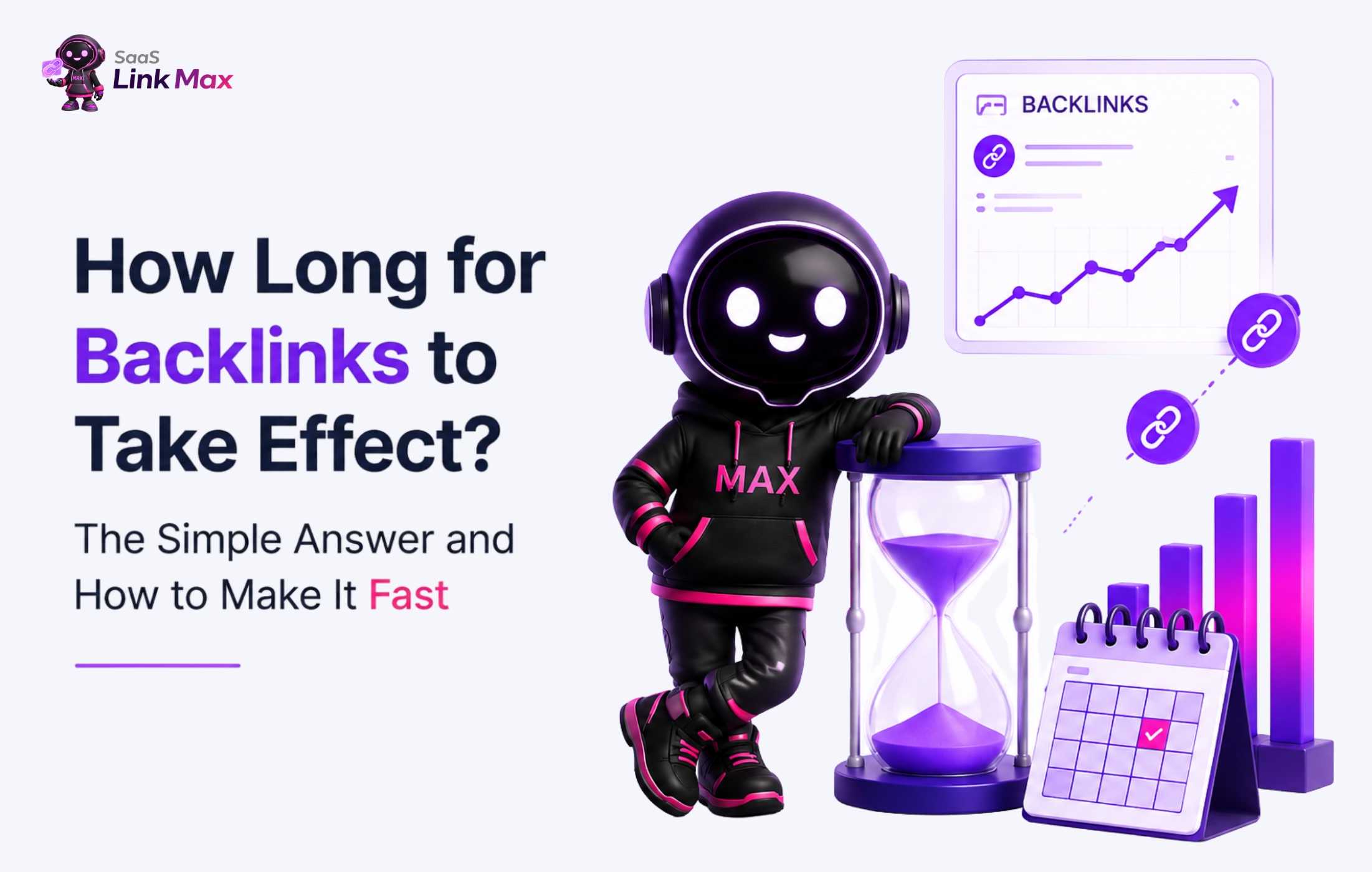
Most backlinks take anywhere from 2 to 10 weeks to show up in your Google rankings - though 10 weeks is closer to the real average.
That range isn't an accident. A solid, relevant link pointing to an established site can nudge a low-competition keyword in just a few days. A brand-new site going after something competitive? You might be waiting 6 months or longer. The process isn't instant either - Google has to crawl the link, index it, and evaluate it before it does anything for you. Only after all that does it start to compound.
Below, I break down exactly what determines where your links land on that scale, drawing on what I've learned from our work as a SaaS link building agency.
How Long For Backlinks To Take Effect, By Scenario
Timeline depends almost entirely on the link, the keyword, and the site receiving it. Here's the breakdown we use internally when setting client expectations:
The biggest takeaway from that table: the same backlink can behave completely differently depending on where it lands. We once added a single link to a client's established product page and watched a mid-difficulty keyword jump within two weeks. Then we added a comparable link to a six-month-old SaaS site and saw nothing budge for an entire month. Same link quality. Completely different foundation.
The Three Stages Every Backlink Goes Through
Every backlink moves through three stages. Knowing which one you're in keeps you from panicking or popping champagne too early.
Stage 1: Indexing (1 to 3 Weeks)
A link can't do anything until Google crawls the page it lives on and pulls it into the index. Before that happens, it simply doesn't exist from a rankings standpoint. Pages on busy, high-traffic sites get re-crawled quickly. A quiet post sitting on a low-traffic blog? That can go unnoticed for weeks. This is the single biggest reason a "powerful" link sometimes feels like it isn't doing anything.
Stage 2: The Ranking Jump (A Few Weeks After Indexing)
Once the linking page is indexed, Google sizes up the link's relevance and authority and decides how much weight to pass along. If the link is genuinely strong, this is where you'll see movement.
Pages stuck on page two tend to benefit the most at this stage - jumping from position 28 to 11 is far more realistic than clawing from 5 to 3, where every site Google already trusts is competing for the same ground.
Stage 3: The Compounding Climb (Months to Years)
After the initial bump, authority keeps building as long as you keep earning quality links. This is the stage most people underestimate. Backlinks are a long-term asset - their value stacks over time, and the full impact of a sustained campaign usually takes several months to fully show itself.
What Determines How Fast Backlinks Take Effect
These are the levers, roughly in order of how much they move the timeline.
Link Quality and Relevance
A contextual link sitting naturally inside relevant content on a site that actually gets traffic can show results in as little as a week. A footer link, a sidebar link, or something buried on a page that has nothing to do with your topic? That can sit there doing almost nothing regardless of how long you wait. Relevance matters just as much as raw authority - ten links from genuinely on-topic SaaS and industry sites will outperform a hundred from random blogs every time.
Your Website's Age and Authority
An established domain with a clean backlink history and existing content responds quickly, because Google already trusts it. A brand-new site is on a short leash, so the same link takes far longer to register. There's no shortcut around this except time and consistent quality.
And no, you don't strictly need backlinks to rank for everything, though they make almost everything faster, which is a longer conversation we have in can you rank without backlinks.
Keyword Competitiveness
The harder the keyword, the more links and the more time you'll need. A low-competition term might respond to a single good link in a week or two. To crack the top three for a high-volume commercial keyword, expect to need multiple strong links and steady pacing over several months.
Link Velocity (Pace and Scale)
Velocity is the rate at which you earn links. Earning quality links at a consistent, natural pace speeds things up, because each new link tends to amplify the others rather than just adding to them.
The trap is going from near-zero to a sudden flood of links, which can read as an unnatural scheme and get your links discounted.
Through years of campaigns, the pattern our team trusts is steady and relevant over fast and spiky. For example, digital PR is the one exception where a large burst of links in a short window is normal and beneficial, because the links are genuinely editorial. We compared the two approaches in our digital PR vs link building guide.
Dofollow vs. Nofollow
As for link type: dofollow links pass authority and are what actually move rankings. Nofollow links - think social platforms, forums, some major publishers - don't pass ranking power directly, so don't count on them to shift your positions. They still earn their place by keeping your link profile looking natural and sending referral traffic your way. But if ranking movement on any kind of timeline is the goal, your dofollow links are the ones to keep your eye on.
Link Position and Anchor Text
A link inside the main body content carries more weight and tends to be counted faster than one tucked into a footer or author bio. Google has confirmed it pays closest attention to links in a page's primary content.
Anchor text plays a role too. A descriptive, relevant anchor gives Google a clearer signal about what your page is actually about, which can speed things up. Just don't go overboard with exact-match anchors. Leaning too hard on them is one of the oldest spam signals in the book.
How To Make Your Backlinks Take Effect Faster
You have more control over the timeline than most people assume. A few practical moves, all of which we apply on client campaigns:
- Earn links from frequently-crawled sites. Pages on high-traffic, regularly updated domains get re-crawled fast, so your link gets indexed and counted sooner. These sites also tend to pass more authority, so it's a double win.
- Internal link to the page you're trying to rank. When you build a link to a page, point internal links at it too. It speeds discovery, distributes authority, and reinforces the topic. (If you've never audited your internal structure, it's often the cheapest ranking win available.)
- Prioritize relevance over raw volume. A handful of tightly relevant links will outpace a pile of generic ones, both in speed and durability.
- Keep the pace steady. Consistent monthly link building compounds. Stop-start campaigns reset your momentum every time.
If you'd rather not manage any of this yourself, that's the entire reason SaaSLink Max exists - we run relevance-first link building for SaaS companies through SaaS-specific guest posts, niche edits, listicle placements, digital PR, and other services.
What This Looks Like in Real Campaigns
I didn’t give you the initial scenario table just from thin air - it’s all based on our experience. And yes, it matches the industry benchmarks.
There are a few niche-specific patterns we've seen first-hand (which you can explore further in our case studies):
- For an established influencer-marketing platform, the existing domain authority meant new contextual links registered relatively quickly, because Google already trusted the foundation. Strong site + relevant links is the fast lane.
- For a construction workforce-management SaaS in a competitive space, the climb was slower and more deliberate, exactly what you'd expect when keyword difficulty is great. Sustained, steady link building over months did the work, not any single placement.
- For link building automation and AI software, the compounding effect of Stage 3 is the clear story: results built on themselves as the link profile matured, rather than arriving in a single jump.
The common thread across all of them is that timelines tracked the foundation and the keyword difficulty far more than the individual links. That's the most useful expectation to set before you start.
So, How Long for Backlinks to Take Effect?
The industry average is 2 to 10 weeks (our experience supports this as well).
At the end of the day, it comes down to three things: the quality of the link, your site's authority, and how competitive your keyword is. No fixed timeline overrides those.
Set your expectations around them, build steadily, and treat backlinks as the long-term investment they actually are. If you'd rather hand that off to a team that does this every day for SaaS brands, get in touch.
Frequently Asked Questions
How Long Until Google Indexes a Backlink?
Usually somewhere between 1 and 3 weeks, though it really depends on the page the link lives on. A high-traffic site that gets crawled constantly can pick it up within a day. A quieter page on a low-traffic domain might take weeks - and in rare cases, Google's own John Mueller has noted that a low-priority page can wait months before getting crawled at all.
Do Nofollow Backlinks Affect Rankings, and How Fast?
Not directly. Nofollow links don't pass ranking power, so they won't move your positions on their own. Where they do help is referral traffic and keeping your link profile looking natural. If actual ranking movement is the goal, dofollow links from relevant pages are what you're after.
How Long Do Backlinks Take to Work on a Brand-New Website?
Longer than most people want to hear - typically 3 to 6 months before you see anything meaningful, sometimes more. A new domain has no trust built up, so Google moves cautiously. Even a heavy link-building push won't fully shortcut that. The site needs time, content, and links working together.
How Many Backlinks Do I Need to Move Rankings?
It depends on where you're starting from and how competitive the keyword is. A low-competition term can shift on just a handful of quality links. A competitive commercial keyword might need dozens of strong, relevant ones. What changes that number more than anything isn't quantity - it's quality and relevance.
We broke down the economics in more detail in our SaaS backlinks cost guide.
Why Aren't My Backlinks Working Yet?
Usually one of a few things - and in roughly this order: the linking page hasn't been indexed yet, the links aren't strong or relevant enough, your site is too new for Google to act on them confidently, the keyword is more competitive than your current link profile can handle, or the links are nofollow. Figure out which one applies before writing off link building entirely.
Do Backlinks Lose Their Effect Over Time?
A healthy backlink keeps contributing as long as it stays live and relevant. But the entire value of a link evaporates the day it's removed. This is exactly why link building is an ongoing program, not a one-time purchase, and why monitoring your existing links matters as much as building new ones.