%20(250%20x%20100%20px).png)




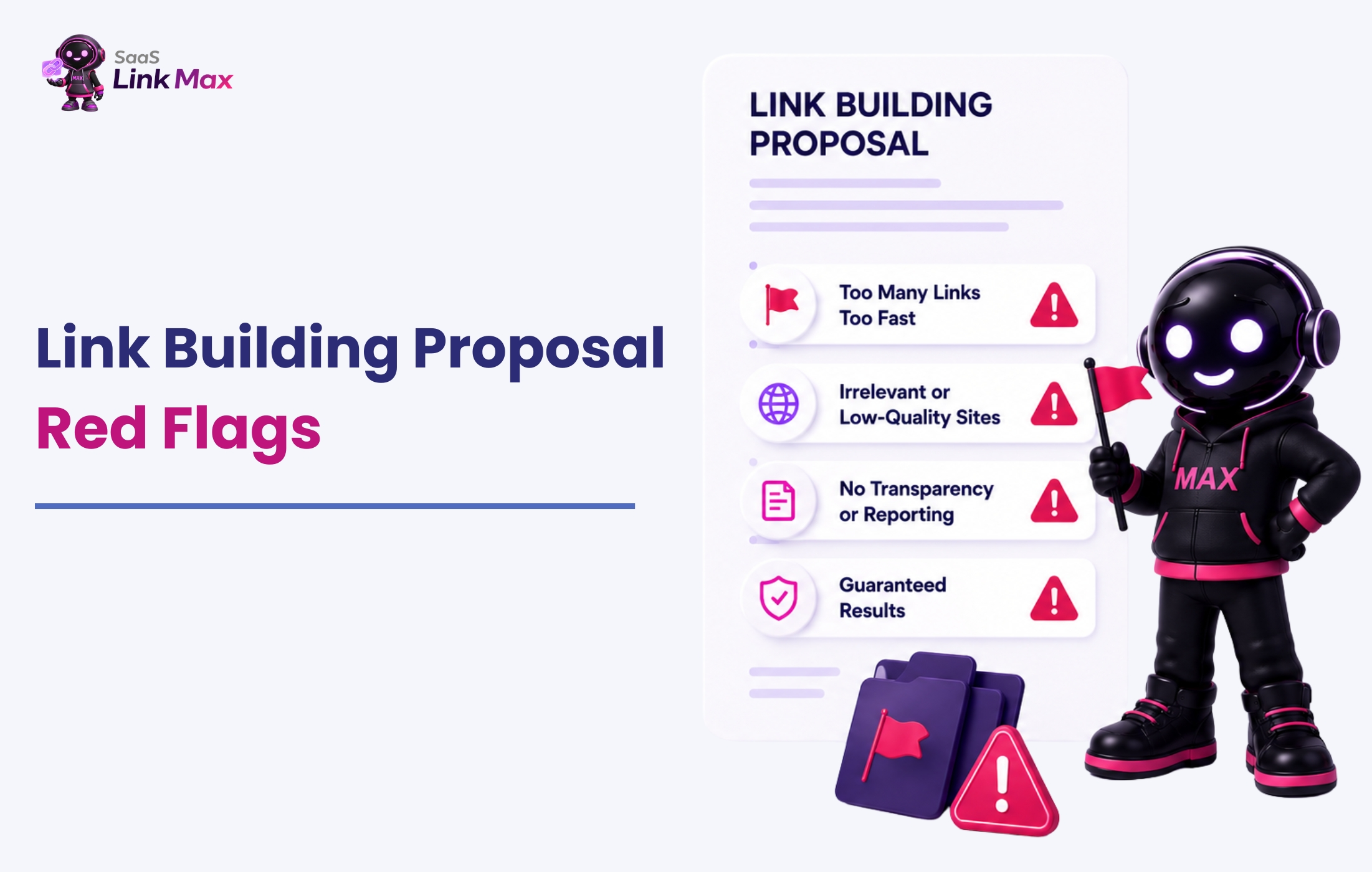
I've reviewed hundreds of link building proposals over the years, and the ones that cause the most damage aren't the obviously bad ones. They're the “overly polished” ones. The ones with clean decks, confident language, and metrics that look impressive until you know what to look for. Bad proposals are designed to look exactly like good ones.
That’s why in this article, I'll walk you through every major link building proposal red flag our SaaS link building agency learned to watch for - both before you sign and once a campaign is already running. I'll also cover what a trustworthy proposal contains, and the questions worth asking any agency before you hand over budget.
The Difference Between a Proposal Red Flag and a Bad Link Practice
These two things get confused constantly, and conflating them leads to bad decisions.
A proposal red flag is a pre-commitment warning. It's something you can spot before any work begins - in the language an agency uses, the metrics they lead with, the methodology they describe (or deliberately don't). These signals tell you how an agency thinks and what kind of campaign you're likely to get.
A bad link practice is what you discover after the fact. There are placements on link farms and over-optimized anchor text, which create penalty risks, or links from sites with no real traffic. These are the consequences of ignoring early signals or not knowing which link building red flags to look for in the first place.
The proposal stage is your cheapest opportunity to protect yourself. A 15-minute review of a proposal can save you three months of budget and a backlink profile that's actively working against you.
This distinction is also worth keeping in mind when you're evaluating an agency mid-campaign. If you're seeing red flags in their reports, which I'll cover later, those are evidence of the same underlying issues that should have shown up in the proposal.
6 Most Common Link Building Proposal Red Flags
1. Guaranteed Rankings or a Fixed Link Quota
If a proposal leads with guaranteed first-page rankings, stop reading and move on.
Nobody controls Google's algorithm. Rankings depend on hundreds of variables, like your content quality, technical SEO, competitive landscape, domain history, and user behavior signals. Link building is just one input among many. Any agency promising specific keyword positions is either planning to use tactics that produce a short-term spike before collapsing, or they're not being straight with you. Either way, it's not a foundation for a real campaign.
The same logic applies to fixed link volume commitments. "20 DR 50+ links per month" sounds like a concrete deliverable. That’s a link building proposal red flag. When you commit to volume before understanding what's available, what's relevant, and what the target pages need, you end up optimizing for a number rather than outcomes.
The agencies I've seen produce real results never promise link counts. They scope campaigns around competitive gaps, identify the pages with the most ranking upside, and build toward those targets. The volume follows from the strategy, not the other way around.
What a responsible agency says instead:
- Realistic projections tied to a competitive gap analysis,
- Honest timelines (three to six months is a typical window for measurable movement),
- Clear criteria for what constitutes a qualifying link (rather than a quota).
2. Vague or Hidden Methodology
Ask any prospective agency a direct question: "Walk me through exactly how you get links."
You should get a specific answer: what types of sites they target, how they qualify them editorially, who creates the content, and what happens if a link doesn't go live.
The most common dodge I see is the "exclusive publisher relationships" claim. It sounds impressive. In practice, it almost always means one of two things:
- They're operating from a paid placement inventory (a list of sites that accept money for links, which Google explicitly treats as a link scheme), or
- They're using a private blog network.
Both look fine on paper until Google catches up and the penalty lands on your domain.
A credible manual link building process is transparent by nature. If an agency hedges around methodology questions or redirects to their client results, that evasion is itself the answer you needed.
What a real answer looks like:
- How they find prospects (specific criteria, not "we have a database"),
- How they evaluate topical fit and editorial quality,
- What the outreach process looks like,
- What they do when a placement falls through.
3. DR as The Only Quality Signal
Domain Rating (DR) is a useful proxy, but not a quality standard.
DR measures the strength of a domain's backlink profile relative to other domains. It says nothing about whether a site has real traffic, whether its content is editorially credible, whether it's topically relevant to your pages, or whether it would actually be read by anyone.
Sites with inflated DR and no real audience are common in the link seller market. A DR 65 placement on a content farm that accepts guest posts from anyone on any topic just adds noise to your backlink profile without adding authority. It creates association with a site that's essentially a link-for-sale operation.
When reviewing a proposal, look for whether they mention:
- Organic traffic of the linking domain (not just DR)
- Topical relevance - does the site actually cover your space?
- Editorial standards - real authors, original content, a real audience
- Placement quality monitoring over time, not just at delivery
The GEO and AEO dimension makes this even more important, since AI citation engines (Perplexity, ChatGPT, Google AI Overviews) evaluate links semantically. A link from a high-traffic, topically authoritative source with named authors carries genuine weight for AI visibility. I’ll explain this during our 6th red flag discussion.
4. Pricing That Doesn't Match the Work Involved
Quality link building is expensive because it's genuinely difficult work. Competitor analysis, target site prospecting, content creation, editorial outreach, relationship management, placement tracking - done properly, this is a significant labor investment per link.
As a rough benchmark, credible editorial placements through a reputable agency typically run $1,000-$2,000 per link on real, vetted sites. Full-campaign retainers at serious agencies generally start at $3,000-$5,000 per month.
When a proposal comes in dramatically below those figures - say, ten high-authority links for $500 - your question should be "How are they delivering this at that price?"
The answer is almost always one of three things:
- a Private Blog Network (PBN),
- a link farm, or
- a bulk content network with no real editorial standards.
The economics of quality link building simply don't allow for that kind of margin.
5. No Verifiable Case Studies or Client Results
Any agency worth working with has results they can point to, with specific client examples: what the site looked like before, what links were built, what changed in rankings and organic traffic, over what timeline, and in what industry.
If a proposal includes case studies but they're vague ("one of our clients grew traffic by 300%" with no site, no vertical, no strategy), that's not evidence of anything. It's marketing language dressed up as proof. You should ask questions about it during your free call (if available), to verify the case.
There are a few more things worth checking:
- Is the case study industry-specific? A B2B SaaS company should be seeing case studies from similar verticals. SaaS link building strategies, competitive landscape, content formats, and target publications are completely different from other industries, and the case studies should reflect that.
- Are the results verifiable? Client name, domain, timeline, and specific ranking/traffic changes you could cross-reference.
- Do third-party platforms match the story? Real agencies have real reviews on Clutch, G2, or similar platforms. If the only social proof is testimonials on their own site with no way to verify them, apply skepticism.
For context on what transparent, verifiable results look like, you can review our own case studies, including an AI backlink automation software case, an email validation tools case, and an influencer finder SaaS case.
6. No Mention of AI Search or AEO
You won’t see this as a link building proposal red flag often, but it's becoming one of the most reliable signals of whether an agency is current or still operating under 2022-era SEO assumptions.
Links don't just influence Google rankings anymore. They determine whether your site gets cited by ChatGPT, Google AI Overviews, and Perplexity.
Let’s say you're a SaaS company and your target buyers are using AI search to evaluate tools in your category (which they increasingly are); your link profile is directly connected to whether you show up in those answers. The same link from a topically authoritative, editorially credible source that improves your Google rankings is also the link that makes you a citable source for AI systems. SaaS GEO efforts and digital PR specific to SaaS would be a really important part of the proposal in this particular case. This is the same for any other industry.
Red Flags in an Ongoing Link Building Report
This can cost you months of wasted budget, so let’s cover it as well.
A link building report can look polished and still tell you almost nothing useful. So even if you start working with a company, there are red flags you should watch for.
1. Every Metric is DR or DA
Domain rating and authority metrics are useful but easily gamed - optimizing around them gets you high-DR placements that could be editorially worthless. A good report shows organic traffic, topical relevance, and actual placement context.
2. No Explanation of Why Each Placement Matters
A report that lists links and domains without explaining the strategic logic behind them is not describing the strategy. It’s just stating activity.
For every placement, you should understand: which page is it supporting, why was that publication chosen, what does this placement add to the authority profile of that page?
3. Links Pointing to Random Pages with No Logic
If placements are distributed across your site with no visible pattern, the campaign is almost certainly unfocused. A well-run campaign identifies the pages with the clearest business value and ranking upside, then systematically builds authority for those pages.
4. Anchor Text Buried or Not Reported
Anchor text distribution is one of the easiest places for a weak campaign to create risk. Over-optimized anchors (too many exact-match keywords, not enough branded or natural variation) create an unnatural profile that Google's algorithms are specifically tuned to detect.
A good report will make anchor usage transparent and explicit. If it’s not reported at all, that's a sign the agency either isn't actively managing it or doesn't want you looking too closely.
For more on why this matters, the contextual backlinks guide covers how anchor text fits into a healthy placement strategy.
5. No Mention of Dropped or Dead Links
Links can go dead. Publishers could change editorial standards. Redirects break. Any agency running a professional campaign tracks link retention as a matter of course, and tells you when something drops and what they're doing about it.
If a provider never discusses retention, you may be looking at selective reporting: showing you the wins and quietly not mentioning the losses.
6. Monthly Reports That Look Identical
Healthy campaigns evolve - target pages change as rankings move, competitor patterns shift, new content creates new opportunities. If these are not reflected in your reports, there may not be much strategic review happening behind the scenes.
What a Trustworthy Link Building Proposal Contains
After all the red flags, here's what the positive version looks like.
- Competitive gap analysis. Where you stand against sites already ranking - their backlink profiles, topical clusters. Strategy follows from the data.
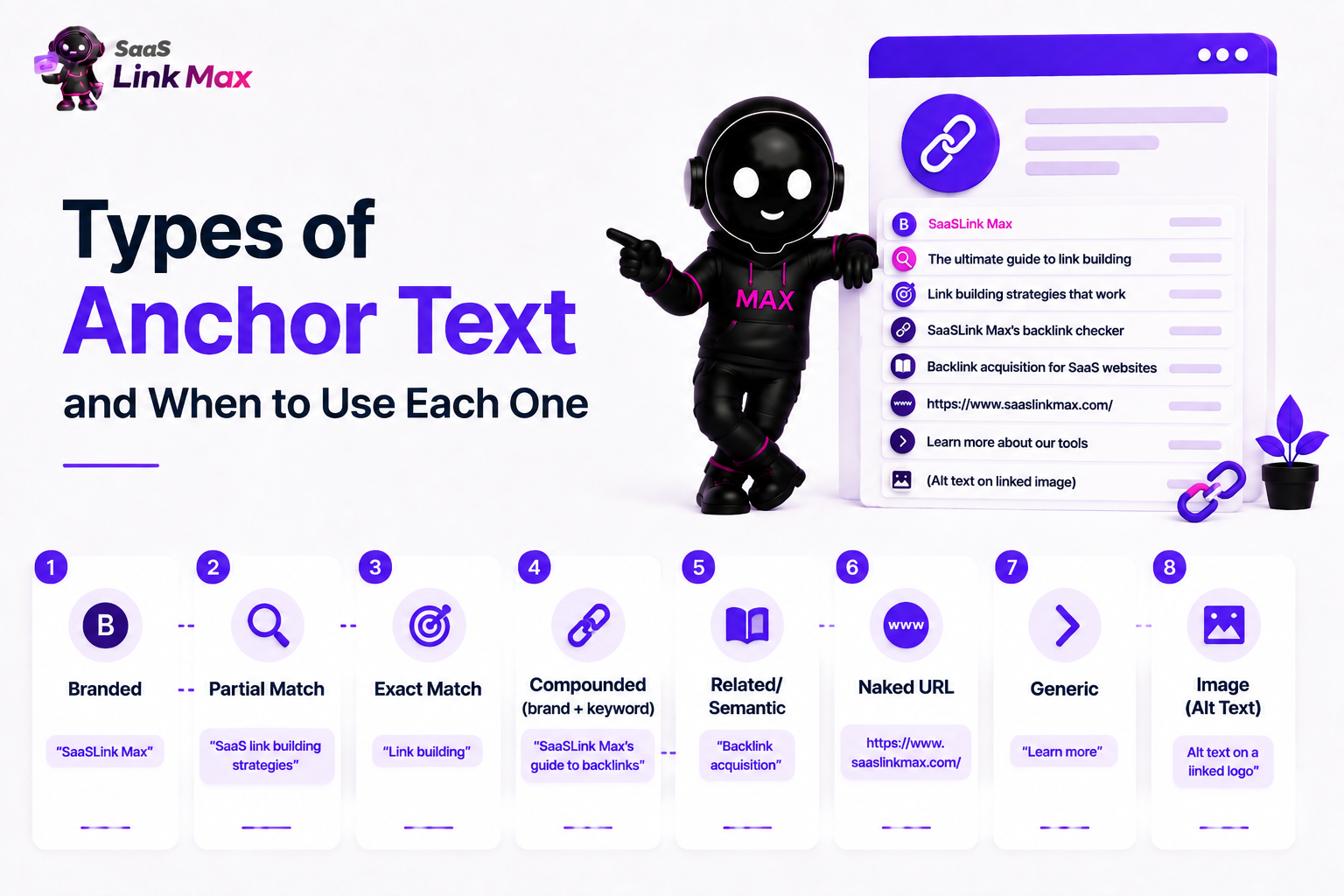
- Named target pages and anchor text plan. Which pages get links and why, with a clear rationale for anchor distribution (exact match, branded, naked URL) and how they'll keep it looking natural.
- Publisher criteria beyond DR. Minimum traffic thresholds, relevance requirements, editorial standards.
- Transparent per-link reporting. Live URL, anchor text, DR, organic traffic, and target page. Every placement verifiable.
- Realistic timelines. Honest about what link building is - one input among many, with results that compound over months, not weeks.
- AEO built into the methodology. Placements chosen for editorial credibility and topical authority, because those are the signals that carry weight in AI-generated answers.
Conclusion
A link building proposal is the first real test of how an agency thinks. Everything you need to know about their methodology, their priorities, and the quality of their work is visible in how they present it, if you know what to look for.
Look for the best agencies with these link building proposal red flags in mind. And if you’re in SaaS and want to work with an agency that knows how to get real results specifically for your niche, get in touch - we’re happy to give you a free personalized proposal.