%20(250%20x%20100%20px).png)





Resource page link building for SaaS is one of the few tactics left that's still genuinely white hat, still works in 2026, and doesn't require a six-figure PR budget to pull off. It just requires patience and the right process.
This guide covers exactly that - what resource page link building is, where SaaS-specific resource pages actually live (most guides only tell you about generic listicles), how to qualify a page before you waste an email on it, and how to write a pitch that gets a reply instead of an unsubscribe.
What Is Resource Page Link Building? (And Why It's Different for SaaS)
Resource page link building is the process of earning a backlink by getting your content, tool, or guide added to a page that already curates helpful links on a topic. Someone built that page specifically to point their audience toward good resources - you're offering to make their page better.
That's what makes this tactic different from a guest post or a digital PR pitch. You're not convincing an editor to write about you. You're suggesting an addition to a page whose entire purpose is to link out.
SaaS buyers specifically don't just Google "best [category] software" and pick the top ad. They dig through curated tool lists, "stack" pages from other startups, integration directories, and community-built roundups before they ever book a demo. A link on the right resource page puts your product in front of someone who's actively evaluating tools in your category.
That's a different kind of intent than a listicle click, and it's part of why we treat resource pages as a core piece of any SaaS link building strategy.
Is Resource Page Link Building Still Effective in 2026?
Yes, because it's still one of the few link building tactics that produces a link Google can clearly read as editorial. A real person maintaining a real page decided your content was worth including.
That said, set your expectations correctly. Resource page outreach won't give you the volume of a large-scale SaaS digital PR campaign or SaaS niche edits. It's a medium-effort, high-relevance tactic - you'll typically land somewhere between 1 and 5 links for every 20-100 personalized emails you send, and the pages you land on tend to stay live for years, which means the link (and the referral traffic) keeps compounding long after the outreach is done.
Where it really earns its place is in a diversified backlink profile. If your whole link profile is SaaS guest posts, it looks exactly like what it is - outreach. Resource page links, mixed in with other white hat link building strategies, make your profile look like what organic growth is.
SaaS Resource Page Categories
SaaS-relevant resource pages rarely show up under obvious searches like "marketing resources" - they live in places most agencies never check. Here's where to look.
GitHub "Awesome Lists"
Developer-focused SaaS tools have an entire ecosystem of curated GitHub repos (awesome-devtools, awesome-saas, awesome-api-tools, and hundreds of niche variants) that function exactly like resource pages, just in markdown instead of HTML. If your product touches development, infrastructure, or APIs, these are often higher-authority and easier to get into than a typical blog resource page.
Startup "Tools We Use" and Tech Stack Pages
Founders and ops teams love publishing the stack they run their company on. These pages exist specifically to recommend tools, which makes them some of the easiest resource page placements in SaaS, especially if your tool solves a real, specific problem they've written about.
No-Code and Low-Code Community Resource Hubs
Communities built around Webflow, Notion, Zapier, Bubble, and similar tools maintain resource pages recommending complementary tools. If your SaaS integrates with or serves users of any major no-code platform, these are worth mining.
API and Developer Documentation Resource Sections
Many dev-tool companies keep a "resources" or "ecosystem" page listing tools that pair well with their product. If you integrate with a platform, ask to be listed - it's a natural, relevant fit for both sides.
Compliance and Security Resource Lists
SOC 2, GDPR, and HIPAA compliance trackers and checklists are maintained by legal, security, and ops-focused sites and often link out to relevant SaaS tools. If security or compliance is part of your product story, this is an underused channel.
Accelerator and VC Portfolio Resource Pages
Many accelerators and VC firms publish resource pages for their portfolio companies and the broader startup community, recommending tools across categories like finance, HR, marketing, and dev tools.
University Entrepreneurship and Business Program Pages
Business schools and entrepreneurship centers often maintain resource pages for students building companies - these are exactly the ".edu" opportunities worth chasing, and they carry real authority.
Marketing and Aps "Stack" Roundups
Sites built around marketing automation, growth, and RevOps content often maintain long resource pages listing tools by category (CRM, attribution, email, analytics). If you're not on Zapier's or HubSpot's ecosystem/marketplace-adjacent resource pages and you integrate with them, that's a gap worth closing.
The pattern across all of these: think about where the people who'd actually buy your product go to research tools, not just where "resource page" search operators happen to return results.
How to Build a SaaS Linkable Asset Worth Pitching
Resource page curators don't add links out of generosity - they add links because it makes their page better. Which means the first real question isn't "who do I email," it's "do I have anything worth linking to." It's the reason linkable assets deserve their own strategy.
The strongest linkable assets for SaaS tend to fall into a few categories:
Free Tools and Calculators
An ROI calculator, a pricing estimator, or a lightweight version of your core functionality gives resource page curators something genuinely useful to link to.

Original Data and Benchmark Reports
SaaS companies sit on data most publishers don't have - usage patterns, churn benchmarks, category-specific statistics. Publishing that as a standalone resource is one of the highest-converting linkable assets we build for clients, because it's the kind of thing other writers cite for years, not just once.
We saw this play out directly in the case for a digital business card SaaS: instead of pitching product pages, we built statistics-driven resources like a business card statistics hub, including a top business card statistics page optimized specifically for search and citation.
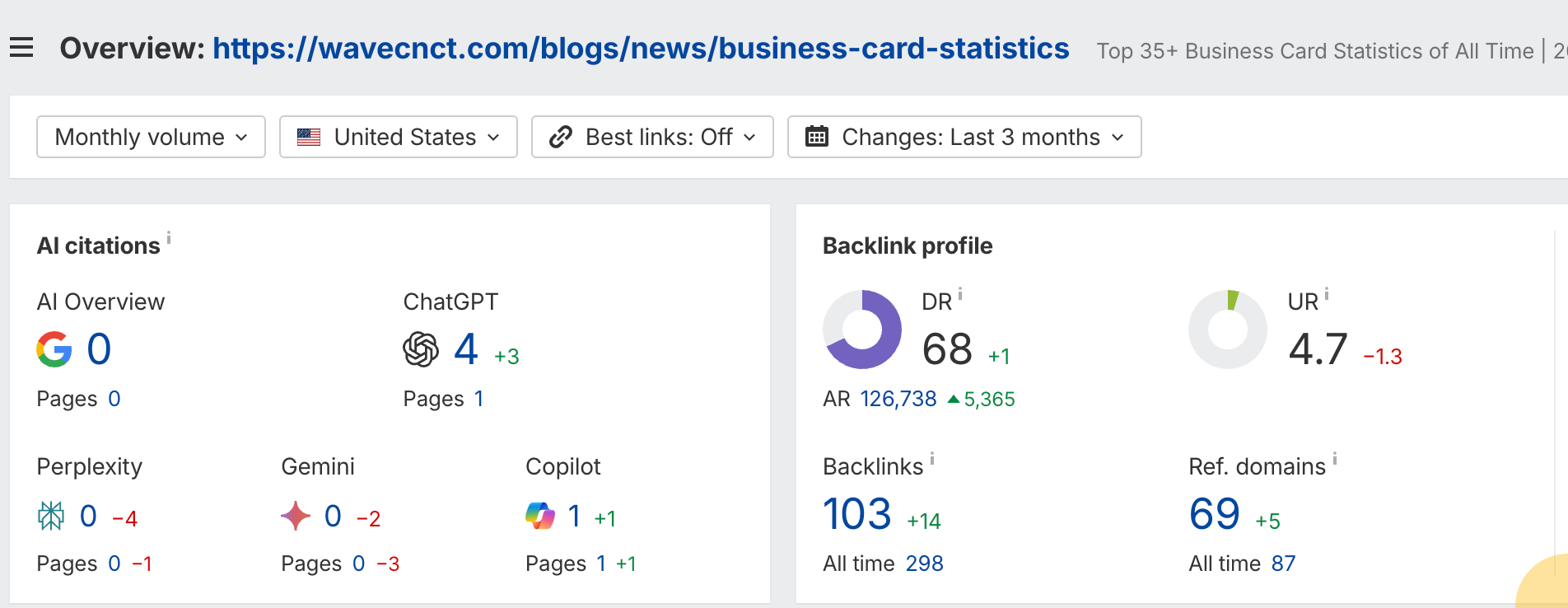
That single asset helped drive 103 organic links and 69+ referring domains, because it gave resource pages, journalists, and bloggers something concrete and specific to point to, not a generic pitch for a product page.
Comparison and Alternative Pages
"X vs. Y" and "alternatives to X" pages get linked from resource and tool-roundup pages constantly, especially in crowded SaaS categories.
Integration and Migration Guides
If your tool solves a specific, painful step (migrating from a competitor, connecting two platforms), a clear guide on that topic is exactly what a lot of resource pages are built to recommend.

If you don't have any of these yet, that's the first step - build one, then start prospecting.
How to Find Resource Pages Worth Pitching
Once you have something worth pitching, it's time to build your prospect list. There are three reliable ways to do this.
Search Operators
Start broad, then get specific to your category. A few that consistently surface SaaS-relevant pages:
- [your category] intitle:resources inurl:resources
- [your category] "useful tools" OR "recommended tools"
- [your category] inurl:links.html
- [your category] "tools we use"
- [your category] "tech stack" site:.com
- [your category] "further reading"
Run 10-15 variations, swapping your category term each time (e.g., "project management," "customer support software," "expense tracking") to widen the net.
Competitor Backlink Mining
Pull a competitor's backlink profile in Ahrefs or Semrush and filter referring URLs containing "resources," "tools," or "links." If a page already links to a direct competitor, it's already proven it's open to including tools in your category - that's a warm lead, not a cold one.
.edu and .gov Searches
For SaaS categories that touch compliance, education, finance, or public services, university and government resource pages are worth the extra effort:
- site:.edu [your category] resources
- site:.gov [your category] tools
These are harder to land, but the authority and durability make them worth prioritizing on your list.
For a broader rundown of the tools that make this process faster, we've put together a full breakdown of the best link building tools worth having in your stack.
How to Qualify a Resource Page Before You Pitch
Sending pitches to dead or low-quality pages wastes time and hurts your sender's reputation. Run every prospect through this checklist before it makes your final list.
Expect to disqualify 60-70% of your initial list. That's the difference between a pitch that converts at 1-2% and one that converts at 8-10%.
How to Write a SaaS Resource Page Outreach Email
The single biggest reason resource page pitches get ignored is that they read like a template. Webmasters get dozens of these a week - the ones that get a reply are specific, short, and clearly not copy-pasted.
- A few rules that consistently work:
- Reference something already on their page. Mention a specific resource they've linked to. It signals you really looked into it.
- Say exactly what you're offering and where it fits. Don't make them guess. If their page has categories, tell them which one your resource belongs in.
- Keep it to 5-7 sentences. You're making a helpful, specific suggestion from one professional to another.
- Follow up once, after 7-10 days. One reminder is enough. More than that reads as pressure.
This is the same underlying structure and framework we use across manual link building campaigns generally - specific, short, and focused on what's in it for them.
Common Mistakes That Kill SaaS Resource Page Campaigns
A few patterns show up again and again in campaigns that underperform:
- Pitching your homepage instead of a specific asset. Resource pages link to guides, tools, and data; so, don’t link to the homepage or product pages.
- Prioritizing authority over relevance. A high-DR page in an unrelated category won't link to you no matter how good your metrics are, and if it somehow does, the link won't carry much topical weight anyway.
- Sending identical emails to every prospect. Even minimal personalization meaningfully improves reply rates.
- Offering payment for a placement. If a webmaster asks for payment, walk away. It defeats the purpose of the tactic and risks a penalty if the pattern is detected at scale - this is a bigger topic on its own, and it's worth reading through whether you should buy backlinks in 2026 before you make that call either way.
- Ignoring broken links you spot along the way. If a page you're qualifying has dead links, mention them. It gives the webmaster a second reason to edit the page - fixing something broken.
If you want a broader gut-check before sending anything out, we've laid out a full link building proposal red flags list that applies just as well to your own outreach as it does to vetting an agency's approach.
How to Scale Resource Page Outreach Without Losing Quality
Resource page link building is inherently manual - there's no real shortcut around personalized outreach. But you can still build a repeatable system around it.
Batch your prospecting. Set aside dedicated blocks to find and qualify prospects using Ahrefs Content Explorer or Semrush, and get them into a spreadsheet before you write a single email. Prospecting and outreach are different modes of work - mixing them slows both down.
Build templates with personalization slots, not fully generic templates. Write 3-4 base structures and personalize the opening line and value proposition for each prospect. This keeps volume manageable without sliding back into the generic email problem above.
Track everything. Whether it's a dedicated outreach tool or a spreadsheet, log every email sent, every response, and every link earned. Over time, this tells you which asset types and which pitch angles are actually converting, so you stop guessing.
Pair it with other tactics. Resource page outreach fills a specific gap, but it won't carry your entire link building program on its own. It works best alongside other tactics like listicle link building for SaaS as part of a diversified profile.
Resource Page Link Building vs. Other SaaS Link Building Tactics
If you're deciding where to start, this is worth reading alongside our full comparison of digital PR vs. link building - the short version is that resource pages are one of the most accessible entry points for a SaaS company that doesn't yet have the brand recognition to land press coverage, but they're not a replacement for a mature program.
If you need help understanding which strategies would work for your SaaS specifically, just get in touch with SaaSLink Max, and we'll walk you through what a program built around your product would look like.
Frequently Asked Questions
How Many Resource Page Links Should a SaaS Company Aim for Per Month?
A realistic target for a lean in-house effort is 3-8 qualified links per month once your prospecting and outreach process is dialed in.
What's a Good Number of Outbound Links on a Resource Page Before I Skip It?
Aim for pages with 30-70 external links. Fewer than 10 usually signals an inactive page; more than 100 means your link is likely to get lost in the noise.
Can an Early-Stage SaaS Startup Do This Without a Big Brand Name?
Yes - this is actually one of the few tactics where brand recognition matters less than relevance. A specific, genuinely useful asset (a free tool, an original dataset) will get linked regardless of how well-known your company is.