%20(250%20x%20100%20px).png)




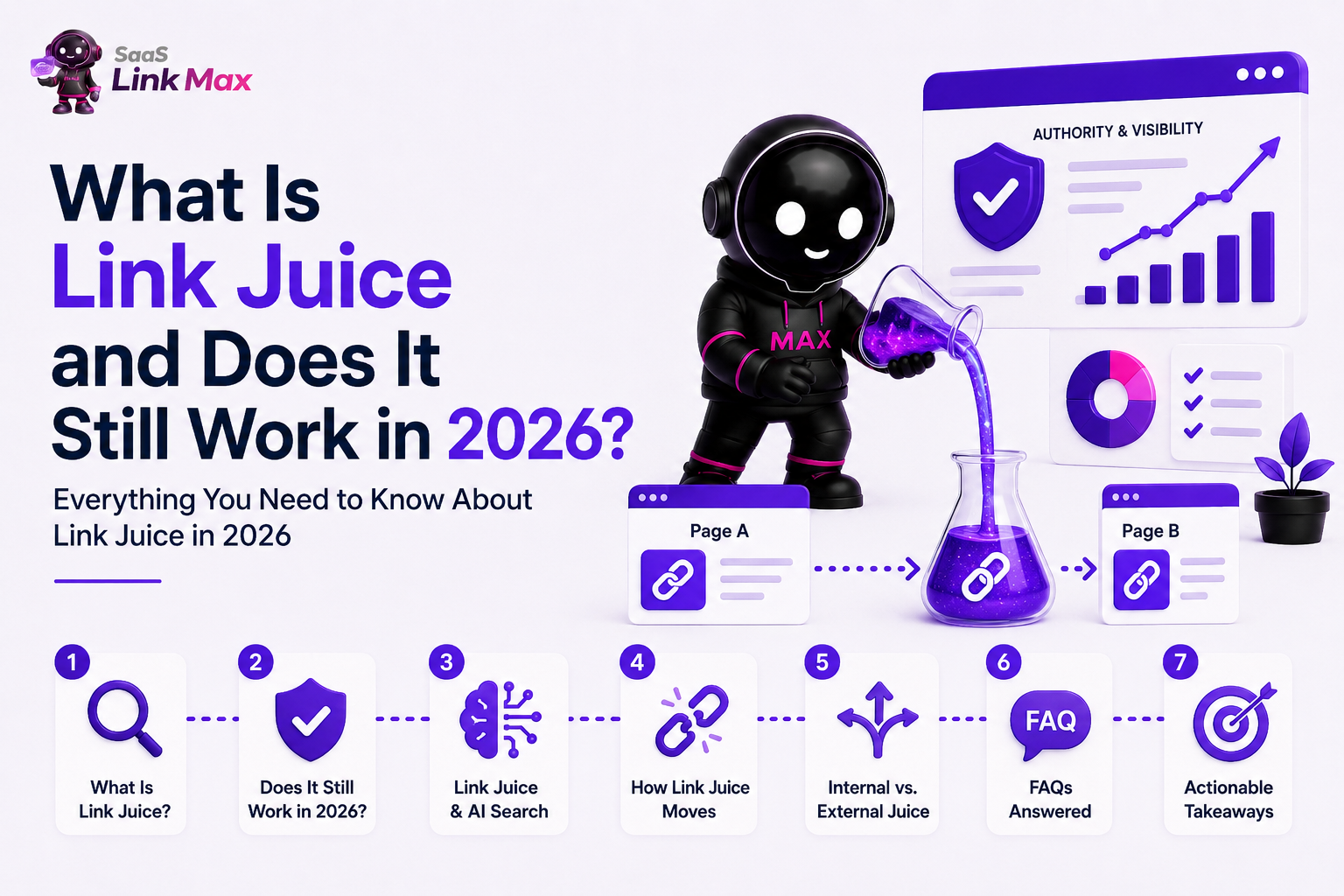
Link juice is the value or authority that a hyperlink passes from one page to another. So when a page links to you, it's basically passing the trust signal to search engines and LLMs. The way link juice works has changed, but it’s still working as well as it used to.
Our Saas Link building agency manages projects manageI manage link building projects day-to-day, and clients always have this in our onboarding calls, mainly because they read something online and want to have a full picture before investing in it. I’ll explain link juice the same way as I do to clients, including also the tactics that people used to abuse (those are mostly dead now), and mechanics that work.
What Is Link Juice In Plain Terms
There are two pages - A and B. When page A links to page B, some of the page A credibility flows to page B through that link. That’s the whole concept of a link juice, aka link equity (the official name).
Link juice is a bit of an old industry lingo, but you’ll still hear it a lot because it’ s more intuitive - you can picture a resource flowing from one place to another, which is exactly what’s happening.
Does Link Juice Still Work in 2026?
Yes, it does, and Google says so directly in its own guidelines - a site still passes equity to another one though a link. PageRank, the original algorithm that supports link juice, is still behind how Google ranks pages. Before, it used to show the ranking score publicly, now it’s not the case.
The major change is how equally is the link juice distributed. When the algorithm was first introduced, it used to pass equal equity to all outgoing links. If I give 10 links from my blog page, it passes equal value to all ten. So, you could pile up links and the quantity would boost rankings.
Now, it’s stricter, and pushed by two main metrics: topical relevance and quality.
Topical relevance means that the source page and the target page share a similar subject line, and they are really close in the niche and context they are covering. And the quality is simply the authority and trustworthiness of the linking domain.
There are other filters and models that Google uses as well:
- How likely is it that a user will click the link? (Reasonable Surfer model)
- Is the link natural and organic, or manipulated? (SpamBrain)
- Is the link sponsored, ugc, or nofollow? (the attributes (rel tags))
Does Link Juice Still Work for AI Search?
In general, the traditional “link juice" is related to the PageRank equity, which doesn't really flow through AI search as a direct mathematical ranking score like it does for search engines.
However, AI systems evaluate the web authority through systems like co-citation, semantic context, and brand mentions, which are similar quality metrics that search engines do to pass link juice. They are also trained on high trust data, which is usually websites with high authority domains. So, link juice is also related to how easily people can find you through AI search.
Our team has seen identical content perform really differently in AI overviews and LLM results in general, depending whether the page has a good backlinks profile behind it. So authority that's built through links is a part of the system that makes LLMs trust you enough to cite you.
If you want deeper on specifics of this overlap, I'd point you to our GEO for SaaS subsites guide and our SaaS LLM visibility strategies piece. Both go into exactly how link-earned authority carries over into AI visibility.
How Does Link Juice Move from Page to Page?
Let's make this a bit concrete with an example. Let's say page A links to page B with a normal do-follow link. Some authority passes over, but how much does it pass depends on a couple things.
What Determines How Much Juice a Link Passes?
The link has to be crawlable. If the link is hidden behind JavaScript a search engine can't render, or it's blocked by robots.txt, it's invisible. No matter how good of a source it is, no link juice will be passed.
It has to be a followed link. If you add a nofollow, sponsored, or UGC tag, you're telling search engines not to pass any authority there. It's that simple.
Link juice gets split across the page. If a page links out to three places, each one gets a decent chunk of link juice. If it links to 50, everyone's getting scraps. This is why a link from a page with a selective approach to outbound links is more effective, and also why link farms do not work anymore.
The linking page itself should be authoritative and with years of trust and quality content. That way, LLMs and Google will value it more.
The linking page should be relevant to your content. Let's say if you are an IT company, you need to get your link from a cybersecurity publication, not a random lifestyle blog. Even if the cybersecurity publication has lower DR than the lifestyle blog, relevance is more important.
The link you get should be from the body of the article, the main text, not the footer, sidebar, or a hidden part of the page. From within the main body it passes more authority.
Have organic and contextual anchor text. This doesn't determine how much value is passed, but it tells the search engines about the context and what the page is about.
Finally, ensure proper HTTP status on your own page. A 200 or 301 redirect is good for equality pass-down, but a broken link leading to a 404 just leaks that link juice into nothing.
Build your link building systems around these, and if you’re building this for the first time, a simple link building checklist should be your next stop.
Internal Link Juice vs. External Link Juice
People usually think of link juice as something that comes only from other websites, but it also moves around in your own website, and you shouldn't leave it completely to waste.
External link juice is what people mean by link building, other domains linking to you. It's done through different strategies. For example, my team is specialized in SaaS link building, and we get those links through SaaS guest posting, SaaS-specific digital PR, niche edits for SaaS, earning mentions, all of it.
Internal link juice is how you move the authority around your own site. Let's say one blog post earned a bunch of backlinks and started ranking really well. If you link from that post to another relevant page, like a product page, some of the authority will flow there too. This is how you can build what's called pillar-and-cluster content model, when one strong hub page links to everything connected to it, and cluster pages reinforce the hub right back.
So, don't put all your energy into backlinks for all your pages. You can target a couple important pages, get the backlinks there, and build pillar-and-cluster models to spread the authority around.
Frequently Asked Questions
Is Link Juice the Same As Backlinks?
Backlink is the link. The link juice is the value that passes through that link.
Do Nofollow Links Pass Juice?
Nofollow links don’t pass juice. Google treats them more like a suggestion; so, I will not recommend counting on it for direct ranking value. Still, nofollow backlinks still fit into a bigger picture of contextual backlinks, and are useful for AI citations.
How Many Outbound Links on a Page is Too Many?
The more outbound links the page has, the less value each one gets.
Should I Buy Backlinks to Speed Up Link Juice?
If it’s a link farm, no. Paid guest posts are also a part of buying backlinks, and they aren’t necessarily too bad if controlled. So, it depends entirely on how you plan to buy the backlinks.