%20(250%20x%20100%20px).png)




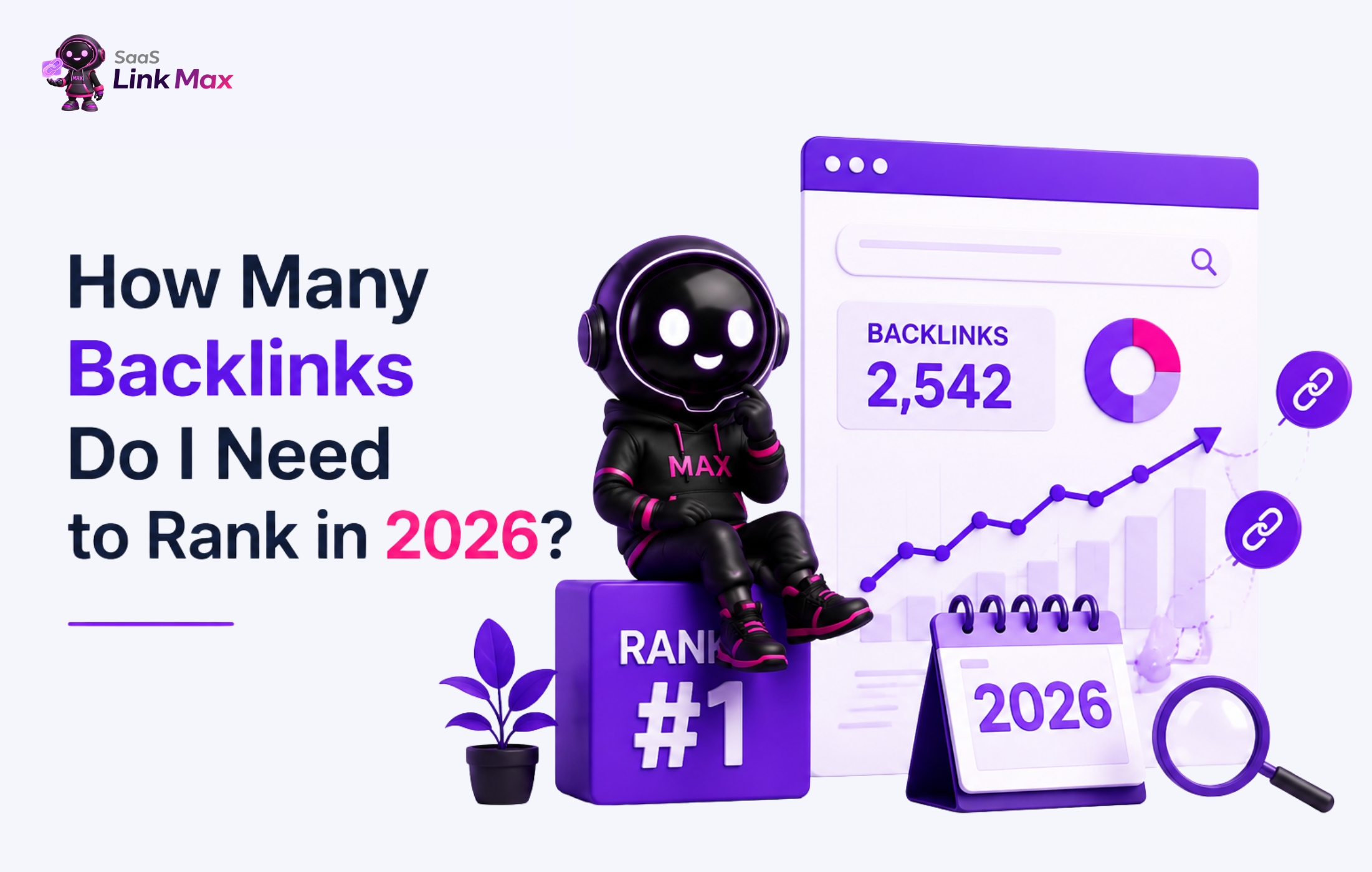
There's no specific number that works for every situation, but there is a number that's right for your specific keyword, and you can figure it out in about 20 minutes.
Quick summary before we get into the how:
You should look at what’s already ranking for that keyword. That means looking at the pages sitting on page one and working backward - a 5-step process I'll walk you through below.
One thing worth flagging before we dive in: the number that matters is referring domains (meaning unique websites linking to you), not your total backlink count. I'll explain the difference, but hold onto that distinction as you read through this.
Why There's No Magic Number?
Three variables make the answer different for every page and every keyword.
1. Competition
A local SaaS tool targeting "workforce management software for construction companies" is competing in a completely different pool than one targeting "project management software."
We've seen this play out directly with one of our clients. A highly specific niche meant competing against far fewer established domains, which changed both the number of links needed and the types that moved the needle. The more specific your keyword, the lower your baseline target usually is.
Read more on how we maneuvered the situation in our construction and workforce management SaaS case study.
2. Quality vs. quantity
One contextual editorial link from a topically relevant DR60+ site does more work than 40 directory submissions. Google's spam policies are explicit about this - low-quality directory links, automated link creation, and excessive link exchanges are all classified as link spam.
Contextual backlinks in real editorial content are what help rankings, and you need far fewer of them than people expect.
3. Your domain's existing authority
A site that already has strong topical authority and internal linking can rank a page with fewer direct page-level links than a fresh domain would. If you have relevant content across your site pointing to the target page, that internal equity matters - especially for SaaS companies with established blog archives.
How to Calculate Your Exact Backlink Target
This is the method we use at our SaaS link building agency before starting any campaign. It takes one keyword and one SEO tool (Ahrefs, Semrush, or Moz all work).
Step 1: Search your target keyword and record the top 10 organic results.
Open an incognito window, search your keyword, and note the URLs ranking in positions 1-10. These are your direct competitors.
You could also use local search results tools to customize the search for a specific location.
Step 2: Remove the outliers.
Not all of them are competing on the same terms as you. Remove:
- Major brand homepages (their authority is domain-wide, not page-specific)
- Reddit, Quora, YouTube, and forum threads
- .gov and .edu domains
- Any page that's clearly ranking for a different intent
You're left with comparable pages, the ones you're really fighting for position against.
Step 3: Pull page-level referring domains for each comparable result.
In your SEO tool, look up the page-level referring domains for each URL, (not the domain's total backlinks, not domain rating). The number you want is: how many unique websites link to that specific page.
This distinction matters a lot. A site might have 50,000 backlinks domain-wide, but the specific page you're competing against has 22 referring domains. That's your real benchmark, not the domain's overall authority.
Step 4: Calculate two thresholds.
- Median referring domains of positions 4-10 = your page-one entry target
- Median referring domains of positions 1-3 = your top-3 breakout target
Work toward the entry target first. Getting onto page one is a different (and usually cheaper) problem than pushing into the top three. Treat them as two separate campaigns.
Step 5: Subtract your current referring domains.
Your current page-level referring domains → subtracted from the entry target = your link gap. That's the number you need to close to compete.
A Worked Example: How many backlinks do I need to rank?
Let's say you're a SaaS company targeting "email verification software." After pulling the SERP and removing a major brand homepage and a couple of Reddit threads, your five comparable results show page-level referring domains of: 18, 24, 31, 29, 22.
- Median of all five: 24
- Your page currently has 3 referring domains
- Your link gap: 21 referring domains to page-one entry
That's a very different brief than "build 100 backlinks." It's specific and actionable, and it tells you roughly what a campaign needs to achieve.
For reference, this is close to what we saw at the start of our email verification SaaS campaign - a competitive email verification market where a clear gap analysis revealed the actual target before we built a single link.
Referring Domains vs. Backlink Count: Which One to Track
This trips up a lot of people, so it's worth being direct about it.
Think of it like a reference letter. One person writing you five reference letters is still one endorsement. Five different people each writing one letter is five independent endorsements. Google treats unique referring domains as independent signals of trust - so 10 links from 10 different sites is almost always more valuable than 50 links from one site.
Large-scale SERP analyses back this up. A study of 11.8 million Google search results found that the number of domains linking to a page correlated more strongly with rankings than the raw backlink count.
So, as a practical rule, always set your target in referring domains and track progress in referring domains. Backlink counts are a secondary metric at best.
Quality vs. Quantity: When Fewer Links Can Outrank More
This is something I see regularly in client campaigns - pages with 15 strong editorial links outranking pages with 80+ mixed-quality links. That’s because the 15 have higher quality.
A high-quality backlink has these characteristics:
- It comes from a page that is topically related to your content
- It's placed editorially within the body of real content (not a footer, sidebar, or directory listing)
- The linking domain has genuine authority - real traffic, real readership, not a link farm
- It's followed (or at minimum, the linking site passes topical relevance even if nofollow)
For SaaS companies in particular, a guest post on a respected SaaS publication, a mention in an industry roundup, or a niche edit within a well-ranked article will do more work than bulk directory submissions. This is why tactics like guest posting for SaaS, SaaS listicle link building, and niche edits for SaaS consistently outperform generic link-building approaches - they target editorial placement in relevant, authoritative contexts.
Reasons you might need fewer links than the median: Your domain already has solid topical authority in this space, your page does a genuinely better job of matching what the searcher actually wants, or you've got strong internal links funneling authority to that page.
Reasons you might need more: Your domain is new or hasn't built much credibility in this topic area yet, your content is thinner than what's currently ranking, or you're up against pages that have earned serious editorial links over time.
Summary: How Many Backlinks Do I Need to Rank?
To get the number of backlinks for your specific keyword and site:
- Pull the top 10 organic results for your target keyword
- Remove outliers that aren't genuinely competing on the same terms
- Record page-level referring domains for each comparable result using an SEO tool
- Calculate the median of positions 4-10 (entry target) and 1-3 (breakout target)
- Subtract your current referring domains = your link gap
- Build toward your entry target first, reassess after movement
If you're a SaaS company working through this and want to understand what link-building approaches make sense for your specific competitive position, reach out and we're happy to talk through it.
For further reading on building the right links rather than just more links, our posts on SaaS link building strategies and white hat link building cover the execution side in detail.
Frequently Asked Questions
How Many Backlinks Per Month is Safe to Build?
There's no monthly quota that Google has published, and "safe" is the wrong frame. What matters is whether the links are editorially justified. A burst of 20 links from legitimate PR coverage in a single week is fine. A steady drip of 5 paid directory links every Monday for six months is a pattern that can attract algorithmic scrutiny. Build links in proportion to what your content and outreach would naturally earn. For most SaaS companies at scale, 5-20 new referring domains per month from quality placements is a realistic and sustainable pace.
Can You Rank with Zero Backlinks?
Sometimes. When you're targeting a low-competition, long-tail phrase where nobody else is actively building links, you might get there without them.
We go deeper on the exceptions in our post on ranking without backlinks, if you want to explore the edge cases.
How Long Before Backlinks Help Rankings?
Usually somewhere between 2 and 10 weeks - starting from when Google recrawls the linking page and processes the new signal. The exact timing depends on how often that domain gets crawled, how authoritative it is, and how far you currently are from closing your link gap.
If you're 5 referring domains below the median and you build 3 strong ones, you might see movement within 6 weeks. If you're 80 domains below, a handful of links won't move the needle visibly yet. I break it down in more detail in our backlinks timeline guide.
How Many Backlinks Does a Local SaaS Business Need?
Local and niche SaaS products targeting specific verticals tend to compete in shallower SERPs. In our influencer marketing platform campaign, targeting a defined vertical, the required link volume was significantly lower than it would have been for a broad horizontal tool.
The same logic applies to vertical SaaS in construction, healthcare compliance, or similar industries: do the SERP analysis above, and you'll often find the bar is more achievable than you thought.
Are Backlinks Still Important in 2026?
Yes. Large-scale SERP data consistently show that the referring domain count correlates with page-one rankings. Beyond traditional organic search, backlinks are now the strongest predictor of citations in AI-generated answers - research across 129,000 domains found that sites with broader referring-domain profiles were significantly more likely to appear in ChatGPT and similar AI responses. If you're thinking about GEO for SaaS, link authority matters there too.
When Won't More Backlinks Fix a Rankings Problem?
More often than you'd expect. We've diagnosed campaigns where the real issue was content that didn't match search intent, keyword cannibalization across multiple pages, or near-zero internal linking to the target page. Adding more links to a page with a fundamental content problem rarely works. Run a content and technical audit first - if the page doesn't deserve to rank based on what it actually delivers to the reader, fix that before spending budget on links.